 Episode 98
· 50:28
What's up? I'm Ron Rapatalo, and this is the Ronderings podcast. Around here, I sit down with guests for real, unpolished conversations about the lessons and values that shaped them. And I'll be right there with you, sharing my own take, laughing at myself when I need to, and wondering out loud about this messy thing called life. Glad you pulled up a chair.
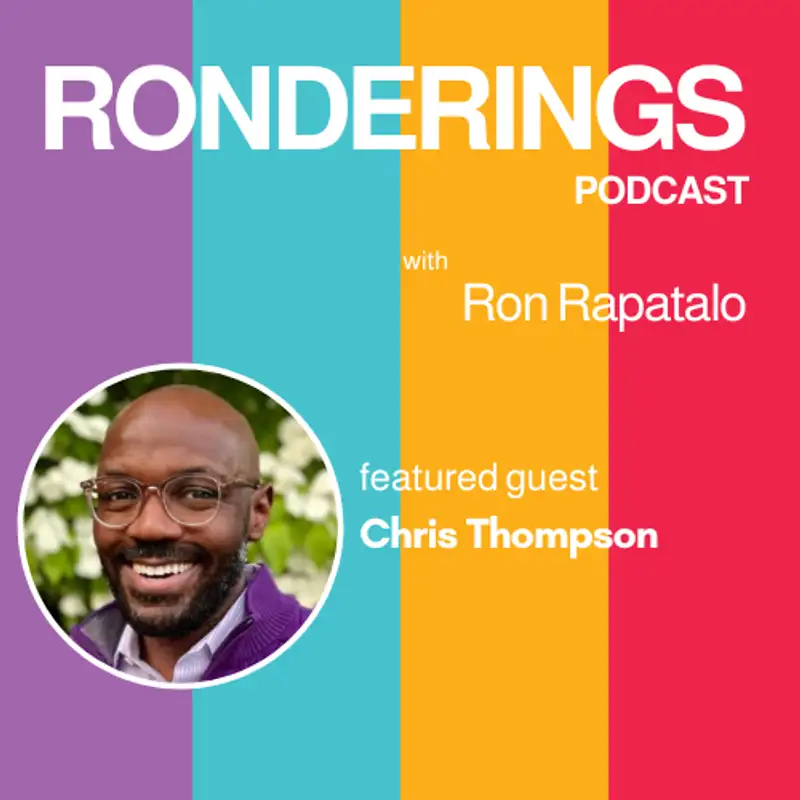
Ron Raptalo:Let's get into it. What's up, everyone? Welcome back to another episode of Ronderings. We explore the multi hyphenate journeys, the leadership pivots, and the human stories behind people doing meaningful work in their communities. Today, I'm sitting down with someone who embodies all of that, Chris Thompson.
Ron Raptalo:Chris is one of those rare leaders who moves with clarity, compassion, and a deep commitment to service, kind of person whose presence alone shifts the energy in a room. His work, whether you've seen it in community organizing, leadership development, or his day to day practice of lifting others up, is rooted in something bigger than strategy. It's rooted in purpose. In this conversation, we get into what shaped him, what sustains him, and what leadership looks like when you center humanity first. Chris talks about identity, mentorship, legacy, and the quiet disciplines that carry leaders to the moment no one sees.
Ron Raptalo:So settle in. This one is grounded, soulful, and totally the kind of wisdom that sticks. Let's get into it. Ronderings family. I have my new friend who I met through previous Ronderings guest, Aki Garrett.
Ron Raptalo:Chris Thompson is here on the mic, and I realized we have a lot in common being children of immigrants, being island people. Chris is Jamaican. I'm Filipino, and so we got to catch up for a little bit before we started reporting. So how's this afternoon going for you?
Chris Thompson:Ron, so great to be here. Thank you for inviting me, number one, and, really looking forward to the discussion. It's an honor for me to be with you this evening.
Ron Raptalo:Absolutely. When I asked Aki for both a hyphenated leaders who practice sacred syncretisms, like, you should talk to my buddy, Chris. I'm like, Aki, I trust you.
Chris Thompson:Aki is a great friend of mine. We go way way back. So it's, when he said you should talk to Ron, it was, like, without question.
Ron Raptalo:That's dope. Well, let's get right into it, man. What's your story?
Chris Thompson:Thanks for asking that, Ron. It's, it's a long story. I'll give you the short version now. But, just honestly sitting here with you today, thinking that someone would want to talk to me, hear about my journey, hear about my story. If you told me that thirty years ago, I was like, there's no way because there was no vision.
Chris Thompson:There was no path for me to make it out of the circumstances that I was going through. So to be an immigrant, come from an immigrant single parent household, first in your family to try to go to college and achieve all of these things, go into a career on Wall Street. I'll become an entrepreneur. I'll become an impact investor. Multiple things that I've accomplished along the way to tell me all of that would happen, and then someone would sit down on a podcast and ask me about those things.
Chris Thompson:Yeah. There was, like, no chance because we were just trying to eat, trying to see the next meal, trying to survive. And so that that is the the very beginning for me. My family is Jamaican, and they sacrificed everything to try to get to this country. They made a pit stop in England first.
Chris Thompson:It was more than a pit stop. You know, that was home for them. Yeah. Because in the in the sixties, Jamaicans could travel. If you could get to England, if you could get there, that was the big if.
Chris Thompson:You get there, they would you'd be accepted. Yeah. So, yeah, they my grandparents got on a boat, and I don't know how long it took them, but they made it to England. Oh. I think in pursuit of that American dream, everyone was trying to make it to The US.
Chris Thompson:And so I was born and raised in Brooklyn coming up in the eighties. That was a challenge in and of itself.
Ron Raptalo:Man, we got a lot to talk about with eighties Brooklyn. Eighties Brooklyn was something else, man. It was wild. It was crazy.
Chris Thompson:So coming coming up through all that, was like, what do
Ron Raptalo:you mean? Like, I think maybe staying in Jamaica might have not been as bad as this. Right. Yeah.
Chris Thompson:But a lot of struggle, a lot of difficult things to encounter, to overcome, one of them being the loss of my dad. He died when I was two years old. He was involved in motorcycle accident. What I'm told, and I I don't remember anything, but I'm told he survived the accident, but didn't live too much longer after that just because of Wow. Healthcare system and and no one knew.
Chris Thompson:And so that's another thing that made my upbringing difficult. That's why I grew up in a single parent household because my my dad just wasn't there because he couldn't be. And so my mom just struggled a lot being a foreigner in this country, losing the the person that she loved, and now you have a child and you need to figure it out. Yeah. And and and she was a superwoman.
Chris Thompson:We we figured a lot out. It wasn't easy, but education was something that she always instilled in me. No matter what you do, go to school. She had to drop out of college because I was born when she was about 20 years old. Wow.
Chris Thompson:And so because of that, she always told me, no matter what, make sure you finish your education. Do what you have to do. Take care of yourself, but, like, focus on the books because we view that as our way out. I was always a good student at Ron, but sometimes that's just not enough. When you're in a neighborhood, that's
Ron Raptalo:That's right. Or the same kind of safety net and all those things. Right? That's Right. Yep.
Ron Raptalo:Mhmm.
Chris Thompson:A public education system in New York City was tough back then. It's still tough now. And so I struggled a lot, not academically, but just trying to navigate violence on your way to school. And then once you get to school, maybe the teachers aren't teaching as they should because they're stressed out with all the
Ron Raptalo:stuff that they gotta deal with. Yeah.
Chris Thompson:And but but somehow, Ronder, just I don't know why, because I think of other people who came along with me that were just as smart, talented, gifted. I don't know why I made it this far or made it out and some others didn't, but a lot of what I'm doing today will talk about impact investing, executive coaching, all the things I'm involved with now. The reason I'm doing those things is because someone saw something in me that I didn't recognize in myself, basically provided mentorship, guidance, and coaching, and that's how I made it through. But it was extremely it was extremely almost like chance encounters that you meet someone or or someone tells you about this program and things
Ron Raptalo:in that nature, but we'll get into all those specifics. That's a pretty common story from the episodes that I've recorded, right, is that when you've grown up like you and I have, right, it takes, I would say, extraordinary effort plus social capital plus hard work. It's a there's a lot of pluses. Right? It's not enough just to get a strong education.
Ron Raptalo:Right? And so I always like to zone in on the people who helped you along the way. So walk with you mentioned your mom. Obviously, your mom like my mom being superwoman, my father passed when I was 10, and I'm the youngest of seven. And so my mom did a herculean job to get a nurse's aide certification and worked the graveyard shift.
Ron Raptalo:It's twenty plus years to put extra food on the table after my father passed. I mean, it's Mhmm. It's a tough life.
Chris Thompson:Yes. Yes.
Ron Raptalo:You know? So who are some of the people that helped you shape the vision and path you mentioned that you didn't have, but you started to see as folks exposed these more and, you know, poured into you?
Chris Thompson:Yeah. And it's funny you mentioned that, Ron. So, my mom was a nurse's aide as well. It's like, I mean, German
Ron Raptalo:kids and Filipinos in hospitals. Never heard of that in my life. You bring her to
Chris Thompson:New Jersey.
Ron Raptalo:No. No. Never. I I didn't know that just growing up in Brooklyn.
Chris Thompson:Oh, man. Yeah. Yeah. So, I mean, you you understand
Ron Raptalo:Yeah.
Chris Thompson:Some things you don't need to say when you just understand. So we're we're on the same page in that regard. But yeah. So coming up in New York City, I my mom didn't want me to work. I'll just say that.
Chris Thompson:So I remember, like, when I got to high school, for example, I was just like, oh, I'll just get a job. I can work in a supermarket. I could do some odds and ends just to help bring some more money in. And she was like, no. Focus on school.
Chris Thompson:Get an education so that you can go to college so you can get a job. That that was just what they drilled into me. Even though we didn't we we weren't we couldn't put food on the table. But she was like, don't worry about working. Because she feared that if you find a job, then that's it.
Chris Thompson:You're not gonna
Ron Raptalo:be focused on trying to go to school.
Chris Thompson:So with that in mind, it's like, okay, I'm going to go to school, but where can I go to a high school that allows me to get a job as quickly as possible? So I decided to pursue vocational training. I was going to become a mechanic. I ended up at automotive high school in Brooklyn.
Ron Raptalo:Okay.
Chris Thompson:And you literally you go to your regular class. And then you won't go work on cars for, like, an hour, two hours at a time every single day. And so my thought process was, let me let me learn a trade. That way, I can get a legitimate job as quickly as possible just to just to take some of this financial pressure off.
Ron Raptalo:Right.
Chris Thompson:And so that that was the plan. And Ron, that is back breaking work, even even just the training part. And so I did that for the first two years. And I'm like, you know, you're underneath the engine. Oil is spilling in your face.
Chris Thompson:You're lugging around heavy machinery. And I'm thinking it's like, wow. I gotta this is gonna be thirty, forty years of this. This is gonna be a a harder life, but it was a honest living, and I thought I'm gonna be the best mechanic I can be. Fast forward to junior year.
Chris Thompson:I met a math teacher, and I was always good in math, Jamaican math teacher. She said, you're really good at this. Why don't you pursue math? She introduced me to the business teacher, and the business teacher said, just join the business program. If you join the business program, your your major in high school will become business and you can leave the automotive specialization behind.
Chris Thompson:And so I I figured I looked at the kids in the business, the business room. They were all in a computer, a nice cushioned office chair typing away on the keyboard, air conditioning. And I'm like, yo, the auto body is like a 100 degrees in the summertime. The auto body shop is hot. Yeah.
Chris Thompson:I might lose a finger And you know what? Let me try this business thing out.
Ron Raptalo:Okay. And and, Ron, if they
Chris Thompson:not for meeting them, my math teacher and my business teacher in high school, I don't know where I would have been. I think things would have worked out. I would have just been a really great mechanic, maybe open my own shop one day, become an entrepreneur in that regard.
Ron Raptalo:Yeah.
Chris Thompson:But things started to shift into gear. Once I once I got into that business program, then you just start learning about different opportunities. Oh, you can apply to this internship for the summer and go work at Warner Music Group and and see what see what that world is like. And so one opportunity after the other, they didn't just magically appear. I'm skipping over a lot of the blood, sweat, and tears that it took to get there.
Ron Raptalo:But Right.
Chris Thompson:That shift, meaning my my math teacher, my business teacher, they just saw a promise in me when I just was like, whatever. I'm trying to make it out of here. I'm trying to do something better with my life. They then started to push me into other programs. My business teacher, for example, we didn't have advanced placement at automotive high school.
Ron Raptalo:-Yeah.
Chris Thompson:-But he said, Hey, that's okay. You can still go to these CUNY schools. They were offering what's called College Now program.
Ron Raptalo:Yeah.
Chris Thompson:You can take a college class while you're in high school and earn college credit. You don't need advanced placement. It's great that you have it. If you have an advanced placement offering, we didn't have that. So what what was the next best thing?
Chris Thompson:The College Now program. That allowed me to by the time I graduated high school, had 21 college credits. I'd earned 21 college I was just working, Ron. I was just working. Just working.
Ron Raptalo:But it right? If you think about what you painted about your life growing up, Chris, right, it took that business teacher and math teacher you were you were working hard. That was not that's that's the foundation. Right? And you were exposed to an opportunity you didn't know could be possible because you were focused on something that was gonna support your family and your mom.
Ron Raptalo:Right? And so you had, rightly so, I would say, like, a very narrow focus and, like, I've gotta do this, but it took, like, these amazing adults to say, you could do something different. And you already were starting to feel it. Right? It was just like, well, I'm putting my language on, like, what you're saying.
Ron Raptalo:Like, you're begrudgingly gonna become a mechanic. You didn't wanna do it, but it was like, well, it's an honest job. It's but you know what? I can do I could I will figure it out because look what my mom is doing to sacrifice for me.
Chris Thompson:Right.
Ron Raptalo:Right? And so that, like, you do what you have to do when you love your family. Right? Absolutely. And so so the path to Wall Street, I'm sure, like, that undergrad that, you know, internships and that whole thing like that.
Ron Raptalo:So tell me how that happened.
Chris Thompson:Yeah. Again, I feel like I I won the golden ticket in life because if you had told me
Ron Raptalo:Yeah.
Chris Thompson:Are you gonna go to automotive high school, train to become a mechanic, and then find yourself within three years in the investment bank. Yeah. At JP Morgan, I was like, there's there's no way because that doesn't happen. That's not how the story is written. You need to go to an Ivy League.
Chris Thompson:You need to go to a target school. You need to be doing all these other things. And so because, because of those 21 college credits that I earned Ron, and I was taking things like calculus, accounting, marketing, all the things that would prepare me. Because I was also a good student combined with some of these internship programs that I mentioned, I had a very compelling profile by the time I started applying to college. I got accepted to Long Island University, Downtown Brooklyn.
Chris Thompson:That's where I went
Ron Raptalo:to college. Right by juniors. Know exactly what that is. Exactly. Exactly.
Chris Thompson:But the life changing moment came from a scholarship that I earned from JP Morgan. So JP Morgan paid for me to go to college. So this was like an unbelievable moment because we I knew I was gonna go to school at this point, but I didn't know how I was gonna pay for it, but I was just gonna work. I earned that scholarship, and that was a pivotal moment because it meant I could now now I could just study without worry.
Ron Raptalo:How did you find out about that scholarship? Was that something?
Chris Thompson:It was because I was in this business program. Kevin Ida was our teacher back then, and he said, hey, you should apply to this scholarship. Look at these different opportunities. So they things would just come into the school. Yeah.
Chris Thompson:What students do you have that would meet the criteria for this? I didn't know. You know, it's it's like having a mentor, having a friend, having a teacher just show you or tell you you can do it. It's it's one thing to maybe apply for something, but someone to instill that belief in you like, no. You can do this.
Chris Thompson:And these are the reasons why you can do it because you've been busting your ass, taking all these college, going up to The Bronx, taking the four train from Brooklyn all the way to Monroe College in The Bronx just to take a a class on the weekend. Like, why would you wanna do that? It's because I wanna improve. I I want a chance You. At a best life.
Ron Raptalo:Us, Lynn.
Chris Thompson:Gotta do it here. Gotta do it. Gotta do it. Two hours. It would take it was, like, two hours from from where I lived in Brooklyn to The Bronx, but that's where the free class was.
Chris Thompson:So I was like, I gotta
Ron Raptalo:That's right. If if audience, if you're not from New York, that is a hellacious commute. If you've gone from Brooklyn where you were, right, Eastern Brooklyn. Right?
Chris Thompson:Crown Heights. Yeah. Crown Heights.
Ron Raptalo:To The Bronx?
Chris Thompson:Yeah. Fordham Road. Last stop on the Ford train in
Ron Raptalo:The Bronx. My god. Damn. I know exactly where it's That's crazy. That is woah.
Chris Thompson:Well, Ron, I left Monroe Cal I had I earned, yeah, maybe half of those 21 credits I earned from Monroe. The other classes came from places like City Tech, different CUNY campuses around around around New York City. But the scholarship from JPMorgan was called Smart Start program.
Ron Raptalo:Okay.
Chris Thompson:The requirement was we will pay for you to go to school, but you need to work. So you have to work at JP Morgan full time during the summer, part time during the school year for four years. And if you don't work, we're cutting that check. So I was like, right, I'm going to
Ron Raptalo:work.
Chris Thompson:And they said, and here's the best part, You needed to maintain a three point o GPA.
Ron Raptalo:Yeah. Yep. I figured it was a GPA maintenance.
Chris Thompson:Yes. Yep. And if you if you fell below that, then the scholarship is also gone. They might work with you, but it's like they had some criteria. Ron, when I tell you I was so afraid of messing up, of losing that opportunity, they told me what the bar was.
Chris Thompson:They said, you need to work. These these are the parameters that you need to work, and this is the GPA. Yeah. I I was so afraid of losing that scholarship. I just you talk about work.
Chris Thompson:Being a mechanic was a a great way to instill in me that hard work ethic. I just put my head down and said, I'm not gonna blow this. So I just worked my ass off. And then by the time I was done, four years later, I looked up. I had I was a valedictorian of New York of of Long Island University.
Chris Thompson:Whoo. Graduated number one in my class. Oh, double major finance and accounting. I had a minor in visual art. I I loved calligraphy.
Chris Thompson:I loved drawing, all these things, but it was I wasn't planning on that to happen. I was just I just knew I couldn't squander this opportunity. Let me work as hard as I possibly can. The investment bank at JPMorgan is not usually recruiting at LIU downtown Brooklyn. They're they're going they have their list of target schools.
Chris Thompson:They're looking at NYU, Columbians of the world.
Ron Raptalo:Yep.
Chris Thompson:Because I was one of them, I had four, four years of work experience. I had this great academic profile, this great story, and I was one of their own. They they said someone said, we at least need to interview this kid. And, again, just give me a chance. I got a foot in the door.
Chris Thompson:I'm gonna blow this thing off the hinges and, earned a spot in the investment bank, and did that for for three years, from 02/2009 through the financial crisis. So that that was how I be. That's not the path that it wouldn't the way it normally works, but it it worked for me.
Ron Raptalo:Yeah. I have going to NYU, the folks who went to Stern, I have a good buddy who dabbled in whether he wanted us to pursue finance. He did a Goldman Sachs summer internship. I was like, wait, how many hours are you working this summer? I was like, say what?
Ron Raptalo:Like, was sixty. I'm like,
Chris Thompson:yeah. Yeah. Sixty is enough. That's enough. Yeah.
Chris Thompson:That's that's that's
Ron Raptalo:child's play. Right?
Chris Thompson:Right.
Ron Raptalo:So, Chris, you worked through the financial crisis. I remember. So something I think you and I chatted about before we hit record in our first convo was I worked in finance in the early two thousands. I worked in Morgan Stanley
Chris Thompson:Mhmm.
Ron Raptalo:With a fixed ink in fixed income operations.
Chris Thompson:Okay. Yep.
Ron Raptalo:Yep. Particularly, I spend most of my time in whole loan operations specifically. And so I remember one of the very first things I saw when I would see a lot of these MLSAs in the whole loan world. I was like, this is fascinating. So I don't know exactly all this terminology.
Ron Raptalo:If I'm reading these things on haircuts, how many how these things are being priced, etcetera, I'm like, alright. Wait. We this bank buys ninety day, a hundred twenty day delinquent loans? And wait. And the little that I started to understand was like, well, how do you make money on
Chris Thompson:these things? Right?
Ron Raptalo:Well, we make the loans better through a server. So I'm like, wait a second. All of a sudden people, like, something just the magic that didn't happen, then watching the big short year and just sort of it's like, oh, this doesn't sound it's like this sounds like a lot if a lot of money was clearly being made. Right? But Mhmm.
Ron Raptalo:I was like, if this ever bursts, this is gonna be a huge problem. I was just like, something about these instruments sound highly speculative.
Chris Thompson:Mhmm. Yes.
Ron Raptalo:Right? And I wasn't a finance guy. I was just, you know, like But
Chris Thompson:you just knew. You knew, like, this it doesn't feel right, and and the the logic doesn't seem to flow.
Ron Raptalo:Yep. And so when o eight happened, I I by then had already you know, I left in, you know, working in the world of finance in o three. I was like Mhmm. Oh, this all makes sense. And all of our big competitors folded.
Ron Raptalo:Mhmm. Lehman and Bear Stearns. Yep. Those are the two big players in that world. So I just put two and say, was like, this is fascinating.
Ron Raptalo:Yeah. Fascinating. Yeah. So what was it like working in I've like, before the recession hit and then, like, during, like, how was
Chris Thompson:that was not so to your point, very, very long hours. I think, I was not prepared for eighty, ninety, hundred hour work weeks, but you kinda just if if everyone else around you is doing it, then you're like, alright. This is what I need to do. I go back to that work ethic, though. It's like, oh, if all I I'm just sitting in a chair.
Chris Thompson:Yes. This is intense. You're dealing with some difficult people, but I kept reminding myself, you're sitting in an air conditioned room in a chair. You're getting you know, you can get a car ride home. You get a meal allowance.
Chris Thompson:You're getting food. And I thought about a 100 degrees in that auto body shop or anything else anything else I could have been doing.
Ron Raptalo:That perspective. Yeah. I'm
Chris Thompson:just gonna I just gotta I gotta figure out a way. And so I learned a a great amount. I was I focused on corporate credit. We were lending to I covered technology, media, telecom sector in general. And so we were we were corporate lenders.
Chris Thompson:And so I learned a lot about how to analyze a balance sheet, financial statement analysis. I'm a fixed income. I call myself a credit analyst still to this day because that that was my training. And that's what a lot of my career revolved around. But it was wild because companies would be investment grade or very high quality one day.
Chris Thompson:And then the fight, you know, things started to feel very risky around summer two thousand and seven going into 2008. And then those same very high quality companies were on the verge of bankruptcy. I was like, how did this happen so fast? It was very it was an exuberant time. Reminds me a lot of what's happening in in the market today.
Chris Thompson:It feels not quite exactly the same, but it's just human nature to to think that the market's only gonna go in one direction.
Ron Raptalo:Yep. So working in IB is one of the more intense jobs that you can have, especially out of college. And it sounds like you were there for three years. And, you know, I don't wanna put words in your mouth, but I don't know many people, like, twenty years later, I'm still an IV. Right?
Ron Raptalo:Because it just it's so intense. So Yep. What made you decide to leave, and what did you start doing after that?
Chris Thompson:I think the financial crisis helped because it forced everyone to think, well, what am I going to do next? And at that point in my life, remember, still at that point, I'm still living in Brooklyn. We're in Crown Heights. We're in an apartment we grew up in, tiny little apartment. Yeah.
Chris Thompson:I then started to dream bigger because business school or graduate school was never something I thought seriously about earlier on.
Ron Raptalo:Okay.
Chris Thompson:I told you that point in my life, if we go back to high school, it's like, I need to we need to we need to eat. So I'm dreaming about the next meal. And then all of a sudden, okay, I get into college, I get into investment bank. And then people around me are starting to talk about, oh, I I'll go to grad school. I'm like, well, what is that?
Chris Thompson:I'm gonna go to business school and do this thing and go to private equity, go to a hedge fund. I was like, none of this makes sense to me, but let me learn more. This is why access information is so important. We can do anything, Ron. Like all of us, we have this same innate human ability to go after our dreams.
Ron Raptalo:Yes.
Chris Thompson:But what's not equal is access, information, creating space for people. And so being in that environment, being in these rooms, being in these meetings, I was like, I don't what the hell are these people talking about? I don't know, but I need I'm interested and I like finance. Let me do more. So that's that's how I decided to go to grad school to go get my MBA.
Chris Thompson:And the financial crisis was that was like a good breaking point. Did at that point, I did three years in the analyst program. It was either you leave or you get promoted to associate. No one's getting promoted to the next level because there are no jobs. It's a financial crisis.
Chris Thompson:So I started planning for grad school and talk about the best two years of my life after working through a very difficult period during the financial crisis. It was difficult for another reason, not because of the work itself, Ron, but this is another sad part of the story. I'm planning for business school, working on my applications. I decided, oh, Duke is the place for me. This is where I want to go.
Ron Raptalo:Okay.
Chris Thompson:I'm flying down, getting ready.
Ron Raptalo:Yep.
Chris Thompson:Single parent household, as I mentioned, I have a younger sister. So it's me, my mom, my younger sister. We're seven years apart. My younger sister's getting ready for high school herself.
Ron Raptalo:Okay.
Chris Thompson:So we're we're talking about colleges. I told her you should go away. Don't stay in New York City like I did. Get that full college experience. That's why I wanted to go to Duke, one of the reasons why that was on my list.
Ron Raptalo:Makes sense.
Chris Thompson:We're doing all these things, Ronderings. The Thompson family is doing well. Yeah. And then suddenly, this happened on July 3. My mom got sick, took her to the hospital, which is July 3.
Chris Thompson:Me and my sister go to visit her on July 4. I think it was a Friday during that time, and she dies right in front of me, right in the hospital bed. Ron, she wasn't she she got ill on the third, but she wasn't sick. She was 43 years old, 43 years young. We walk in, and I just could tell because we're me and my sister are going to visit her at this point.
Chris Thompson:Yeah. Mom is sick. She's in the hospital. Took her there on the third. I went to work that day because it it was there was this important project that needed to get done.
Chris Thompson:I still kick my I don't blame myself for the decisions that I made, but I still kicked myself because I didn't think it was that serious. Obviously, had I had known, like, this is the real deal, I would have not gone to work. But when you work in the bank, these type of high pressure environments, plus it was like I was leading a project. I needed to be there or so I thought I didn't need to be there. But like, in my in my 22 year old mind, 23 year old mind, it's like, I can't.
Chris Thompson:I just get her to the hospital. She's good. Boom. I'm gonna go to work. Do what I need to do?
Chris Thompson:Go visit her the next day. So that that was the decision I made. Ron, we walked into the hospital. I could start, like, why is she still in the emergency room? This is a day later.
Chris Thompson:This doesn't make any sense. And they said, well, we had to bring her back here. And, yes, she I realized, well, let me take my sister out of the room, took her back to the waiting area. Then I went back in, and then that was it. It was almost like she was waiting to see her kids one last time.
Chris Thompson:Because as soon as we walked in, that's when and that was it. And her heart they to this day, we don't know what happened. They said her heart just stopped.
Ron Raptalo:Wow.
Chris Thompson:We got her we got the cause of death. Well, we got the death certificate. There was no cause of death. It was just blank because the the doctors didn't know what happened. It was very, very weird situation.
Chris Thompson:We had a medical examiner. We had some attorneys involved. It was a very stressful time, very stressful period. That's what made, like, the ending or that that process of trying to go to business school a lot more difficult, not the worst, but all of the things we were dealing with. Wow.
Chris Thompson:I wasn't gonna go, Ron. I was gonna because at that point, I'm looking at my sister and it's like, well, shit, I need to take care of her and make sure she is fine. Make sure she can go to college. She deserves all these opportunities as well. Right.
Chris Thompson:Right. So that was my focus. I kind of dropped the b school application thing, focused on her. She found her way. She made her way.
Chris Thompson:She made it into college. And that's where I kinda, like, picked up steam again and decided, you know what? Let me let me now dedicate this next phase of my life to my mom, because she would want both of her kids to succeed and go on and do what they wanted to do with their life.
Ron Raptalo:Wow. Wow. I mean, there's something around this bookend of, like, your parents passing away. Right? But, like, what you got from both of them around just the hard work ethic, but it is also, I would say, the people that have come along your life to support you along the way.
Ron Raptalo:So I'm curious like, because obviously, you know, when your parents pass, right, from when you're young versus when you're a little bit older, but you just had started your your career, right? It's Yep. It's two different levels of trauma, right, in terms of processing all those things. Right? Because I'm curious, who helped you along the way post your mom's passing?
Ron Raptalo:Right? Because, you know, you lost is it, like, this rock in your family? That's all.
Chris Thompson:Ronnie, they say it takes a village. It it's been multiple people have helped me. Yeah. It's not I can't just point to one, but certainly, like, Kevin, Adrian, Tony is still a mentor to me today. I met him when I was in banking.
Chris Thompson:Yeah. There have been people along the way in my life. Holly helped coach me through the business school process. I had so much love and support. Mhmm.
Chris Thompson:And my family is extremely small. Yeah. It was me, my mom, my sister. My aunt has been a huge, influence in my life just being there when we didn't have places to go. But it's the village that's been around me, Ron, and I've leaned leaned on that support certainly over the years.
Chris Thompson:And so I'm eternally grateful to all those people that when I was rock bottom, like, you talk about an ass kick. It's beyond that.
Ron Raptalo:Yeah.
Chris Thompson:It's not only in Lucy, I'm I'm I'm watching it. It was like it felt like a movie, like an out of body experience. Like, this can't be happening. And then then that was it. I'm so grateful for their support.
Chris Thompson:Ron, if I didn't have my sister, I think she's an extremely important person. We had each other.
Ron Raptalo:Yes.
Chris Thompson:But if I didn't have her during that period, because again, it became in my mind, it's like, well, let me take care of I have there's no one else. Let me make sure she's set up for success. She needs to finish senior year in high school. She needs all that support. I need to help take her on college visits, all of these things.
Chris Thompson:If I didn't have that, like, my mind would have just been too scrambled and scattered. I needed something to just be centered on and focused on. And so my sister and I honestly supported each other during that time.
Ron Raptalo:Yeah.
Chris Thompson:And I just, seriously here a little while ago, she's doing well now. She went on and got her own master's degree later on in life, Ron. So she's doing well, but she, she came by with her son early on. So we were just hanging out for a little bit. So it's really the, yeah, the, the support network I had around me during that time and beyond, but really honestly, just having having a sister.
Chris Thompson:We just lean on each other heavily because our mom was our our world. She we she did everything for us, And to be going that quickly was difficult. But, like, yes, mentors, coaches, friends, all of those things were extremely important to my to my success.
Ron Raptalo:Yeah. So let's talk a little bit about what you're doing today, Chris. You're doing a lot. Right? Impact investing, executive coaching
Chris Thompson:Yes, other
Ron Raptalo:things. So talk to us about that and what Chris has in his pot today.
Chris Thompson:Yes. So the the coaching came about because of everything kinda we just walked through. My early beginnings in Brooklyn, not seeing a way out for myself, finding some mentors or coaches or people looking at me, telling me you could do it, and helping me navigate away, still having that support to this day, I recognize, okay. I wouldn't be here certainly without that support.
Ron Raptalo:Right.
Chris Thompson:But I'm energized by this. I've had some executive coaches through different employers at work. And I remember going through these sessions thinking, I'm enjoying this, but it seems like they are having fun as well. I want to have that type of fun that they're having. -It's so
Ron Raptalo:-It's a lot of fun.
Chris Thompson:Yeah. It's a lot of fun. And just working with people, helping someone achieve that breakthrough. And I realized, okay, this is this is going to be a big part of my life. So I I've started form and I've been mentoring younger kids, people behind me really since the beginning, but I started to formalize this, get some training, get some coaching myself.
Chris Thompson:And I've been doing that for about a year and a half, almost two years now. Congrats. And thank you. And really, the coaching ties in nicely to impact investing. It may seem like two very different unrelated fields.
Chris Thompson:But the reason I got into impact investing is because we talked about the financial crisis. We talked about how so many people lost their homes or lost their savings or couldn't go on to a career that they thought they would have anymore. I'm seeing all these things transpire over time. And I'll say, well, I have these great set of finance skills. Is there a way I can apply that in a way?
Chris Thompson:Can I invest in people? Can I invest in a way that helps uplift people? Coaching is the exact same thing.
Ron Raptalo:Yeah.
Chris Thompson:So when I'm doing my impact investing work, I might take capital and look at an affordable housing project or some community development project. We are investing to uplift the community. Beautiful. When I'm doing the executive coaching, I'm just using my time, my experience, investing in that in the person to help uplift themselves. And I go back to that scholarship from JP Morgan that I earned in college.
Chris Thompson:To go to college, that was an impact investment into my life because that's when everything changed.
Ron Raptalo:Yeah.
Chris Thompson:And that's how all of these things have been with me in my mind. So I realized this is the type of work I need to be doing in impact investing. And the coaching, to me, they go hand in hand. And so I get the same type of enjoyment from both. So they're different from a technical perspective, but in my mind, it's very aligned and one and the same for me.
Ron Raptalo:That makes so much sense. Right? This all resonates when I went to NYU. I got a pretty significant scholarship and a ton of financial aid to go to NYU, because certainly, there is no way that my mom, you know, with supporting all of us is gonna be able to finance my college.
Chris Thompson:Seven seven kids. Right? Seven?
Ron Raptalo:Yeah. Mhmm. I mean, significant support. Right? And so, you know, between that and all the other early adult teachers, relatives that poured into me, right, coaching, especially in college for me.
Ron Raptalo:Right? I was a resident assistant. I was a orientation leader for freshmen, peer adviser, all these things. Right? And so when so much has been given to you, I find many of us, especially the way you and I grew up, it becomes a way to pour back into others because it's a legacy builder.
Ron Raptalo:Right? Because you wouldn't be where you are. I wouldn't be where I am today without people having coached, mentored, supported, poured resources into us. And so this is our way of giving back and creating better opportunities for folks who look like us, don't look like us, who could use our support. Right?
Ron Raptalo:Absolutely. And I think the it's just different sides of the coin around how you use this ability to build relationships with others to unlock something in someone or provide someone a resource. Right? It's really powerful that you do that. It like, this it's like this I imagine you feel like it's this full circle moment
Chris Thompson:of like Yeah.
Ron Raptalo:Absolutely. So I'm gonna ask you this is a very Barbara question I'm about to ask.
Chris Thompson:Let's hear it. Let's hear it.
Ron Raptalo:If you were able to talk to your mom and your dad about the legacy you and your sister have built
Chris Thompson:Wow.
Ron Raptalo:What would you say? I know. I told you it's the Barbara Walters question.
Chris Thompson:The heavy one. Right?
Ron Raptalo:I wasn't expecting I know. This is Ronderings. I you know, you know what? I'm gonna I don't know what I'm gonna ask.
Chris Thompson:Well, I never I miss my mom so much because, look, we've had conversations. Right? Of course. I never knew my dad. So there there are things that I would love to ask him, but he sort of don't even know where to start because it's there is no image of this person in my mind because I I just was so young.
Chris Thompson:But I would ask both of them, And I think I would know their answer, if it was worth all of the effort to to get here and if they are happy with how things turned out for us. I would I would ask them things like that. Because my mom, when she left England, they were they were both in their like, they were 18, 19, and they're late. They were basically adults. So I I would ask them things around just like, obviously, I think they would be any parent would be very happy if both of their kids if their children went on and got graduate degrees and were able to, you know, take care of themselves, have their own family.
Chris Thompson:But, yeah, I would I would just wanna know if is this what they expected? And I don't think because I had no idea what would happen to us. And so I would talk to them about how things turned out for their kids despite a lot of the challenges that we had to go through.
Ron Raptalo:I imagine at least what your mom would say is that you and your sister have done beyond what she could have ever imagined, right, plus some. Right? Because I think about this with my own parents, right, is, you know, my mom got to live till she was 84. Mhmm. And my mom, in her last twenty years of life, it was like a really slow decline.
Ron Raptalo:It was hard to watch.
Chris Thompson:Mhmm. Sorry.
Ron Raptalo:Right? Sorry. Between every other ailment you can name when you become older, diabetes, you know, cataracts, you know, dementia, every just all. You know? And I think I attribute that she just works.
Ron Raptalo:She literally sacrificed her body
Chris Thompson:for our family. Mhmm. Yep. Right? And
Ron Raptalo:I think I have felt from her because, like, every good Filipino is supposed to go to medical school, decided not to. And I think there was this point, you know, for a while, she didn't understand. Like, why would you have wasted all that time? Right? I have to take that language with a grain of salt because I think, you know, from my mom's standpoint and many, like, immigrant parents are just like, we want you to be stable.
Ron Raptalo:Like and the fact that, like, you're doing something she didn't quite understand Mhmm. But when I would explain to her, she knew I was happy without having to understand exactly what I was doing. She's like, well, you seem happy. You're married. Mhmm.
Ron Raptalo:She got to meet I mean, she was in a hospital bed and not really able to, like, talk a lot, but she got to at least see my oldest daughter when she was, like, nine months old. Right? I wish my mom would have been around to,
Chris Thompson:like Yeah.
Ron Raptalo:See my kids, but she's around. I have this very strong spiritual sense that they never left. That's the way that I've always reconciled things. So I think I asked you that question. I think I've asked that question in times of other episodes because for me, it's the feeling of, like, tapping into that ancestral wisdom.
Ron Raptalo:I imagine that your parents still pour into you and sister and guide you both in so many ways. And for me, I have this I have a curiosity question. Have have you been able to do any, like, research? This sounds like a finding your roots question, right, to figure out, like, who is your father aside from what your mom has told you? Right?
Ron Raptalo:Like Yeah. I mean, I know I know I know who he is. Like, you know, I,
Chris Thompson:yeah, I know that side of the family. But I that's one thing I want to do, Ron. I wanna go, like, back to Jamaica and actually see, like, alright. Where where is everyone actually from? Yeah.
Chris Thompson:Because I'm two generations removed. Like I said, they they they were both born and raised in England. Like, my grandparents are from Jamaica, so I would wanna and I have I know my family. I know where they are in England as well.
Ron Raptalo:Wow. Yeah.
Chris Thompson:That doing that, it's it's on my bucket list. Not just go to Jamaica and be at a resort, but just let me see, like, where where did my people come from? Where did they leave to be on this journey all
Ron Raptalo:Yeah.
Chris Thompson:Halfway around the world to make it to New York?
Ron Raptalo:Yeah. I got to return to The Philippines only once because being born in America, I went in '88. So this is a couple years after my father passed away, and my mom brought all of us to The Philippines. I stayed for a summer.
Chris Thompson:Mhmm. And I remember
Ron Raptalo:my mom was really offended rightfully so for me saying this. It's like, I am more American than Filipino. And she's like, what? Are you out like, I could see the, like, pain. Right?
Ron Raptalo:But going there, the love of all of my relatives and all the people and the culture and the food and everything. I came back. I was like, it totally flipped my cultural pride.
Chris Thompson:Mhmm. Mhmm.
Ron Raptalo:And now fast forward, like, you know, I have, like I got to ask some things. Right? Yep. But I was young. I was 12.
Ron Raptalo:Like, there are things I would ask an adult that I'd be really curious about. Like, who was my mom to y'all?
Chris Thompson:Right.
Ron Raptalo:I can ask being older. Who was my dad? I mean, I have a sense of it Mhmm. Because I visited, but that was thirty five years ago.
Chris Thompson:You know
Ron Raptalo:what I'm saying? Like, I I was planning to go back to The Philippines, but then COVID hit. We were planning a trip that summer. And so now it's five years later, but I wanna, like, bring my family to, like, see what their roots are like from their father's side. Like, from my side to be able to, like, see that because I think there's so much of, like, pouring into, like, our kids that also is around understanding where we come from.
Chris Thompson:Right. Right.
Ron Raptalo:That for me is really like, my my daughter, you know, today was practicing Tagalog on, like, our you know, on her iPad. And, of course, because I'm obnoxious to Adam, like, messing around with her, I'm just like, wait. What do you say?
Chris Thompson:What's speak it? Do you speak it as well?
Ron Raptalo:Or Not. Well, my my comprehension gets better as I hear it. I mean, my mom used to speak it to me all the time.
Chris Thompson:Yep. Yep.
Ron Raptalo:And so I could respond in English, but my is the don't never. But because I was I did Spanish for six years Mhmm. From middle school through high school, my Spanish just because I was trained in it. Right? So classes, it I took AP Spanish.
Ron Raptalo:Like, the Spanish comes back to me really fast. Uh-huh. When the gets because I don't have the same structure of understanding the grammar and syntax like I do Spanish. It's just like it's all, like, memory of, like, knowing what I've heard for, like, fifty years in my life.
Chris Thompson:Right. Right.
Ron Raptalo:Right. It's definitely something I wanna, like, pick up. And it's cool. There's actually shout out to Vanessa Manzano for finding the Filipino School of New York and New Jersey. They offer cultural classes and language classes.
Chris Thompson:Okay. That's awesome.
Ron Raptalo:My my my daughters got to participate in dance classes last spring,
Chris Thompson:which was really cool. That's amazing.
Ron Raptalo:Cute to see them down. It's like, oh, I was at your paddle house. I feel like I'm a dad. Proud dad. What?
Chris Thompson:Rod, that's the funny thing you mentioned. I so I have two kids now. They're eight and six. I get so much joy just watching them do stuff. Like, we'll go out, and it they're not doing anything crazy or wild, but, like, I'm just watching them at the swim practice or watching them.
Chris Thompson:They're, like, throwing the ball around. Yeah. So just, like, seeing this next generation now, then me being the bridge to that connective tissue to the past in terms of where everyone traveled, where everyone came from. To see them now carrying that torch or getting ready to, Yeah. It is it is an amazing experience to be a dad and see that.
Ron Raptalo:Yeah. Well, Chris, now sounds like a good time to ask you the Ronderings question.
Chris Thompson:Mhmm.
Ron Raptalo:What's the lesser value you wanna share today?
Chris Thompson:Well, I I would say based on a lot of the things I shared and just my journey
Ron Raptalo:Yeah.
Chris Thompson:There were plenty opportunities for me to give up. And it's not that I I never took a knee or never got tired or never was like, well, I'm I'm just out of it. I'm just not going to do anything. I certainly have had those feelings in the past. And we're human.
Chris Thompson:I have those even still now to this day. Absolutely. Yeah. I allow myself time to feel that when I need to, but you have to keep going. So my Ronderings would be to just find a way to keep going no matter no matter the challenge.
Chris Thompson:In my case, a very difficult thing was losing both of my early on and then physically witnessing my mom's passing. I wanted to stop, but it's like, I I can't because, like, my sister is here. Right? And I can't because my mom would have wanted me to. So I I allowed my time to just be still.
Chris Thompson:But if you can use those moments of stillness to remind yourself why this is so important, why this journey of life that we're on is so precious and valuable, you can keep going and and lean on community when you need to find that person. There's there's no reason to be struggling through challenges alone, but you you get the support and but just keep going once. My mom would literally always say one step at a time. And I tell my tell my kids that now. I mean, they're struggling with something.
Chris Thompson:Hey. Just,
Ron Raptalo:like, one step front of the other. Like impact investing. Right? It's the idea of compound interest. Right?
Ron Raptalo:Which is around, like, one step at a time, one habit at a time. Right? Just move like, inertia I mean, all these things in, like, whether it's finance Mhmm. Or physics or, like, life isms. Right?
Ron Raptalo:They all have very similar themes of you need to be around your people because that energy matters to be to get that support because the idea that we can do things on our own is at best severely overinflated. Right? You know, whale is not one of our stronger things. Right? I have whale when I'm around people, but, like, you know, if I'm on my own Am I doing it right?
Ron Raptalo:Right? Right? It just is. Right?
Chris Thompson:Yep. Yep.
Ron Raptalo:But, you know, you realize that once you start then moving and you create your the community to support you, but also really good, like, systems and ways of, like, being, there's a lot that I don't wanna do on a given day in a given week, but I do just because, frankly, it's autopilot. So it's kinda the environment I've created for myself. Right? And so Right. That becomes, like, you know, a huge thing around, like, you know, when you just keep moving, the environment and the people around you allow you to do that a lot more ea it's a lot less friction.
Chris Thompson:Absolutely. Absolutely.
Ron Raptalo:Well, Chris, how do people find you slash what would you like to promote?
Chris Thompson:Yes. You can find me on LinkedIn. I'm fairly active there. I just I try to just post a positive message once a week when I I can get to it. A lot of my messages come from people ask me, like, where did you think of that?
Chris Thompson:It's like I sit and write in my journal, just things on my mind, and then that I this becomes
Ron Raptalo:No wonder Aki connected us. You have your own, you know, Ronderings . We got to brand it with Chris. We got to figure out what the
Chris Thompson:Chris the rings doesn't sound as Chris
Ron Raptalo:the rings? No. Doesn't Chris the rings? No. I don't know.
Ron Raptalo:We'll figure something out. Yeah. But think about it. Link, LinkedIn is good. And then
Chris Thompson:my webpage is careerfreeagency.com. And that's that's my site where I you could just find out more about my coaching style, my philosophy, my thought process there. So those are the two best places to find me.
Ron Raptalo:Well, Chris, thank you for sharing your incredible story, not only of resilience, but triumph, community, mentorship, pouring into others. Really inspiring to hear that. I'm hoping you find time to go back to Jamaica for you and your sister to, you know, get deeper with your your family story. I wanna do the same and go back to The Philippines. Right?
Ron Raptalo:Because I you reached that point where you have your families, like, to be able to, like, share that legacy with them. Mhmm. Because I when you hear the pieces, I get really I'm like, I know we have streets named after us, but exactly what's going Wow. It's really cool. I mean, there's
Chris Thompson:That's amazing.
Ron Raptalo:It I I wish I have the pictures, but I could still visually see the streets named after both the sides of my parents. Mhmm. Like, which really cool. Like
Chris Thompson:You gotta get back to yeah. You gotta get back there, man. For sure.
Ron Raptalo:Well, Chris, thank you again. And in the words of one of my heroes, Dion Sanders, we always come in hot with amazing people like Chris.
Chris Thompson:I love it. I love coach Prime.
Ron Raptalo:Yes. Thank
Chris Thompson:you, Ron. Thank you, Ron.
Ron Raptalo:You're welcome. Peace. What a conversation. Chris reminds us that the work of leadership isn't just about outcomes. It's about the inner life of the leader, the habits, the values, the relationships, the courage to stay rooted when everything around you is shifting, and the commitment to community that shows up in both big actions and the small consistent ways we hold each other.
Ron Raptalo:I love most is Chris's reminder that leadership isn't a title. It's a practice. It's how we show up, how we listen, how we create room for others to rise, and we honor the people and experiences that shaped us. If this episode resonated with you, do me a favor. Share it with someone who's also trying to lead from a place of purpose.
Ron Raptalo:And if you want conversations like this, describe Surrenderings wherever you get your podcast. Chris, thank you, brother, for your honesty, generosity, and the legacy you're building every day. Until next time, y'all. Keep reflecting, keep stretching, and keep Ronderings. Peace.
Ron Raptalo:Thank you for listening to today's Ronderings. I enjoyed hanging out with me and my guests, and I hope you leave with something worth chewing on. If it made you smile, think, or even roll your eyes in a good way, pass it along to someone else. I'm Ron Rapatalo, and until next time, keep promdering, keep laughing, and keep becoming.
Listen to Ronderings using one of many popular podcasting apps or directories.