 Episode 106
· 55:58
What's up? I'm Ron Rapatalo, and this is the Ronderings podcast. Around here, I sit down with guests for real, unpolished conversations about the lessons and values that shaped them. And I'll be right there with you, sharing my own take, laughing at myself when I need to, and wondering out loud about this messy thing called life. Glad you pulled up a chair.
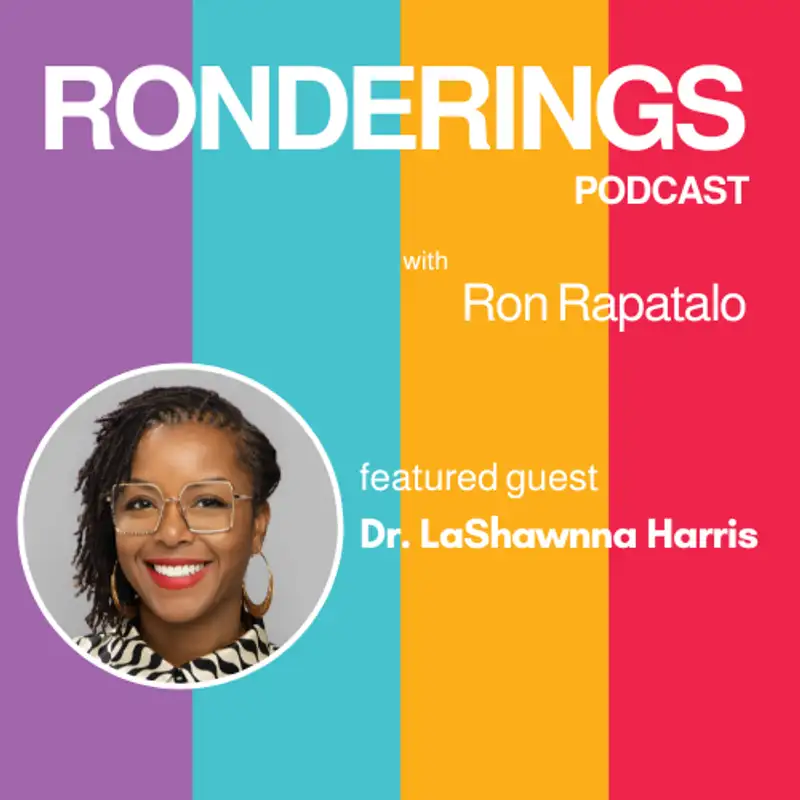
Ron Rapatalo:Let's get into it. Welcome back to Ronderings. Today's conversation is with LaShawnna Harris. This one is about what happens when technical excellence isn't enough. LaShawnna's journey starts in Queens, moves to engineering at RPI, becoming a young mother in college, stepping into education through the New York City Teaching Fellows right after 09:11.
Ron Rapatalo:From here, she rises fast, teacher, math coach, then founding principal in Corona Queens, opened a school with over 200 kindergartners from day one. And here's where it gets real. Tell it yourself, Get systems, the operations, the execution. Almost lost it all because she hadn't yet mastered relationships. This conversation is about that tension, incompetence and connection, so you're doing the work and bringing people with you.
Ron Rapatalo:We also get into her current work building a shared talent platform. The research on trust and social capital from a black entrepreneurs, and how we need to rethink how we design spaces for people to actually build real relationships, not just exchange business cards. Earn Ronderings, make the ass, be okay with no? And understand, flow doesn't mean no. Let's get into it.
Ron Rapatalo:Ronderings universe. So I think y'all know that the place that I worked the longest had the most impact on me in terms of the many great people that I met. And so that includes doctor LaShawnna Harris, who I met. I think I think this is the first time we met back in the day in the new leader's Office when you were leading as a New York City principal. Don't think you're resident.
Ron Rapatalo:I think you were a principal then. You came to a New York City info session on the 10th Floor. I think it was the first time that we met sometime in the late two thousands. So doctor LaShawnna Harris is on the mic. How are doing?
Dr. LaShawnna Harris:I'm well. Thank you. How are you?
Ron Rapatalo:I'm good. Well, we've kept in touch since because, you know, New York all day every day. Raised in Queens? Do I born and raised? Okay.
Ron Rapatalo:Got it.
Dr. LaShawnna Harris:I'm a Queens girl.
Ron Rapatalo:Yes. Same with me. Although, I I have to admit my own relationship with Queens. Like, I usually represent Brooklyn pretty hard because I was born in Brooklyn, but I spent most of my time in Queens. So I have this I have this fast day relationship with Queens, which probably has more to do with my head than anything.
Ron Rapatalo:But I'm this is not me sharing my story. This is sharing your story. So we I'll talk about that in therapy. So, nonetheless, LaShawnna, to kick it off, what is your story?
Dr. LaShawnna Harris:My story is a little unconventional in terms of how I ended up in education. Okay. Like I said, Queens girl, but I actually went to high school in The Bronx, so I kind of have a little bit of like, you know.
Ron Rapatalo:Oh, where'd you go to high school in The Bronx?
Dr. LaShawnna Harris:Monsignor Scanlon.
Ron Rapatalo:Ah. Back in the day when everybody if you wanted a good school and you couldn't get into good public, it was often going to a good Catholic school.
Dr. LaShawnna Harris:Yeah. So taking a taking a bus across the bridge to The Bronx. And so went to graduated from high school, went to a pretty tough school, undergrad, RPI, started out as an engineer. I didn't really know what an engineer was. And then switched my major to management, loved, but graduated right after nineeleven and couldn't find a job.
Dr. LaShawnna Harris:So came home, worked with my mom as her assistant. That didn't last very long, but saw a posting for New York City teaching fellows on a, I guess, a billboard somewhere or a bus. Fast forward about three months, I was cohort five of teaching fellows
Ron Rapatalo:and Wow.
Dr. LaShawnna Harris:Teaching in The Bronx by September. And so teacher, math coach, all things within the New York City Department of Education. And we actually met at New Leaders when I was there for the interview, that very, very rough interview.
Ron Rapatalo:Did did did I scare you during one of the interviews? Did I was I the scary superintendent with you, LaShawnna?
Dr. LaShawnna Harris:No. That was Mark who was the scary But but I will tell you, and I don't know if Mark remembers this, he the role play was so silly to me that I burst out laughing and thought that I there's no way I was gonna get in. I could not keep a straight face. And so when I found out I was accepted, I was I was pleasantly surprised.
Ron Rapatalo:Wow. That that is a new leader story of the day because laughing during an interview usually does not get you a offer for a thing. Wow. That's bananas. Yeah.
Ron Rapatalo:Oh, goodness.
Dr. LaShawnna Harris:And and like you said, that that opportunity to work with new leaders change your life, but that that opportunity to be a a new leader for that, you know, it's part of foundations and my training there was game changing for me and really helped solidify my commitment to education because I knew I wanted to. I didn't want to be a teacher, but I was a teacher and I was a good teacher and did all those things. But then when I had the opportunity to actually open a school and had some agency and and changing children's lives, I mean, that that cemented my footing in education.
Ron Rapatalo:So founding school leader, fast forward entrepreneur. I'm I'm tying some pieces together because there's some things. So let's do what I think is gonna feel a little bit like this is your life and do a little bit of a rewind. What was it like growing up in Queens?
Dr. LaShawnna Harris:So growing up in Queens was really fun because I lived in a community that was surrounded by family. So cousins and aunts and all over. So you can walk down the block and always see like a relative. My grandparents and parents were both from the same community. Well, all lived in the same community.
Dr. LaShawnna Harris:My parents were from the same area. And so family on both sides. And then their friends that they went to school with were there. So very, like, close knit community, lots of basketball. Right?
Dr. LaShawnna Harris:So I played basketball. Friends played basketball. Lots of Okay.
Ron Rapatalo:I did not know you played basketball.
Dr. LaShawnna Harris:Okay. I did. I played at my my senior scaling too. Mhmm.
Ron Rapatalo:What position did you play? Guard? Point guard. I was point guard. Not look at that.
Ron Rapatalo:Point guard to leading a school. See? All these things are tracking. Okay.
Dr. LaShawnna Harris:Right. Okay. Alright.
Ron Rapatalo:Got it.
Dr. LaShawnna Harris:And I think it was what I what I'll say was it was safe. Like, growing up in Queens, I felt safe. I felt loved. Loving family. And I think it's interesting that you asked that question because once I got to college, it felt like everything changed.
Dr. LaShawnna Harris:I was far away Yeah. From home and just felt a little bit out of place and struggled my first year in in college. Mhmm.
Ron Rapatalo:What was that choice process like to choose RPI and to choose, like, what was, I mean, I knew it from going to very nerdy Stuyvesant, but that was one of the engineering schools that, like, students chose if they wanna do engineering. So walk us through that choice process and a little bit of, like, the kinda, like, shift and change for you at RPI.
Dr. LaShawnna Harris:Right. I didn't know where I wanted to go to school. I didn't know where it was just so many choices, and I was a little bit overwhelmed. And my parents didn't have a position one way or the other. I was a high achieving student in high school, got the Rensselaer Medal, and they give you a, you know, a small partial scholarship to go there.
Dr. LaShawnna Harris:My parents are like, oh, I heard this school is good, so you should go. I didn't know that it was 86 or 85% male, 6% people of color. You know, didn't realize how cold it was in Troy. Yeah.
Ron Rapatalo:Yep. That that Upstate New York weather's no joke. It's like you live in snow. You become an Eskimo.
Dr. LaShawnna Harris:Yep. Snow in October. Could be snow
Ron Rapatalo:in May. Yeah. Cool. So switching to management, like, did that happen, and how was the rest of your time at RPI?
Dr. LaShawnna Harris:So switching to management was I need to stay here, and I don't wanna fail out. What else could I do? And management was a viable option to make sure I was able to graduate on time. And I actually fell in love with it. The strategy classes, the marketing classes, and I didn't even I had never thought about anything that had to do with business, but it was also I had a concentration in information systems.
Dr. LaShawnna Harris:So I had to dabble in a bit of technology at the time. And so it felt like a great fit. I had no idea what I would do with it after I graduated. But it it I was able to to graduate almost on time. I had my daughter when I was a sophomore.
Dr. LaShawnna Harris:Okay. And so that was a little bit of a hiccup. But, you know, stayed at school, finished I had take a semester off, finished one semester after, but I was able to walk with my class. And Yeah. So did did the thing, right, when it seemed like it might be impossible to do.
Ron Rapatalo:Did you look for, like, business jobs in the city? I know when you said you graduated when nine eleven hit, so shit was cray cray in New York, to be clear. I was working at Morgan Stanley at the time. So because for me, I go through this juxtaposition of engineering school shifted management. You could have ended up working in some investment bank, but instead work with your mom, right, which seemed like it didn't work out, but saw an ad to start teaching through the teaching fellows.
Dr. LaShawnna Harris:Yeah. So I actually had an interview scheduled in the World Trade Center the week after 09:11.
Ron Rapatalo:What? Everybody got a New York story like that. That's crazy. She
Dr. LaShawnna Harris:Yep. Yeah. Wow. And so I didn't even think to pursue it afterward because, you know, I was a mom, like, a mom of a a toddler.
Ron Rapatalo:Yeah. You know,
Dr. LaShawnna Harris:it was my mom's assistant. She worked in fashion. I was like, okay. So how do I I I need
Ron Rapatalo:to work. I was gonna ask, like, what your because one of the through lines I always get curious about is what jobs, things did your parents do while you were growing up. Right? Not always a through line to where we end up, but I've seen in Ronderings episodes, like, when I've talked to educators, like, oh, my parents were educators, and my parents were in social justice or so. What did your
Dr. LaShawnna Harris:That's family a really interesting question because I've been thinking about that, what my parents did, but then also what my family members did, and that as it relates to my role as an, well, me as an entrepreneur now. So my dad was a police officer, Port Authority police officer, but he also owned owned a barbershop. My mom
Ron Rapatalo:There it goes. Okay.
Dr. LaShawnna Harris:Was a technical she's a technical designer in fashion, but she sewed, so she was a seamstress. So she would make Look
Ron Rapatalo:at that.
Dr. LaShawnna Harris:Bridesmaid dresses, you know, which is clothes. People were at our house all the time picking up clothes that my mom made. But then also when he when I think back about it, my grandparents would sell fish sandwiches on on Fridays. My aunt
Ron Rapatalo:No kidding.
Dr. LaShawnna Harris:My aunt owned a cleaning business. My other aunt owns a catering business. And so it was my cousin was the photographer. So everybody had these, like, stable jobs. Some of them were government jobs, but they were jobs that they held for twenty, thirty years, but always had some type of side hustle.
Dr. LaShawnna Harris:And that was, like, embedded in our family. And so it it didn't dawn on me, and I didn't think about that as entrepreneurship. It was just what everybody did.
Ron Rapatalo:To make a little bit extra money, right, and pursue stuff that you love that may not have been what you were able to do in your job.
Dr. LaShawnna Harris:Right. Exactly. And they didn't think about being able to do that full time. I was like, what do you mean? You're gonna give up your benefits?
Dr. LaShawnna Harris:You're gonna give up that good government job? But you still have this this need for additional funds, and you have these
Ron Rapatalo:look at that. I'm gonna thread through we'll talk about your own entrepreneurial journey in a little bit. And so being in education, walk us through that journey and lessons learned and what you wanna share about that.
Dr. LaShawnna Harris:So I wanna say, like, the first lesson that I learned that I went to Catholic school k through 12, so I'd never been in a public school until I became a teacher. And the first thing I remember is, wait. We can go on trips? We can take the kids kinda wherever we want because the school I the k a school I went to didn't take us on trips. You didn't go on
Ron Rapatalo:a full school trip.
Dr. LaShawnna Harris:No. We didn't go on school oh, wait. We went we went to the we went to the pumpkin farm in kindergarten, and then we went to Kings Dominion in eighth grade. But in the middle, there was nothing.
Ron Rapatalo:You didn't go to the stereotypical New York City trips like Queens Museum, Bronx Zoo, Botanical Gardens. None of that? Yo. That robbed you, yo.
Dr. LaShawnna Harris:Sure did. That's And so that's kind of So when I became a teacher, it was like, I could sit and we could walk to the Bronx Zoo. Right? And so there were so many opportunities, I didn't really have a whole lot of, guardrails in the school I was in in terms of the experiences that we could offer our students. Was definitely a challenge, right?
Dr. LaShawnna Harris:I remember one, one day in the closet calling my dad crying and I was like, can't do this. As a first year teacher, he was like, get it together. Get us
Ron Rapatalo:together. And
Dr. LaShawnna Harris:another career path.
Ron Rapatalo:You know what it is. Go go stick with it. Make it happen. Yeah. That's, that's good parental advice.
Ron Rapatalo:Yeah.
Dr. LaShawnna Harris:Yeah. And it and it was important that I stuck with it because it was the stair step to where I am now.
Ron Rapatalo:Who were your, like, mentors, models for leadership as you went through your k 12 career? Aside from the great people, new leaders like Mark amongst others.
Dr. LaShawnna Harris:Right. Right. New leaders were, you know, amazing folks. Let me think. My mentors honestly, my my biggest influence the biggest influences are for me as a teacher were the other teachers, the veteran teachers.
Dr. LaShawnna Harris:And so people ask me questions all the time, like, you know, as in leadership, you you have a veteran teacher and she's cranky and she doesn't want this and she doesn't want to do that. She's not going to listen. Had very, very brilliant, dedicated veteran teachers guide me as an educator and also value my input. Although I was younger, you know, I had things that came from RPI and management that I was thinking about in education, and they allowed me to do that, but then also pulled pulled me aside and, you know, helped me shift my perspective around some things. You know, you're young, you're immature.
Dr. LaShawnna Harris:You know? You stay you're still going out late at night and getting up early in the morning and trying to teach. Oops.
Ron Rapatalo:When life was a little easier, maybe not. Or we just didn't know any better. I don't for that's for the that's for the nightcap Ronderings episode. It like, what was you what was you doing after? We're like, oh, things now.
Ron Rapatalo:Just yeah.
Dr. LaShawnna Harris:Yeah. Yeah. So those some of those veteran teachers I'm still in touch with now because they helped me Yes. You know, see see what I could do with some patience and some planning.
Ron Rapatalo:Yeah.
Dr. LaShawnna Harris:Yeah.
Ron Rapatalo:So tell me a little bit about being a school leader for your vantage point. Like, I didn't remember that founding school leader in Queens. Right? Tell me about that part. So was this around, like, the when the new small schools movement under Bloomberg, Klein, Walcott was around, or was it a little after that?
Dr. LaShawnna Harris:So it was toward the tail end.
Ron Rapatalo:Tail
Dr. LaShawnna Harris:end. So I became a teacher right when everything shifted under Bloomberg. And then so that was about 2002. And then by 2008, I was a new leaders. 2009, I was a founding AP with another new leader who was in my cohort, which was an amazing experience because it was like, you know, I had the one year as a resident principal, then a year helping another principal opening a school, then opening my own school the first one year.
Dr. LaShawnna Harris:And so I I kinda understood some of the the really hard stuff that people don't teach you. You know? So I I had an opportunity to, like, learn procurement,
Ron Rapatalo:all the
Dr. LaShawnna Harris:technical stuff. Mhmm.
Ron Rapatalo:How much did your management experience at RPI inform your ability to open a school? Because it's when I think through founding principal profiles, having a management background an undergrad, I mean, if I put 100 of y'all in a room, I might guess two or three of y'all might have it, maybe.
Dr. LaShawnna Harris:Yeah, so it was a gift and a curse. The gift in the sense that I've always understood continuous improvement. I've always understood data driven, any and everything. However, being a principal and that the leadership, the people part of leadership wasn't necessarily my strong suit when I opened the school. It's like I I'm running the operations.
Dr. LaShawnna Harris:Like, I know all the back end stuff, and they're like, do you mean you want me to like, I'm not soft and fuzzy. I'm an introvert. I'm a bit shy and not so great at small talk. Everybody has what they need to do a good job. And I recognized them that they needed they needed me.
Dr. LaShawnna Harris:Right? They need they wanted to feel close to me. They wanted a different type of engagement. And actually, although my school no grievances. School was rocking and rolling.
Dr. LaShawnna Harris:We started with 220 kindergarten students.
Ron Rapatalo:Wow. Two twenty as an opening grade. That's big for for Yep. Wow. So was it was it a combination of, like, that much interest, the kinda great what was it about having that big an an opening grade?
Dr. LaShawnna Harris:Because that's So we were overflow. We were we our school is district twenty four. So I think it's the most highly populated district in New York City at the time. And so they needed to open a whole new school for students in Corona to attend. And so that was our school.
Dr. LaShawnna Harris:So so nine classes of kindergarten and went the first year opening. And so we, you know, we had a lot of kids, a lot of five year olds doing five year old things and just trying to get the operations under control and not necessarily understanding the people aspects of it, you know, even the hiring. And I know, you know, about hiring
Ron Rapatalo:and, you know,
Dr. LaShawnna Harris:a school and not realizing that I can open with a vacancy and hiring somebody at the eleventh hour who I originally told no. Right? Getting that person and that person is still at that school. Wow. Even though they shouldn't have been.
Dr. LaShawnna Harris:Right? So you make these decisions around personnel because you don't know, you're not necessarily, like, nurturing in the way that you should and could without, you know, that that experience. So so I say the gift with the operations piece and instructions and systems has always been a strong suit of mine
Ron Rapatalo:that I
Dr. LaShawnna Harris:had to work on and kind of be called called in about the people aspect as an a young leader.
Ron Rapatalo:How did you start making that shift? I imagine mentor, but what was some of the you talked a little bit about the mindset shift in terms of, like, well, people have the resources they need. Why would they need me, but in fact, they needed you? What was the part about needing you and the mindset shift that you had to undergo to be more of this, like, interpersonal, using new leader's language, adult leader?
Dr. LaShawnna Harris:Right. So, I mean, it wasn't like any magic pixie dust. It was time for me to be It's it's and that's not
Ron Rapatalo:that's not wait. We can't we can't put that to policy that there's some adult leadership pixie dust we can get people.
Dr. LaShawnna Harris:Like, I wish. So what what what had happened wise. My it was time for me to be appointed. I had gone through my c 30, and my appointment was stalled at the superintendent level because there there was a complaint by the the union, they weren't sure if they were gonna appoint me. And so again, my argument was I don't have any grievances.
Dr. LaShawnna Harris:We're rocking and rolling, you know, and so how could how could it be solved? And so my network leader came and said, you you need to work on the people things, and then had to speak to the district rep who was, you know, you have to soften up. And I remember the conversation about, and I think for many of them, my superintendent, why don't you try to bring some pink donuts for the staff? You know, give out some donuts, give out some treats.
Ron Rapatalo:Wow. Wow.
Dr. LaShawnna Harris:And I I pushed back a bit. I remember I I remember pushing back. And I mean, I was a young principal. So some of it was probably a little immaturity. Yeah.
Dr. LaShawnna Harris:But but it was like, do you want this role or not? And how how how would you want to be treated in this space? So had to, like, open my eyes to seeing, like, how I was a barrier to people being their best selves even if they have the the technical things in place and the systems are in place.
Ron Rapatalo:That's like a huge it makes me think. If I go way back, I'm gonna shout out one of the old school, like, new leaders, staff members, Jan Coles, in one of the most instrumental PDs that she gave in the Spine Principles program, which I got a snippet of learning, was the four frames leadership. The political frame, which is always the one that has every principal. That's not, you don't get taught. It's a little bit of trial by fire and a little bit of, like, understanding context even if there are ways to think about it.
Ron Rapatalo:Right? But I hear, well, you had to go through. Yeah. A little bit interpersonal, but that feels like it's that political frame of leadership tied up into, like, you know, if LaShawnna just would have talked to us and done things this way, this never would have been an issue. Right?
Ron Rapatalo:When in fact, your results spoke for themselves, but that's oftentimes, in public school districts, that's just not enough. It's fascinating
Dr. LaShawnna Harris:to It's not enough. And and that it's funny that that you say that because this idea of, like, mobilizing social capital and relationship building. If you asked me in 02/2010, If that was even a thing for me, I would say, what are you talking about? And now that's my bread and butter.
Ron Rapatalo:Yeah. So you just did the Victor Nguyen Byama. Like, you just threw the alley oop to yourself. What I'm gonna fast forward in terms of, like, a lot of what you focus on now in terms of your entrepreneurship, which is that, this relationship building, collaborative learning with social impact leaders to accelerate their impact. So talk to us a little bit about how you do that work, how you support leaders, etcetera.
Ron Rapatalo:Yeah. Let me start there. Let me not give you the stereotypical new leaders. Like, I have a 20 part question for you. You're taking notes.
Ron Rapatalo:Be like, what the fuck? Now interviews so don't don't don't ask multipart questions. Ain't nobody will remember. Don't do that. Bad, bad habit.
Dr. LaShawnna Harris:That's funny. I'm sitting here thinking like, okay, I'm storing them all up. Okay. So all of this has been a, I guess a work in progress. So like working with leaders, school teachers, and then working with principals, the principal coach, and then understanding that they're all working in these silos, even if they were part of districts.
Dr. LaShawnna Harris:Previously, was a part of a network that was really strong. And we, we were across the city and we were able to like lean on each other in ways that the traditional district didn't work. And so when we went back to the districts, I'm supporting leaders, trying to bring them together just in these informal spaces for them to be able to learn together, right? Because they're dealing with the same types of problems. And then literally using some of the protocols that we use with teachers around teacher teams and applying that to like getting principals to work with each other.
Dr. LaShawnna Harris:I found some success in that area. And then, you know, going into entrepreneurship around 2018, after I left the DOE, I'm working with principals in that same capacity, but finding the same issues. Like they don't have access to the types of partnerships that they need. They don't have relationships with other principals. And it just isn't the culture to ask for help in that way, or to show the level of vulnerability that you need to show to actually get help with these these challenging tasks.
Dr. LaShawnna Harris:Because ultimately, like you have this title, people expect you to be the know all,
Ron Rapatalo:the end all be all, right? Yes.
Dr. LaShawnna Harris:And it's just unrealistic for you to be able to solve the types of problems that you have to solve in the the pace that you need to solve those problems over a long period of time, it's just not sustainable.
Ron Rapatalo:Right.
Dr. LaShawnna Harris:Yeah. And so I found I was doing that with principals. And then I founded Shared Talent, which initially was a platform to help schools find school education vendors, because that was the other thing. Right? It's like, I have these issues, and we don't have the people to actually help us do it.
Dr. LaShawnna Harris:There are vendors out there, but we can't find them. And so our platform, we have a directory. It's a free directory where school vendors can go, you know, nonprofits, put your profile up there, and schools can find you. Right? And so I was doing that, but then realizing that the vendors are struggling with their businesses because they don't understand necessarily continuous improvement, and like how to run tests then KPIs and all of that.
Dr. LaShawnna Harris:And so over the last six years, transition from working solely with school leaders to working with school leaders and vendors, and even some folks. I have a client who has an app he's working on right now, a hair salon, but all around, like how do you get better at getting better, but then also leverage the relationships and partnerships that you need to be able to problem solve and accelerate your impact.
Ron Rapatalo:So I'm curious. I so at the time of this recording, so folks understand why I'm asking this question, I just came from the ASU GSV summit, and someone that I met has this app. I don't wanna give them free space just yet, but it's in my mind that I'm gonna relate to, like, what you do, right, is one of the problems that he saw was how much folks in schools had trouble keeping track of all their partnerships and therefore being able to measure the impact and who these people were. Talk to me a little bit about how you help leaders with that. Like, this is getting a little bit in the weeds because this person I met, like, created this platform that they're now selling in this space.
Ron Rapatalo:Right? And so but it sounds like you do that on the ground, but I'm wondering if you give people, like, tools, platforms, or other things to also, like, maintain that information. Because I'd like ultimately, like, teaching people how to, like, have the relationship is one thing, but being able to organize in a way that they see where the impact is going and the progress is going matters as much as, like, the relationship building acumen.
Dr. LaShawnna Harris:Right. And it's interesting that you say that because I think the app that you just mentioned has a good space when it comes to leaders, right? So how do leaders do that? Because leaders kind of have those structures built in. They just don't necessarily use them.
Dr. LaShawnna Harris:And so an app to do that makes sense. I've been focusing on the education vendors and how they are creating the structure so that they're bringing that to school. Because oftentimes those partnerships happen, and the vendors are not, don't have the systems and structures to talk about the impact and measure the impact, because they like to do what they do. Like, I am a chef. I want to teach kids how to how to cook.
Ron Rapatalo:Oh, yeah.
Dr. LaShawnna Harris:I haven't thought about impact as it relates to schools. Right. And so that becomes a challenge. And so we're bridging that gap, teaching them how to do that, creating systems so that they can measure, and then the conversation look very different with schools when you can talk about how your program helps them get to where they wanna go with their their school community.
Ron Rapatalo:You I I have to say, LaShawnna, talking with you, you would if you got I mean, I'm wondering how many it sounds like some of these vendors you'd be be working with probably are in the AI world because that is just the most, godforsaken, most popular thing happening across sectors. There seems to be an AI vendor in in every sector left and right. And I went to a panel that was hosted by some like, a venture capitalist firm, and they brought in district and charter systems leaders. And one of the things that they talked about was having these vendors, particularly in AI, but I would argue it's probably most vendors in my estimation, being able to better articulate their impact because they have a really hard time doing it. And I might argue many of them have a hard time doing it because the majority of the vendors pushing in.
Ron Rapatalo:Right? Noninstruction ones notwithstanding, even the instructional ones sometimes have a hard time articulating impact to be clear. The noninstructional vendors, they're not as used they're just trying to do what they do. Right? And so they don't know how to relate it to, like, impact on the things that systems leaders, principals, school leaders care about.
Ron Rapatalo:Right? And so Mhmm. To help educate people in the audience, right, especially folks who may not be working k 12 education, what are some of the themes in terms of things that banters, generally speaking, especially in the noninstructional end, need to be thinking about as they're thinking about how to best show impact.
Dr. LaShawnna Harris:Right. So one of the things I try to do with them is get clear about what they do and what success would look like if they did that within schools. Right? And so I found that helping them connect to almost like the nonprofit impact model
Ron Rapatalo:got it.
Dr. LaShawnna Harris:And then translating that into business. So typically, would say to you, you know, use a what's the I forget what it's called, that small one page business plan. And then it's like, you know, the lean the lean startup type of business plan and like, okay. So, yeah, use that. Translate that, almost overlay that onto an impact model and then work backwards from there.
Dr. LaShawnna Harris:So, you know, what would long term success look like for you? What would short term success look like for
Ron Rapatalo:you? Yeah.
Dr. LaShawnna Harris:And then in order to do that, which of your offerings align to that? Like, how does that initiative help you get there? And then if you got there, what would those what metrics would you monitor to get there? And that actually maps back to what schools are looking like looking at with their strategic plans and their, you know, comprehensive education plan. So it's like helping the the vendors and the language that works for them so that you can bridge the gap between this language.
Ron Rapatalo:You know, I just had I I don't know if it's an moment. Right? But I'm sure you've thought about this and now running this entrepreneurial business that ties together a lot of what you learned in your family history of entrepreneurship, what you learned at RPI and management, and then a lot of you learned in being from classroom to school leader to systems leader. Right? I'm I'm curious.
Ron Rapatalo:Right? Did you see yourself being in this seat right now? Is this something that, like, you know, even five years ago, seven years ago, you're like, I could see myself doing this thing, or, like, what as you reflect on where you are right now, I'm curious about it was like, this makes sense, or this was another one of those things that's like, it sort of just came to be.
Dr. LaShawnna Harris:It's actually no. In no way did I think this is the way I would be. Yeah. But this is how it's like how my brain works. I see everything in this way, whether it's, you know, in a school, it's in a with a business.
Dr. LaShawnna Harris:It's Yeah. My brain works this way. And so I think I just stopped fighting it and found ways for them to, like, interact. Right? And so they would like, connect the dots.
Dr. LaShawnna Harris:Alignment is really important. Right? Mhmm. That that's been huge for me. And I the other day, I posted something on LinkedIn.
Ron Rapatalo:Yeah.
Dr. LaShawnna Harris:And it said it was from 2019, and it said connecting people for continuous improvement. Six years ago. I said it. I posted it.
Ron Rapatalo:Yeah.
Dr. LaShawnna Harris:But in no way did I think it would look like what I'm doing right now.
Ron Rapatalo:Yeah. Well, let me let me let me pull a little bit of a thread because I know you had shared your your dissertation work online, I think, with me. So because this is related to office. So let me have you elevate that. Talk a little bit about your dissertation work because I think it gave you, from, like, my watch from afar, I think, platform to start doing what you're doing today in a lot more detail.
Dr. LaShawnna Harris:Okay. Yeah. So that that was actually another one of those weird things that kind of like, how did this happen in this way? I was almost finished and preparing to defend my original proposal, which was about school leaders' perceptions of their readiness for change management. And at the eleventh hour Uh-huh.
Dr. LaShawnna Harris:I decided to change my entire dissertation, six months before I was supposed to I'm scheduled to defend my dissertation.
Ron Rapatalo:The level if I was your faculty the the level of anxiety, I'm just like, do do you realize what you're doing? You ain't getting your you ain't they they ain't gonna be able to Doctor in front of your name anytime soon. Oh my god.
Dr. LaShawnna Harris:Yes. So they they were a little freaked out, but then they said to me, which was so reassuring Uh-huh. If anybody can do this, we know you can. And so because I couldn't write about that topic anymore. Was like, was trying.
Dr. LaShawnna Harris:I was like, I
Ron Rapatalo:don't want
Dr. LaShawnna Harris:to write about this. And I don't know why. I've never thought about doing anything related to business as it, you know, with my dissertation, but I got this topic and I want to pursue it. And so the topic ended up being race socialization, trust, and how that impacts how how black entrepreneurs mobilize or don't mobilize their social capital. And what came of it, which was really interesting, was that we have to be really intentional about how we create spaces for people to build relationships where they can accelerate trust fast.
Dr. LaShawnna Harris:Right? With that whole, like, I'm gonna be in a room for the strangers doesn't work for certain people, and nobody the people aren't necessarily, like, tending to that. And we're expecting people who have very different experiences. And, again, race socialization was interesting. We had folks who you know, one of the questions that I asked was, how did you learn what it meant to be black?
Dr. LaShawnna Harris:And I had a had some participant said, I didn't know until I was called a racial slur when I was in first grade. Mhmm. Because that wasn't something I was taught at home. And then how that may or may not have influenced who they leaned into, who they trusted. Right.
Dr. LaShawnna Harris:And you if you don't trust people, how do you build relationships, let alone ask somebody to help you when you're in need?
Ron Rapatalo:Yeah.
Dr. LaShawnna Harris:And so with all of that, you're hosting, you know, a panel discussion for for entrepreneurs of color, and people are not connected. Did you did you take into consideration that you might need to massage that a little bit differently? You might need to design that differently. What does it look
Ron Rapatalo:like for people to feel welcome? They belong. This sounds a lot of one of the few books that I've read cover to cover in the last five years with my ADHD and the 80 books that are around me and bookshelves and other things that I collect because I my patience in reading a book these days is thin. But this reminds me of, like, designing for the people that are in the room and outcomes. It's Priya Parker's The Art of Gathering, one of the best books I've read in recent memory.
Dr. LaShawnna Harris:It it her book was amazing, and I think I read it prior to going into graduate school again.
Ron Rapatalo:Right.
Dr. LaShawnna Harris:But it always stuck out to me because I I could feel myself being that person who needed those types of events or needed that type of thought put in put into the events that I wanted to attend. And it's funny that you mentioned that we've known each other for a while. I always feel so good when I see you in a room because I know there's gonna be somebody who reaches out and says, hey. I know you. It's almost like welcome home.
Dr. LaShawnna Harris:Right? Yes. You're on. And and I think we need that in many more spaces, and it needs to be intentional.
Ron Rapatalo:Yeah. Yeah. I you read my mind, and and thank you for that shout out because it's a I think it's something that and you knowing me, and I think my reputation in this space, is something that I take extremely seriously. It's a tick. It's a feature.
Ron Rapatalo:Right? It's something that I it consumes a lot of my thinking is to do that. Right? And do going to the conference circuit and being someone who's good at creating like, being in space, creating space within space, creating my own spaces. I often think of space in, like, in seven dimensions when I'm in spaces.
Ron Rapatalo:Right? And so I think the question I would ask you is because I make the conference circuit a ton. People ask this of me all the time around, well, how do you, like, navigate these spaces? But for me, the more interesting question, because I think people write about that enough, which is kinda interesting even when I write it, is more about how do we redesign these spaces. Right?
Ron Rapatalo:And so if I gave you, LaShawnna doctor LaShawnna Harris, the keys and said, I want you to redesign this ed conference. Let's say it was with, like, I don't know, 4,000 ed leaders and whatever the outcomes could be. Right? So that it's not just the stereotypical panel panel panel network network network panel. You you see where I'm going?
Ron Rapatalo:I'm just like, oh my god, Jesus Christ. Every fucking conference is designed the same way. My head's gonna explode. I would love your take as someone who does this for a living, has really poured a lot of energy into it. Redesign a net conference for us, please.
Dr. LaShawnna Harris:So there's a couple of things that I think are are lightweight, but then as we've I've been thinking and dabbling in AI, one is who's gonna be in the room? We joke, you know, sometimes Black folks who say, who all gonna be there? Right? So I wanna know. I'm not
Ron Rapatalo:That's a question
Dr. LaShawnna Harris:that they told me. That could be an app.
Ron Rapatalo:Oh my god. This sounds like the, on, oh my god, on Insecure, her, her app. No. No. It was Lawrence's app on Insecure.
Ron Rapatalo:The do you remember the app they had on Insecure? Oh my god. I forget the name of it, but that's what it made me think.
Dr. LaShawnna Harris:Yeah. I can't I can't think of the name. I loved Insecure. Yeah. But, yeah, like, like, we ask who who's who's going?
Dr. LaShawnna Harris:Who's gonna be there?
Ron Rapatalo:Yes.
Dr. LaShawnna Harris:And then at conferences, it's like, can't plan because I don't know who's gonna be there. I was at an event the other day and I just happened to pull I'm going to an event. I posted on LinkedIn. I'm gonna be here. Who's gonna be here?
Dr. LaShawnna Harris:If you're gonna be there, let me know because I wanna I wanna chat. I wouldn't have done that three years ago, you know? And so, you know, have a way for people to know who's registered, what, what they do, what they're looking for in the conference. And then even if it's 4,000, you can run an AI. Give me the top 10 people based on what I'm looking for, I should reach out to.
Dr. LaShawnna Harris:What are they registered for? When can I find them? Right? So I think that's a simple thing about just logistical, right? But the other thing is give people an opportunity to problem solve together.
Dr. LaShawnna Harris:And so that's one of things we build in all the time. Shared collaborative learning experiences because you accelerate trust when people can tell that other folks are competent. How can you tell them competent or not competent? Right? Give us something to give us something to figure out together.
Dr. LaShawnna Harris:And that that's something again, maybe one panel, we get rid of that. We have some small group problem solving, some case studies happening, some ways for us to talk. And the other piece of that is if we create something, give us an opportunity to get some feedback. Real learning happens when you get feedback on what you did and you have an opportunity to tweak it again. We are missing out on that when it comes to adult learning right now.
Dr. LaShawnna Harris:It's a lot of stuff being poured over you that you don't really get to experience, touch, play with, make mistakes with, and get feedback on and try again.
Ron Rapatalo:Yeah. And it's funny because when I think about, and maybe I'm biased because working somewhere like new leaders in a lot of the ed space that I've been in when I've been inside of the kind of professional learning in those organizations, professional learning that I've sought out, that's just a feature of it. Right? So I expect it. I'm not gonna go.
Ron Rapatalo:I I zone out in five seconds. If I see that's not a feature because to be talked over, I'm like, you know what? I'm gonna put that on, like, three x speed, and I'm gonna go dump it in AI. I'm gonna do the TLDR, and I'll figure out how to, like, apply the learning. I don't need to sit for something for four hours if that's I'm not gonna have the chance to, like, play with it, get feedback, and, like, grow during that time.
Ron Rapatalo:Right? Right. So
Dr. LaShawnna Harris:And then the mhmm. I was gonna say in the entrepreneur space in the entrepreneur space
Ron Rapatalo:Yes.
Dr. LaShawnna Harris:They're not educators. And they have all these people who are providing technical assistance and, you know, support, and you can go to a like, come to this QuickBooks webinar, and you don't really you get to ask questions, but you're not actually dealing with your own use case. And so information poured over you, and you go off into your silo, and you struggle, and your books are a mess.
Ron Rapatalo:Yeah. And so that you know, it's funny, like and I wanna shout out to the folks because I've been a nine year long member. As I think about the at the time of this recording, it already have happened, but the Edlock National Convening, its tenth anniversary will be happening in the end of April, within two week like, a week and change from when we are recording this. And I have to say, I couldn't help but play by play a little bit of your overlay of what good a good redesign of an conference could be and thinking about some of the structure I saw in their three days. I'm like, oh, there's Right?
Ron Rapatalo:And, admittedly, my own experience, right, I have felt of the convenings I've gone to, those are one of the ones in terms of, like, learning and opportunity tend to be ones that have a bit more fulfillment as someone who doesn't often like sitting in rooms. Right? I'd rather just network all day, which people know is my like, I'd rather I get a lot of my learning by being in conversation with people,
Dr. LaShawnna Harris:period. Mhmm.
Ron Rapatalo:End of day. Nothing else. Right? And so I I deeply appreciate, I think, your thought on that because folks who are organizing conferences, and that's many of y'all, because you you see my face, and I don't have my purple velvet blazer on, but folks know
Dr. LaShawnna Harris:who I am.
Ron Rapatalo:Folks know who I am. Please redesign your conferences so there's a little bit more intent of LaShawnna just said, especially around having the k 12 ed folks and other folks really be able to get feedback and, like, design together and work on things.
Dr. LaShawnna Harris:It's a
Ron Rapatalo:few and far between. There's there's so much expertise. It it's more of the norm than, like, what you just said. Actually think there was more of a balance to that. I'm not saying you should get rid of the panels because I think people would have a Mhmm.
Ron Rapatalo:Conundrum. Oh, I'm but I'm expert.
Dr. LaShawnna Harris:I must talk and give you lectures.
Ron Rapatalo:I'm like, alright, y'all. Fuck. Go ahead. Have have your platform. Right?
Ron Rapatalo:How about some other opportunities? Just like you think about when you were a school leader, right? People have different ways that you have instruction, right? There's so many different ways to like reach students. Why don't we design that for our adults at conferences?
Dr. LaShawnna Harris:Yeah. It's madness. Yeah. Madness. It is.
Dr. LaShawnna Harris:And and similar to you, I'm like, I I can't do this. I signed up for a class at a very prestigious university, and it was online. And I was like, you gotta be kidding me. We're sitting here for, like, ninety minutes of a two hour class, and you're just talking to us. So needless to say, didn't finish because I'm just not doing that to myself anymore.
Ron Rapatalo:But you know what's funny? Like, what I've learned, and this is me, so full stop, I use Granola AI, and the majority of things I'm on my computer, including this recording. It helped me create the content that I put out for, like, this recording, is if I have something like that, then I just stay off camera. I I leave and go to the wayside, record the whole thing, and then you can then put that into all your different platforms. Like, create a learning plan.
Ron Rapatalo:Like, then if you're not going to give me a learning plan or a place to like, give me that and I'm gonna create it. I think that's where, you know, I'm finding that, you know, if the market isn't gonna change, then I'm I sometimes the content is really good, but they just haven't created the space and the learning environment to actually apply it during said time.
Dr. LaShawnna Harris:Right. And so what we're trying to do is share talent is bridge that gap and create the spaces. Right? Like, who's out there creating these learning spaces where people are really problem solving together, but then also building relationships that they need to have the trust to create that that community that's really gonna help propel them forward in business and and, you know, and leaders as well, like, within their their what they're looking to impact within their their organization.
Ron Rapatalo:So I'm a ask you my Oprah s question before I ask you the Ronderings question. So considering where you are now, where you found alignment and stop fighting your brain in terms of bringing all these, what some might say, are, like, disparate skill sets but unifying it, What advice would you give to LaShawnna in RPI when she's in her engineering degree program freshman year?
Dr. LaShawnna Harris:I would recommend that LaShawnna meets and talks to as many people as she can, classmates, professors, and administrators, and build relationships with them. Be curious about what they do. Be curious about their stories. Stay connected, not because you want something, but because knowing people and contributing to them, because you'll have a chance to contribute to them Yes. Right, is important, and that will continue to propel you forward.
Dr. LaShawnna Harris:I think I had a gap in that because I just didn't know.
Ron Rapatalo:Yeah. And I'm glad that when you did your dissertation work elevating and I don't think people often understand this. Right? And there's an often a, I don't believe the stories of black people, generally speaking, that lives in our crazy ass, like, Western society and white supremacists, you know, thinking, is these stories of when did you first realize you were black, whatever race that you are, particularly if you're black, that often being something quite negative and traumatic, being called the n word, some kind of racial slur. Right?
Ron Rapatalo:And so this mistrust of people outside of your media community is something I don't think we realize deeply impacts people, people of colors, particularly black peoples, want to network and the trust of social capital. Right? So I'm glad you elevated that. Right? Because I think in my own coaching practice, when people ask me how to network all the time.
Ron Rapatalo:I think it's something I built awareness of, and I'm glad you elevated it, like, mistrust of non black people that black people can have in their experiences.
Dr. LaShawnna Harris:And it could be just people in general. Right? Because just being on guard at times and Yeah. Or the code switching and the double consciousness and what that looks like when you're put in a space that you're not familiar with and, like, having to negotiate that and the space is not being designed for you even when there are people who look like you who are hosting them.
Ron Rapatalo:Yeah. Oh, we're probably gonna need an entire episode where we can just redesign, like, every space. Alright? We're do the happy hour. We're gonna do, like, the social gathering.
Ron Rapatalo:We're gonna do for church. We're gonna boy. This is all these spaces that I'm in. I'm like, wait. This happened?
Ron Rapatalo:We gotta redesign these. We gotta redesign board meetings? My god. Like, okay. LaShawnna, we're at that time of the episode.
Ron Rapatalo:What is your Ronderings? What lesson or value do you wanna share with the audience?
Dr. LaShawnna Harris:My lesson or value is make the ask. Ask and be okay with no. And I posted the other day on LinkedIn, slow does not mean no. Everybody doesn't always respond as quickly as you may want them to, or even as quickly as you would respond. Yeah.
Dr. LaShawnna Harris:But make the ask. And sometimes you need to ask it again, but continue to ask because the answer's in the room, the answer's in your network. And if it's not in your immediate network, it's somewhere within that network, like this extended network. Right? But continue to make the ask.
Dr. LaShawnna Harris:You can't do it alone.
Ron Rapatalo:I love that because I think when I make the conferencing, I realize the timing of how people interact with you. So something that I think is this, I would say, is a micro thread based on the world that I live in and making the ask is sometimes people need to see that you are in relationship with someone that they deeply trust before they fuck with you. Yeah. I said that word before they fuck, like, literally. Right?
Ron Rapatalo:And it's true. And it this is not gonna surprise you. I'm gonna make the following statement on that. That just always deeply bothers me because that'll operate like that. This is it's not.
Ron Rapatalo:Very few exception. And so I've realized being the spaces that I'm in, sometimes there's signals or other things. I I I observe everything socially. There's very little that I miss. You might get the nice smile.
Ron Rapatalo:I'm the person you come home to and but, like, I don't miss much, LaShawnna. I don't. And I also can judge people quite quickly for it. Somewhat fatal flaw being a New Yorker and a, you know, Filipino who likes to treat people generously. And if I see that you don't or if I think you have a, you know, a pattern of meanness, LaShawnna.
Ron Rapatalo:Bame. Oh, boy. You getting cold, Ron, is really weird because I feel it when I'm being cold. Because it's not what tell you offline story. But it it just doesn't it it bothers me, but I also understand I'm putting a story that may not actually be the story of why someone reacted to me that way because then I I've seen people's temperature to me as I make the conference circuit change over time because there's certain people that always rock with me.
Ron Rapatalo:Then over time, it's like, all of a sudden, certain people start, Ron, hey. I'm like, a word? In my head, I'm like, okay. And I'm a play with it because I know how to, I mean, I can switch it up. You would never know.
Ron Rapatalo:But I can I I sense it because I don't forget ever? I have an elephant memory when it comes to stuff like this, which for me is like, might remember something, somebody that thirty years ago, which the missus is always like, Ron, why you you're worse than, like, like, Italian folks on the John Stewart scale on Daily Show about people grudges. I'm like, you're damn right. I'll forget. I'm sorry.
Dr. LaShawnna Harris:Right. Right. Especially when you lead with generosity, and I feel like that's I always lead with generosity. How can I help? I'm not a gatekeeper.
Dr. LaShawnna Harris:I wanna make sure that, you know, people people have access to experiences and opportunities that they need to thrive. And so similar to you, I'm observant of when people are gatekeeping and are just not open to helping others. You know? So
Ron Rapatalo:Yes. Yes. Yeah. Whoo. That's probably a third episode to talk about that because that's a whole another my god.
Ron Rapatalo:We got lots of episodes to record. So, LaShawnna, before I let you go, how do people find you? What would you like to promote?
Dr. LaShawnna Harris:So people can find me at sharedtalent.org, or they can find me at lashawnnaharris.com. And I am promoting our Impact Labs that we are launching. Those are small group cohorts of continuous improvement, whether you're a leader in an organization or you're an entrepreneur who really wants to build in community and leverage social capital, but also with learning in mind, I would love for people to inquire about that, they'll join in one of our cohorts.
Ron Rapatalo:Beautiful. Ronderings fan, if you are an entrepreneur in and around the social impact space or nonsocial impact space, get on LaShawnna's radar, please. I I watched it. Like, people desperately need this help, and it's a very there's certainly some adaptive part of it using some of the, you know, high fits language that we learned in new leaders because, you know, you can't be a effective, like, person, new leaders world without knowing that work. Right?
Ron Rapatalo:But that you can't learn this technical stuff of doing it that without some of this adaptive change. Right? And I think you certainly went through your own journey of that that ties together of, like, taking that own learning for yourself and why did I not get my school approved? I was doing all this technical stuff, and now you are paying it forward with your own generosity of creating your business and your your Impact Lab spaces. So thank you.
Dr. LaShawnna Harris:Thank you so much.
Ron Rapatalo:You're welcome. So, LaShawnna, I always like to end off in the words of one of my favorite sports heroes who's not a New York City sports hero, though you played briefly for the Yankees, Dion. Neon Dion Sanders. I always like to leave this episode like we always come hot with amazing guests like doctor LaShawnna Harris. Peace, y'all.
Ron Rapatalo:Thank you, LaShawnna Harris, for hanging out with me on Ronderings. Couple of things that hit. One, technical still will open doors. Relationships determine whether you get to stay in the room. Two, so many of us are waiting for the perfect moment to ask.
Ron Rapatalo:In reality, the ask is the moment. And three, this idea that slow doesn't mean no. That one really hit. Because often do we interpret silence as rejection when it's really just timing, capacity, or process. LaShawnna is building something powerful with shared talent for upcoming Impact Labs.
Ron Rapatalo:Space designed not just for learning, trust building, collaboration, but actually moving work to forward together. If this conversation resonate with you, share with someone who's building, leading, or trying to navigate the space between excellence and conviction. As always, keep Ronderings. Peace. Thank you for listening to today's Ronderings.
Ron Rapatalo:I enjoyed hanging out with me and my guests, and I hope you leave with something worth chewing on. If it made you smile, think, or even roll your eyes in a good way, pass it along to someone else. I'm Ron Rapatalo, and until next time, keep promdering, keep laughing, and keep becoming. Podcaststhatmatter.org.
Listen to Ronderings using one of many popular podcasting apps or directories.