 Episode 111
· 50:15
What's up? I'm Ron Rapatalo, and this is the Ronderings podcast. Around here, I sit down with guests for real, unpolished conversations about the lessons and values that shaped them. And I'll be right there with you, sharing my own take, laughing at myself when I need to, and wondering out loud about this messy thing called life. Glad you pulled up a chair.
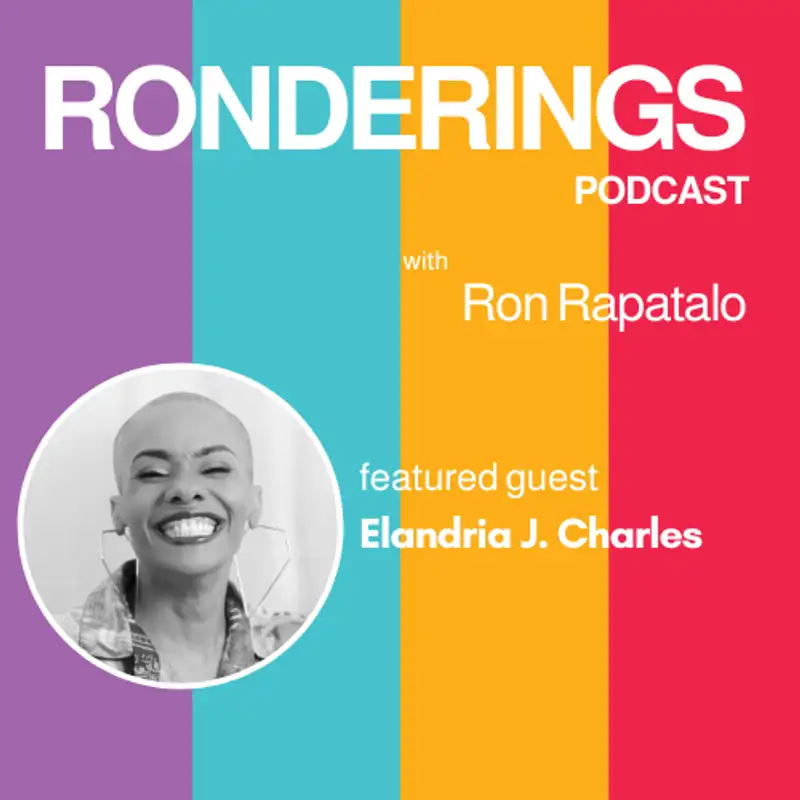
Ron Rapatalo:Let's get into it. Welcome back to another episode of Ronderings. I'm your host, Ron Rapatalo. Today's conversation is one I've been looking forward to for a long time. Joining me is Elandria Jackson Charles, coach leadership strategist, founder of Ayoka Partners, someone deeply committed to helping leaders reconnect with rest, clarity, and joy.
Ron Rapatalo:In this episode, we talk about everything from identity and ambition to burnout and sabbaticals. Elandria shares a journey from being a junior Olympic track champion, carrying intense pressure at a young age to building a practice centered around helping leaders slow down enough to actually hear themselves again. We also explore what it means to create cultures where rest isn't treated like a reward after exhaustion, but an essential infrastructure for sustainable leadership. This conversation felt grounding, honest, and deeply human. Let's get into it.
Ron Rapatalo:Ronderings universe. I have another esteemed amazing guest who, like me, used to live in New York City, but had to find more space. I went just a hop, skip, and then jump away to live in Jersey City, but my friend Elandria Jackson Charles moved to the ATL semi recently, but has got New York in her heart. So I wanna introduce Elandria Jackson Charles is on the Ronderings, Mike. Elandria, how are doing today?
Elandria Jackson Charles:I'm doing amazing. I'm so happy to be here, Ron. Excited about this conversation.
Ron Rapatalo:Yeah, same here. I think we were talking about because I always like to tell folks, look, I turned 50. My short term memory? Even long term, like remembering people, because I talk to so many people, you're like, Ron, I think we met when you were working at Blue Engine. I'm like, that sounds about right.
Ron Rapatalo:So that was a while ago, because you've been through a couple of iterations since then.
Elandria Jackson Charles:Just a few that I'll get into. Thank you. Yes.
Ron Rapatalo:So Elandria, let's, chop it up right now. What is your story?
Elandria Jackson Charles:I love this question so much because the way I tell my story has shifted as I continue to evolve. Beautiful. You know, I used to anchor my story in what I did. So my title, like who I was working for, and now my story begins in relationship to others. So I center who I am around being a wife, a mother, a daughter, a granddaughter, a chosen big sister, a friend.
Elandria Jackson Charles:Yes. And the reason why that's important to me is because I think there is an inherent value of looking back and looking forward when I orient myself to those who I love most.
Ron Rapatalo:Yes.
Elandria Jackson Charles:And so the next part of my story really is rooted in my parents, Bill and Elaine Jackson from Macon, Georgia. These two humans are so incredible. When I think about what they have done, like based on where they started, I really think that they embody what it means to dream big and to trust God. There is so much that they gave me that if I'm honest, it did not make sense on paper. The math was not mathing, but they sacrificed tremendously to give me opportunity that, I'm tremendously grateful for.
Elandria Jackson Charles:When I think about my story, it actually is very expected. I checked all the boxes. I did everything that I was supposed to do arguably in the right order. And then I completely lost myself. I don't know if it's the only child syndrome or other variables at play, but I suffer deeply from perfectionism and being an achiever.
Elandria Jackson Charles:Like, one of my strengths on StrengthsFinder is achiever, which is not a bad thing, but it needs to be achievable. Right?
Ron Rapatalo:Of course. Yep.
Elandria Jackson Charles:So I spent so much of my life proving and trying to earn, acceptance and being good enough that I reached burnout. It wasn't until I had my second child
Ron Rapatalo:Okay. That I
Elandria Jackson Charles:bet on myself. And I was like, you know what? I can't be the wife and mother that I want to be if I continue on this path. And so I started my own firm called Ayoka Partners. Ayoka is Yoruba for one who causes joy.
Elandria Jackson Charles:So that's what I do. I love that.
Ron Rapatalo:Thank you for sharing what Ayoka means. When I saw your email, I was curious what it meant. So thank you for sharing that joy because certainly I imagine you create a lot of joy for everyone that you're around Elandria.
Elandria Jackson Charles:That's what I strive for. It was my original middle name given to be given to me by my uncle Greg.
Ron Rapatalo:Really? Oh,
Elandria Jackson Charles:wow. Yep. Yep. And so in my business, joy is at the center, but I really do support leaders, especially Black women leaders to pause, to reclaim clarity, and then pursue life centered in their joy. And the way I do that is through sabbatical care.
Elandria Jackson Charles:A lot of times people hear sabbatical and they're like, oh, wait, time off extended? Yes. And I truly believe that there are sabbatical moments. I think there
Ron Rapatalo:Amen. Yeah.
Elandria Jackson Charles:Right? Right? Like, on on this Thursday, there are things that I can do to restore and be nourished. And so, so much of my work is around pausing, stepping away, getting clear, and then moving forward with intention.
Ron Rapatalo:Definitely want to dive into that more. And I wanna do a little bit of rewind to the path that got you to choose this. Yeah. Talk to me about what it was like growing up in a little bit more depth. You talked about your two amazing parents who sacrificed for you.
Ron Rapatalo:Right? Yeah. But talk to me about what it was like growing up in Macon, Georgia.
Elandria Jackson Charles:Yeah. So they my parents were born in make born and raised in Macon. Was born and raised in Atlanta. So about an hour Okay. And fifteen minutes Okay.
Elandria Jackson Charles:I grew up as an only child. And I felt like we had a village. So people think, they ask me sometimes, Was it terrible being an only child? And I'm like, No. My parents were very strategic and very intentional to make sure that there were other families, there were other children.
Elandria Jackson Charles:I felt completely held and seen well beyond my extended family. I mean, well beyond my core family. Okay. And so, yeah, we grew up. I grew up, like, in the suburbs.
Elandria Jackson Charles:I went to a private Christian school for most of my life.
Ron Rapatalo:Okay.
Elandria Jackson Charles:Went off to college. That was my first time being at a public institution, 30,000
Ron Rapatalo:students deep. Oh, that must have been a shift from suburbs, private Christian school to a big public uni oh my god.
Elandria Jackson Charles:It was huge. Yeah. But what else made it dynamic, I'll call it, is that for my entire life, I ran track. So I was actually a junior Olympic champion when I was 12 years old. Oh, see.
Elandria Jackson Charles:Yes. Yeah.
Ron Rapatalo:This is why I love not doing any background research and vote. Junior Olympic track and field. What did you run?
Elandria Jackson Charles:The 200 and the 400. Mhmm. Yeah. So I was, you know, I was a little speedy, a little speedy. But the reason I bring that up is because I had lost the joy in track.
Elandria Jackson Charles:So by the time I graduated from high school, I no longer enjoyed track. And while I had the opportunity to potentially run track in college, I decided not to. So not only was I now this little fish in this big pond, I also didn't have that crutch of my identity as I'm a track star. I had to completely find redefine, like, who I was, what I was good at, find different community than I ever had.
Ron Rapatalo:How did you lose the joy for track? Do you have you reflect, like, what that was? Was there a moment? What does what was the feeling you had?
Elandria Jackson Charles:Yeah. Good question. Expectations. Right? It wasn't just go out there, do your best.
Elandria Jackson Charles:It was, okay. You need need to be in the top three in order to advance. And so it was just like every single time, it felt like there was so much on the line. I talked about this recently on my Instagram account. Yeah.
Elandria Jackson Charles:I used to vomit before races because I was Oh, damn. Yeah. Like, literally so nervous and overwhelmed by the moment. And then, of course, when I once I got on the line, it was fine, but that should have been a It's sign like, okay. This is not something that is enjoyable and fun anymore.
Ron Rapatalo:Yeah, you're not the first or last high achieving performer. I I think about not only athletes, but folks who, like, have to entertain. The act of vomiting before a big thing is not uncommon.
Elandria Jackson Charles:Yeah. Yeah. And for me, you know, I'm not, you know, I'm not gonna put pass a judgment on that, but I do believe that now at this stage of my life, the nerves and the butterflies and all those things, I actually feel more grounded in, like, who I am authentically. Yeah. And so Yeah.
Elandria Jackson Charles:I'm ready because I'm coming from a place of calm and authenticity. Right? Yes. And not trying to strive and prove and be something that I'm not.
Ron Rapatalo:Do you still run?
Elandria Jackson Charles:I do. Yeah. I do. It's changed. It's changed, Ron.
Elandria Jackson Charles:So I was
Ron Rapatalo:It always does.
Elandria Jackson Charles:Yeah. I was a half marathoner. I did the New York City marathon. What? So running so running for me, again, was an anchor point.
Elandria Jackson Charles:Like, I I got injured at the end of 2025, and so I've been working my way back.
Ron Rapatalo:Oh, mass, what kind of injury you like, knee, hip? Back. Back.
Elandria Jackson Charles:Are you familiar with piriformis? The piriformis muscle?
Ron Rapatalo:I mean, I'm a power lifter. Of course, I'm I know what the piriformis is.
Elandria Jackson Charles:Right. Well, look. Fool me, sir, because the way I could not stand up for more than five minutes, the way I was in excruciating pain Oh, instantly gosh. Yeah. That's how my twenty twenty six started, with intense physical therapy twice a week.
Ron Rapatalo:Jesus.
Elandria Jackson Charles:That finally got me back, and so I just started running two weeks ago.
Ron Rapatalo:Oh god. It's funny, like, think I I was just so mentioning, and I think on my podcast, my Instagram is mostly of my power lifting videos. Right? And so I am dealing at the time this recording with like, it's definitely not left shoulder soreness, it is some kind of injury, and I was trying to figure out how to work through it, so I asked my coach, right, and so he was like, look, let's you should warm up doing some things to get the stuff around my shoulder because this the whole shoulder's not gonna heal itself overnight.
Elandria Jackson Charles:Right.
Ron Rapatalo:He was like, do some face pulls, do some, like, dead hangs, do some, like, chest supported rows because it's about getting the architecture around your shoulder to Like, feel warmed that's the one thing I've learned from like years and years of getting bodywork massage therapy is when you have an injury, that acute area is it is usually not the culprit. It's the surrounding system that needs to be understood about what's getting to that that also needs to be strengthened, whatever, right? And so that's what I've learned a lot about, like, my injuries. It's like, what's the so I have a massage on Saturday.
Elandria Jackson Charles:Okay.
Ron Rapatalo:I mean, I took it I mean, I didn't take it easy. I still did my heavy dead lifts, but I pulled off from, like, what I was supposed to do until the end where I was like, I'm gonna show off and doing four and five pound, one second pause sumo squat sumo deadlift. Yeah. It's double my weight. It's little crazy.
Ron Rapatalo:It doesn't
Elandria Jackson Charles:make me Wait. How long have you been doing the power lifting?
Ron Rapatalo:Over four years.
Elandria Jackson Charles:Wow. Wow. And are you in pain or is it just discomfort? Like, what's the what would you
Ron Rapatalo:Problem. I have a high pain threshold to
Elandria Jackson Charles:Network. Okay.
Ron Rapatalo:It's definitely enough pain. So if I do this, I can feel it.
Elandria Jackson Charles:Okay.
Ron Rapatalo:That's where I'm like, yeah, there's something That's not sore because it it there's a there's a grab. Through bodywork and like, I mean, you know, yoga, pilates, I do my facial stuff, I have massage. I mean, I've got all the tools and things because of the bodywork that I've done and people pouring into me. It's like, you seem to really enjoy recovery mobility work. I'm like, yeah, because it allows me to stay fresh and learn how to work through my because if you're gonna go intense on your body
Elandria Jackson Charles:Yes.
Ron Rapatalo:You're going to have something happen.
Elandria Jackson Charles:That's right. It's inevitable. Not get injured. Yep. Yeah.
Ron Rapatalo:Right? Because as your body changes things, you just
Elandria Jackson Charles:That's right.
Ron Rapatalo:It's kind of but it's also I posted about this very recently on my Instagram
Elandria Jackson Charles:Mhmm.
Ron Rapatalo:When I, you know, put my show off videos of me lifting heavy weight Mhmm. Is the lesson is have a game plan to work through your injury. That means you have to consult someone, that's why I asked you my boss, like, do you know, and, you know, I know the things to do, like, you know, stuff to, like, keep my rotator cuff warm up, band and stuff. It's all the things and, yeah, it it hurts. I'm gonna, you know, magnesium oil, ibuprofen, and all the things and, you know, it's
Elandria Jackson Charles:just You got a That's deep really impressive.
Ron Rapatalo:I mean, this is called being semi obsessive with it. Like, when it co like if we we could spend this entire podcast of me talking, and then it'd be like
Elandria Jackson Charles:Wait, what are we
Ron Rapatalo:I mean, we we could weave it in, it's like, I have found that level of commitment and discipline is ported to every other aspect of my life. That's Including leadership. Including my coaching.
Elandria Jackson Charles:So good. So good. Well, when you said the part around, you know, what you think the primary agent is, it's actually the surrounding area. Like, that made me think about, like, leadership and how we ourselves are moving in the world. Right?
Ron Rapatalo:Yes.
Elandria Jackson Charles:I think it's one thing, and there's actually a whole bunch of other factors that are at play. Yeah.
Ron Rapatalo:Yeah. I mean, I think I had the privilege previous Ronderings podcast guests and homie from Edlock, and I used to work with their new leaders. Mary Rice Booth, gotta shout her out. She's got a new book coming out. Look at me promoting people up.
Ron Rapatalo:My god. This is because my ADHD brain, celeb like Jeopardy! Brain remembers all kinds of details. It's a little it's a little quirky. But she, asked a whole bunch of us to film, audio and or video on our definition of contextual leadership.
Ron Rapatalo:So that's what it made me think of, of like, you have to understand your context and all these things because every leadership decision, I think, has to come with understanding your context in every given moment. Sometimes if you're really fluid at this stuff, for me it comes with this level of like deep intuition, understanding of space and people that I don't quite understand how I know it, but I just do at times. Right?
Elandria Jackson Charles:Yes.
Ron Rapatalo:And I can move pretty fluidly in understanding what to do and why, and what the conditions are to move things through. Especially on an individual level, but also like making understanding of space. Mhmm. You coach too, when you coach people, they have to understand a leader's like context, the right questions, but it then becomes a feel because it's not as if I'm viewing Right. Not the majority of my coaching clients, right?
Ron Rapatalo:It's a feel of understanding like what are they experiencing, what kind of picture and emotions am I feeling to be able to get a sense of
Elandria Jackson Charles:Yes.
Ron Rapatalo:How might you navigate this? What question do I need to ask you in order for you to like come with what's the best decision for what context you might have in the moment. Yeah. Which is hard.
Elandria Jackson Charles:Yes. Right? And I think that the desire for, like, genuine connection and genuine curiosity allows us as coaches to create that space and and Yeah. Contextualize. Right?
Elandria Jackson Charles:Like, you're really truly there, like fully present and tuned in to them.
Ron Rapatalo:So let me fast forward because you and I sound like not sound like we are. We have a genuine love and authenticity when it comes to coaching. I'm gonna ask a question that sounds like something from the movie Brown Sugar. When did you fall in love with coaching? I'm not gonna ask you when you fell in love in hip hop, I can!
Ron Rapatalo:And we all have that moment. I know the moment I fell in love with hip hop. I have a very distinct moment, but I might ask you that later. Might ask you, like, who your favorite Atlanta R and B and, like, you know, hip hop artist is, but then it's like, who's your top three? I'm like, uh-oh.
Ron Rapatalo:Everybody's top three different. Well, why did you fall in love with coaching?
Elandria Jackson Charles:Yes. So I'm gonna take it back to one of my first clients. The best way I can describe it is seeing a light come on.
Ron Rapatalo:Ah, okay.
Elandria Jackson Charles:Right? And not a light that was outwardly where she was focused on the things around her, but literally, like, a spotlight on herself and her realizing how much power and agency she had in her situation. And this was a leader who had stepped into a role before she was, quote, unquote, ready, you know, had a board that was breathing down her neck. And there was just, like, all these, all this supposed data that said you're not doing it right. And in our time together helping her see you're doing everything right because you are brilliant.
Elandria Jackson Charles:You're showing up as your most authentic self. Now let's just find the tools and the practices that you need to make your brilliance work in this context. And so it was just so beautiful. It was almost like watching her bloom.
Ron Rapatalo:Isn't that beautiful when your client comes to their own realization with structured support guidance? And I would say from, look, when folks, when you listen to this, you're not gonna be able to see, but Elandria is wearing this beautiful yellow. Like, your brightness. Plus it really accentuate your beautiful, like, brown skin. You know what I'm saying?
Ron Rapatalo:Like, that's a when I tell I used to men's personal style, so for me, like Oh, understanding, like, the mix of colors is
Elandria Jackson Charles:something. My stylist.
Ron Rapatalo:Yeah. It's like random fact when I tell people that, especially because you if you've seen my LinkedIn posts, right, when I'm posted with the ubiquitous purple velvet blazer that I wear, that's become my signature thing. And the reason I wear that when I and it started because I I'm a super proud Uber NYU alum, twenty nine years and counting. Also twenty nine years on the NYU Alumni Association Board of Directors. So I like to say that I'm a young elder on
Elandria Jackson Charles:the board. You know I got some NYU cred too. Right?
Ron Rapatalo:Remind me.
Elandria Jackson Charles:I went to Wagner.
Ron Rapatalo:Oh, work.
Elandria Jackson Charles:Grad school. Yes.
Ron Rapatalo:Can ride Hey, the purple now. Hey, now. And so I have found, like, when you wear something that, like, makes you feel royal Yeah. Incredible
Elandria Jackson Charles:Yes. Makes a bit
Ron Rapatalo:And it's something that sticks out, it's something, like, everyone knows. I was like, hey, you want to find me the Edlock convening I was at last week? Look for the purple velvet blazer. Me bring you on some things. Anybody else ever wears a purple velvet blazer, it's gonna be a problem.
Elandria Jackson Charles:It's gonna be a problem.
Ron Rapatalo:It's gonna be a problem. It's it's mine. It's It's mine. Mine. Mine.
Ron Rapatalo:And at NYU people like that, you can't rock it like me because I think, you know, if I think about someone, may he rest in peace, that dressed in a way he could wear whatever he want, you know what I'm about to say because it's purple. Prince, Prince could wear ever he wanted.
Elandria Jackson Charles:Yep.
Ron Rapatalo:Whatever he wanted. Yep. The only person still alive who I think kind of has that, like Jen Maxwell.
Elandria Jackson Charles:Old Maxwell or, like, current day Maxwell?
Ron Rapatalo:Oh. That's a good question because I don't know if, like, current day Max, because he's a I think a little bit in between, like, you know? Because I remember I seen a photo of him of, like, wearing a boa over it. It was just like, wait, not a week, though. It like It looked good on him because looked good.
Elandria Jackson Charles:Looked I'm gonna throw someone else in the mix. I think Lenny Kravitz. Still Thank you, that's the And they're like, you know what?
Ron Rapatalo:Plus, I get mad when I see Lenny working out and doing things. I get, like, I get, like
Elandria Jackson Charles:He says the bottom of way like, out. I gotta go I
Ron Rapatalo:gotta do do some push ups. It's like me when I see Idris Elba and the missus goes, oh, Idris. Like, stop and turn it up. No. So speaking of Atlanta R and B artist Oh, yes.
Ron Rapatalo:Usher. So the missus and I saw him perform Oh. In And because I believe very strongly that Usher is a male harpy. He is. He's a male harpy.
Ron Rapatalo:No. If I let my wife near, he was coming down, we were in the, you know, in the You're like, awfully missed. Yep. I pushed her to the side, I was there when he was walking around, this beautiful red Oh
Elandria Jackson Charles:my goodness.
Ron Rapatalo:I saw the white woman fall, was like, nope. My mom's like, yeah, stay over there. Nope. Nope. I'm secure, but not that secure.
Ron Rapatalo:Nope. He he's not gonna go pull you in and put you on no. Hell no.
Elandria Jackson Charles:Because there are married women who find themselves, like, on stage, like, kissing Usher. I'm like, what are you doing? Come back to your senses.
Ron Rapatalo:There are limits. There are limits. Yes. Janita, you can go shake Idris Elba's hand or you're not giving him a hug. I'm sorry.
Ron Rapatalo:No. No hug from him. I can I feel that man energy? I he got swag. I wanna hug him, but I'm not gonna like, no.
Elandria Jackson Charles:You're gonna hate him?
Ron Rapatalo:No. You're funny. Well, I love that moment of, like, how you fell in love with coaching. Right? Because it shows that how like, I think incredible coaches understand that it's about how we pour into our clients and there's a mindset and there's an energy because I find like, look, there's a lot of technical skill set.
Ron Rapatalo:I'm not hating on frameworks and things like that. There's a lot that you can learn about different approaches and things at the end of it all. Yes. I think you have to come, my strong opinion, from a place of love and energy when you're coaching. Yes.
Ron Rapatalo:Which has a very big mental and spiritual demand when you're coaching. I agree. Because you are bringing light into a situation.
Elandria Jackson Charles:I agree.
Ron Rapatalo:Even if your client hasn't seen their own light yet for that situation.
Elandria Jackson Charles:That's right.
Ron Rapatalo:And you get like, I can think of a myriad of situations. I've got two career coaching clients later today. I'm working for an organ you know, a CMO that needs some support. Yes. Coach I'm coaching a soon to be recent college grad through some so it's just Oh, wow.
Ron Rapatalo:There's, like, a swing.
Elandria Jackson Charles:Yeah. That really is a wide spectrum.
Ron Rapatalo:That's awesome. You know, and for me, like, is coaching is coaching because once you establish that relationship, you show belief in someone, you figure that commonality
Elandria Jackson Charles:Mhmm.
Ron Rapatalo:And then it's then carrying some of that stuff. It's hard. I'm sure you're as empathetic as I am. Right?
Elandria Jackson Charles:Right. It's not that after the session, you put everything down. Right? There is right? Some You're still caring because you care so deeply about that person.
Ron Rapatalo:Yeah. That's that's very true. What do you do, Elandria, when you feel that to, like, recenter yourself as a coach? What are some of your practices around because that weight is something I don't think we often talk about as coaches. Like, I've heard the the gamut of heavy stuff.
Elandria Jackson Charles:Yes. Yes. Yes.
Ron Rapatalo:-DAVID: Gamut. Mhmm. Like you.
Elandria Jackson Charles:Yeah. For me, it's very connected to my own rest hygiene. So in the same way that I need to put down something that I'm carrying in a personal relationship, if there's some something in a coaching relationship professionally that I need to shed, it's rest. It's through rest. So my daily practices definitely include I like to start my day with a daily inquiry
Ron Rapatalo:Okay.
Elandria Jackson Charles:Where I ask myself, what is the best fuel to support my dreams today?
Ron Rapatalo:Oh, what a what a beautiful question. How?
Elandria Jackson Charles:So I start there. And as you can imagine, the answers, it creates literally like a perspective, the way that I view that day. And it does center me, but allows me to show up for people and in spaces in a certain way. I pray, I meditate, and I make sure I move my body. So we were just talking about, right, like, being active.
Elandria Jackson Charles:As much as that's for physical reasons, I also think mentally and emotionally is huge. Yeah. I spend a lot of time in nature. So I live ten minutes from a state park.
Ron Rapatalo:Yeah. Is Ain't that a blessing?
Elandria Jackson Charles:Gift. I know.
Ron Rapatalo:Oh my god.
Elandria Jackson Charles:Sorry, Jersey.
Ron Rapatalo:Well, no. Here's the thing. Where I live in downtown wait. Not Journal Square? Yes.
Ron Rapatalo:I am we're about a mile and change from Liberty State Park.
Elandria Jackson Charles:Oh, good. You have The
Ron Rapatalo:missus and I have a have a weekly routine every Monday morning after we drop off the kids. We walk together. That's It's a way for us to reset. It's
Elandria Jackson Charles:Beautiful. Beautiful.
Ron Rapatalo:It is incredible. No.
Elandria Jackson Charles:Well, don't tell my husband because he's not invited to my time in the park.
Ron Rapatalo:I guess That's a laundry stop. No. Look, you gotta
Elandria Jackson Charles:Like, do drop I drop a pen so he knows where I am. Yeah. But for an hour and a half, I have a notebook. Beautiful. I walk, sit, things.
Elandria Jackson Charles:Wow. So that ends up being a nice way to release.
Ron Rapatalo:And it sounds like, I imagine, a lot of the practices you've used as a Black woman are strategies and tools that you've shared with the Black women that you've coached.
Elandria Jackson Charles:For sure. But I'm bring something up that you talked about before, Ron, is contextualizing. Yeah. So one of the things I wanna make sure I'm careful of is because this was my experience, because this is what has worked for me, the last thing I need to be trying to do is prescribe or assume that this will also fit for you. And so that's why I enter relationships with open, like, clean slate.
Elandria Jackson Charles:This is a white canvas. Let's co create what's gonna work for your context, the way you're wired, your responsibilities, the way your life is set up.
Ron Rapatalo:Yeah. I think when we it's so easy when, I think, as coaches, when you find something in common to someone, you wanna say, this worked for me, this is what you should do. Right? And I think I sometimes go back and forth in that, like making sure I'm not being prescriptive, I'm giving suggestions, then pulling back and saying, How does it feel? Right?
Ron Rapatalo:So give an example, you said that you meditate, right? I like to believe that everyone's gonna want to meditate and actually know people who don't like it for a varied myriad of different reasons. And I think what I've learned in my own sort of, like, mental journey Mhmm. But also I would say meditation for me is extremely spiritual, because for me it's very I started to get into places of, like, being in space and time that, like, brings me into, like, experiencing things in my own, like, emerging spiritual intuitive journey of me tapping into, like, people that have passed in my life Yes. The universe Yes.
Ron Rapatalo:Other people. Right? And so what I have said to folks is it's not about necessarily sitting down, it's just being able to create and I try to use the physical aspect of it Mhmm. Your breath to your movement. Sounds very yoga.
Ron Rapatalo:Right? So it's just like I sometimes practice, like, you know, we're we're gonna meditate right now. I said, close your eyes. They'll close their eyes. Mhmm.
Ron Rapatalo:I said, inhale through your nose on four. Mhmm. Exhale on four. Mhmm. Now open your eyes.
Ron Rapatalo:Yeah. We just meditated. What? Right. One
Elandria Jackson Charles:breath. Right.
Ron Rapatalo:Right. Let's drink it just it's about getting you to be able to experience yourself with no judgment.
Elandria Jackson Charles:Feel again.
Ron Rapatalo:That's the hard part, I think. You me, they don't to, like, emotional intelligence, it's a way to start building the practice of deeper self awareness.
Elandria Jackson Charles:Yeah. I agree.
Ron Rapatalo:You can't be an effective leader if you don't have self awareness.
Elandria Jackson Charles:Completely agree. Completely agree.
Ron Rapatalo:And for me, like meditation, but it's also like, it could be a physical practice. Find, I'm sure your running is extremely meditative for you. It is. My parallel of things is extremely meditative for me. I'm like, when I'm in flow and doing it, it's almost like the entire world shuts off when I'm doing that lift.
Ron Rapatalo:The world is and it's like I get into this thing, it's my kids imitate me because I had them come with me a couple because
Elandria Jackson Charles:they think
Ron Rapatalo:they're funny, but they're not funny. I don't know why think they're funny. But they're like imitating daddy because daddy is very demonstrative and like a cartoon
Elandria Jackson Charles:character Oh, like when it. He like works you have the sounds, the faces, like it's all like very animated. The whole thing.
Ron Rapatalo:I have a video of them imitating me when I brought them to the my my fitness studio of me deadlifting, because I get this thing where I'm like, I sort of shimmy in place, they're like, are you doing bachata, daddy? Like this? No. Stop. It's not funny.
Ron Rapatalo:Let's see, what do they think? And then I did this other thing where I looked down at my feet, got in position. I looked up like this. So they both think it was funny and then like shimmy and then pick up the weight and then see me come up and then they dropped the weight and they're like, I'm like, okay. It's kinda accurate, but that's besides the point.
Elandria Jackson Charles:But imagine what you're modeling for them. Yeah. Right? Like, the practice, the discipline, like, a goal, working towards with consistency. That's really nice.
Ron Rapatalo:Yeah. My daughter's getting into competitive swim more, so Yeah. It's She's like a dolphin in the water. Wow. That's awesome.
Ron Rapatalo:It's pretty incredible to watch. No matter where it goes, for me, it's just Yeah. Like think missus and I understand it's about the discipline what she gets. Like, yes, she would like a d one college scholarship out of it, so would we, so we don't have to pay for that tuition because tuition then plus it. Right?
Elandria Jackson Charles:Yeah.
Ron Rapatalo:You know? HU, Howard University, or NYU, those are her dream schools.
Elandria Jackson Charles:Like, come
Ron Rapatalo:on now, Evany.
Elandria Jackson Charles:Whether it's from NYU or not, that's
Ron Rapatalo:funny. Yeah. And HU has a pretty good swim team from what I saw recently. Was like
Elandria Jackson Charles:That's cool.
Ron Rapatalo:She'd be around her family and be more, because DC's not it just there would be a lot of synergies of like, if she got I'm not look, I love NYU like all day every day, but I'm not like my daughter must go. I'm like, she gonna go what's best for her. That's right. And she goes NYU, that'd be great too, because they can take it around solid justice. It'd be pretty incredible, right?
Ron Rapatalo:So Awesome. Well, tell me a little bit more about your coaching business and what you've been doing with it, and I'll come up with more questions with for you, Elandria.
Elandria Jackson Charles:Sure. Sure. Sure. Yeah. So everything that I do is anchored in sabbatical care.
Ron Rapatalo:Yes.
Elandria Jackson Charles:And sabbatical, when I say it, is the act of pausing, of slowing down, listening, coming home to yourself, and moving forward with clarity. So the two different ways that I support clients in doing that is through coaching, but also through longer term engagements. And so, you know, what I've found is that coaching can be a really good on ramp for not just leaders, but their institutions to see what it looks like to slow down the benefits of it, how it influences your creativity, your innovation, the way you show up, not just at work, but with your families and in community. And it helps people dream about what extended time off might look like. And so I think in the absence of you know, we're in, you know, a society that is rooted in capitalism.
Elandria Jackson Charles:Right. You know, so many things that it's very hard to imagine taking a leisurely three or four months off. And so I think coaching is a nice way to give, folks a taste of how beneficial it is when you center yourself, when you come home and the ripple effects that it creates for the rest of your life.
Ron Rapatalo:Yeah. So I have a question I've asked other Ronderings guests who do similar work on creating, like, care and rest for their coaching clients. Right? Yeah. Is and I'm not you're not saying this.
Ron Rapatalo:This is my, like, watch of and will focus on the social impact sector, which I think you and I know very well, is the idea of rest is something that I think is put upon the individual rather than as an organizational structure.
Elandria Jackson Charles:Mhmm.
Ron Rapatalo:In fact, the past Ronderings guest that I had, Josh Feldman, runs a nonprofit called The Rest of Our Lives.
Elandria Jackson Charles:Get it?
Ron Rapatalo:The Rest of Our Lives. Mhmm. Yeah. Josh is good people. I mean amazing amazing amazing like leader doing this work, right?
Ron Rapatalo:Mhmm. And a lot of what he talks about is rest is infrastructure. So I'm curious from your experience and wisdom. Mhmm. What can rest is infrastructure look like on an organizational level?
Ron Rapatalo:Because for me, there's only so much an individual can do because if you have a tidal wave coming at you
Elandria Jackson Charles:Yeah.
Ron Rapatalo:I mean, an umbrella ain't gonna help you. You better have like, how do you create like a freaking armor? I mean
Elandria Jackson Charles:Yeah.
Ron Rapatalo:That just requires so much of us.
Elandria Jackson Charles:Yes.
Ron Rapatalo:That for me, the onus has to be on the organization Mhmm. To make rest happen and then allow individuals to manifest it Mhmm. In ways that make me sense for them?
Elandria Jackson Charles:Yeah. Love that question. So I'm gonna answer it in two ways.
Ron Rapatalo:Okay.
Elandria Jackson Charles:The first is, I think that a sabbatical is actually as much as it appears that it is about that one leader stepping away, is actually an investment into organizational resilience. What I mean by that, right, if you have the top person stepping away for three or four months, guess what? You're gonna figure out who's on your leadership bench real quick. You get a sense of what success I should
Ron Rapatalo:hadn't thought about it. That makes a total. Yes. Yes. I'm I'm thinking through this through the world of sports.
Ron Rapatalo:This totally makes sense. And, yes. Right. Keep going.
Elandria Jackson Charles:Yeah. So when that when that person steps away, it lifts it lifts the veil, and you have to identify other leadership. It also reorients that leader when they come back. So the work that you were doing before you left has likely changed, and you now need to pitch to a different level, likely a more strategic level. Get out of the weeds.
Elandria Jackson Charles:The second way I wanna answer that is I really truly believe there's a role that entities like foundations can play to create the conditions and allow the resources for these visionary leaders to step away, be recharged, reconnect with themselves, and combat.
Ron Rapatalo:Again Yes.
Elandria Jackson Charles:Organizational resilience. You're investing in this leader that's built something remarkable. It shouldn't all fall down when this person leaves. You should invest in them being able to be recharged, to refuel, to invest in that vision, and then have a team that can carry it forward well beyond their time in that seat.
Ron Rapatalo:Yeah. I can't help but think through the sports analogy, right, of when a player that has played paid a salary gets injured, what happens to that player? They're rehabbed. Mhmm. The organization pours resources into them.
Ron Rapatalo:Right? Because getting them back on the court, whatever the court is, football, baseball, basketball, hockey, whatever Yeah. Is important for the team. Yeah. Right?
Ron Rapatalo:And I think when I watch and I don't this is a very oversimplified statement, but fuck it, I'm gonna say it, right? Is that we talk about in our social impact sector that we're playing a team sport, but in fact, we really structurally play an individual
Elandria Jackson Charles:sport. Individual.
Ron Rapatalo:We're playing tennis when it's like, look, I was gonna give them a like, I was gonna give to Serena because I was like, that's not the right example because the WTA is like, that's her money that she paying herself for like, you know, Fed or Nadal or, you know, Jokic. That's basketball. You know what I'm saying? So it's one of those things where I'm just like, are we willing to put, and to put philanthropy on the spot, our money where our mouth is. Right?
Ron Rapatalo:Because if we are not believing in leadership health and staff health Mhmm. Do we believe in organizational health?
Elandria Jackson Charles:Mhmm. Probably not. Yep.
Ron Rapatalo:Right? Or do we just believe, hey, we're gonna churn people through and it's just gonna be a cycle. Yep. I mean, I've heard of many things and this is for me to not disparage all the like CMOs out there, but over the years it was just like, yeah, we have a burnout, so people are gonna leave every three years.
Elandria Jackson Charles:Revolving door, like an expectation.
Ron Rapatalo:Doesn't But why have do we be the solve
Elandria Jackson Charles:same. For that?
Ron Rapatalo:And I think that some of them have evolved and changed, I think it's one of those things where it's just like, you know, I think we often accept working in mission based work the way that we do Mhmm. That you're going to get burnt out, and you just have to figure it out on your own, and hopefully you get a resource of an amazing coach like Elandria, Ron, or the founda you have a great board chair or like you have a foundation that's. That's not the reality. And so we ask folks to like do
Elandria Jackson Charles:the most with the
Ron Rapatalo:the most. And it just it's so counterintuitive to me. It's just like it doesn't for me, it's it's it's you know, I have a lot of issues with it. Right? And people saying, like, well, I'm just gonna pour into myself.
Ron Rapatalo:And I'm I'm like
Elandria Jackson Charles:Yeah. It's not all
Ron Rapatalo:We have to put pressures on organizations and the folks who can resource this to change the system.
Elandria Jackson Charles:Completely agree. I really, really appreciate the sports analogy, Ron. I really do. And I'll tell you what it makes me think is how do we perceive injury? Because what's really easy, right, about a professional is like
Ron Rapatalo:Oh my god.
Elandria Jackson Charles:Come up with a limp. But when we're talking about a leader who's walking around here, still on the surface showing up, present Yeah. Answering the emails,
Ron Rapatalo:da da da,
Elandria Jackson Charles:but literally broken, like a shell of themselves in the evenings when they go home. And so that's where it's like, okay. Care enough to understand the ways that people are injured beyond what you can see beyond what you can see, where there is need for repair.
Ron Rapatalo:Yeah. That's thank you for, like, elevating that. Right? Because I think we have so much in our Western society, I would say globally. I don't know anybody who really deals with mental health well as a society per se.
Ron Rapatalo:Right? And so you don't see those things, right? Because so many of us, especially us as leaders of color, put on the mask because we're And expected if you think about how Black female leaders are expected to be a billion times better than everyone
Elandria Jackson Charles:else, Robin has to
Ron Rapatalo:save organizations and then do 20 things and be able to run marathon and be able to all these, it's like, these are some impossible, like, expectations and therefore then your pain threshold must be off the chain and therefore it just, it adds to all of these like societal and systemic like norms that then lead to all kinds of unfortunate health outcomes, particularly for black women, right? And we don't like to talk about how much the workplace like exacerbates those things in our society for sure.
Elandria Jackson Charles:That's fine. That's fine.
Ron Rapatalo:Yeah. So Elandria, my last question for you before I ask you the Ronder question is, where does Elandria find her joy today?
Elandria Jackson Charles:So I talked about being in nature.
Ron Rapatalo:Yes, you did.
Elandria Jackson Charles:The one thing that I wanna underscore about where I find my joy is how micro it is. Yeah. So for me is little moments and noticings. And so I'm gonna tell you one that happened very recently. I got in the shower, and I saw a little yellow smiley face sticker in the drain.
Ron Rapatalo:And
Elandria Jackson Charles:it literally lit me up because between my husband and I, like my daughter is always putting stickers on us. And I'm like, somehow
Ron Rapatalo:Do we have the same daughter? We're the think it's all
Elandria Jackson Charles:a big thing. Right?
Ron Rapatalo:Yes. Yes. And
Elandria Jackson Charles:so that the moment of just that was something that brought her joy that she passed on to us. And then to have it show up in such an unlikely place. And then I just enjoy. We do family bike rides. Like, that is actually a ritual That's dope.
Elandria Jackson Charles:That I found deeply nourishing.
Ron Rapatalo:Yeah. I have this phrase, and so my missus Shanita will know this as well as my daughters. Right? I will get these micro moments. We could be most recent one that comes to mind, we're eating at one of our favorite Jersey City downtown Jersey City spots, Left Bank Burger Bar, which has amazing burgers, but I would say even has better rice bowls.
Ron Rapatalo:Have a dope rib eye, like, rice bowl with avocado and all the things. Good. I'm like, you're
Elandria Jackson Charles:your protein for the perilous. Oh.
Ron Rapatalo:That thing gets why I'm like, with as hungry as I am right now, that would be gone in three minutes, and I'd be hungry again in three hours like I didn't eat, because I just consumed calories and a half. But I get these moments where I literally, in the micro moment, I was feeling like good. It was like after church with my family and I was just like I had that look on my face and my wife's like, I know what you're about to say, Ron. We live a blessed life.
Elandria Jackson Charles:I love that you have like a language and a phrase, like you name it. Because I get to this moment of, like, of just gratitude. Because we do like out of joy.
Ron Rapatalo:Hard as life is and all the things, we live a blessed life because we have a third baby on
Elandria Jackson Charles:the way.
Ron Rapatalo:We live a blessed life because we are homeowners. We have a blessed life because the love my wife and I have for you. We have a blessed life because the love we have for our daughters. We live a blessed life because we have jobs that we love where we can have impact. We have a blessed life because of the way we grew up and all the adults that support us to get us where we are.
Ron Rapatalo:We live a blessed life because we get to watch all kinds of like fun TV together in Kiki, whether it's Game of Thrones, House of the Dragon, Mad Men, ninety Day Fiance. I mean, we've a the crown. So this will give you a flavor. The the missus and I watch a lot. The only thing we don't watch too much of because she does not is like watching sports on TV.
Ron Rapatalo:Okay. That makes her eyes peel over.
Elandria Jackson Charles:Okay.
Ron Rapatalo:Everything else
Elandria Jackson Charles:Fair game.
Ron Rapatalo:I mean, it is there's very few things that like, there might be some she she likes better than I do. Like, she likes watching British royalty drama, which I was like I like The Crown, but, like, all the other stuff was,
Elandria Jackson Charles:You can't do without them.
Ron Rapatalo:Mountain Abihamling. And so because I'm obnoxious, especially when Masterpiece Theater comes on Yeah. Here's me this is me finding my joy and bothering my wife. I just start going She's like, are you watching? Beep beep beep.
Ron Rapatalo:Shut up.
Elandria Jackson Charles:Wait. Shut
Ron Rapatalo:up. I'm like, what?
Elandria Jackson Charles:Ruining my moment.
Ron Rapatalo:That's her thing.
Elandria Jackson Charles:Yeah.
Ron Rapatalo:My thing is watching like, you know, all the documentaries and things that I was like, you wanna watch? She's like, what's that? Like, why am I watching? What? Oh, okay.
Elandria Jackson Charles:I mean, sometimes, you know, high marriage, you just take one for the team. It's like we're doing it together. That's what you have it. Right?
Ron Rapatalo:Yeah. Well, we're at that time, Elandria. I have to ask you, what is your Ronderings? What's the lesson of value you wanna share with the audience?
Elandria Jackson Charles:Sure. It's very connected to what we've been talking about. I'll say very simply.
Ron Rapatalo:Yeah.
Elandria Jackson Charles:Pausing unlocks possibility. Point blank period.
Ron Rapatalo:Oh. Pausing pausing unlocks possibility. I love it.
Elandria Jackson Charles:And so we've talked about how, like, we live in a culture that's go, go, go, go, prove, check the boxes, do. And it feels counterintuitive to slow down, but slowing down actually accelerates you because you get it gives you a time to check-in with yourself, to understand what you truly want, what you truly desire, and get after it.
Ron Rapatalo:Yeah. If I give the physical analogy of that from what you do, Elandria, from loving running, from your junior Olympic running 200, 400 to now running more long distance
Elandria Jackson Charles:Yeah.
Ron Rapatalo:You can't run all the time, you pause. Right? And especially when you were a sprinter, sprinters pause. Yes, it takes time to run that fast, but there's a lot of the in between. You only see the flash.
Elandria Jackson Charles:That's right.
Ron Rapatalo:See. When run that kind of like speed
Elandria Jackson Charles:Mhmm.
Ron Rapatalo:Where the pause or what you do with the pause in between the sprints is as important as the sprints. That's how I think about powerlifting. My rest period has to really be well thought about. Right? And sometimes I might be thinking about other things, I might let my mind go, but I'm like, I might be doing like my, today with my rotator cuff banded work, right?
Ron Rapatalo:I'm looking at my timer because I'm trying to be strict because if I don't think about time, time gets away and sometimes resting too much is not good for what you're trying to do. It's this very kind of careful balance of understanding how much many of us live the pause in other parts of our life. How do we then bring that into the way that we work because no one Mhmm. Mhmm. Like this all the time.
Ron Rapatalo:Look at this. Look at my head. Mhmm. Can I possibly like
Elandria Jackson Charles:you feel like you're swimming upstream, like you're pushing a rock a boulder up a hill because it is counter it's counter to the way everyone else is showing up? So it requires a level of courage and bravery and betting on yourself. Until, like we talked about, the institutions and the right? Like, we need the spaces to catch up to what individuals need to do. But until that
Ron Rapatalo:Yeah. Hope is you and I, many other amazing coaches, we probably, like, spit off, like, a couple 100 coaches easily who do amazing work like you and I. Right? Yes. That us pouring into coaches like this and having leaders inside of organizations understanding the power
Elandria Jackson Charles:of laws tied.
Ron Rapatalo:Mhmm. Start creating and pushing for the conditions and policies for, in Josh's words, rust is infrastructure inside of our social impact organizations.
Elandria Jackson Charles:I love that.
Ron Rapatalo:Yeah. So how do people find you? What would you like to promote?
Elandria Jackson Charles:Two things. So LinkedIn, Elandria Jackson Charles. At the top of my profile, there's a link to my newsletter. It's called sabbatical moment. Whoo.
Elandria Jackson Charles:And then in the second place is my Instagram. It's rest clarity joy. No dashes, no spaces.
Ron Rapatalo:Rest clarity joy. What a that's a dope Instagram handle.
Elandria Jackson Charles:Thank you.
Ron Rapatalo:Make sure I'm following if I'm not already.
Elandria Jackson Charles:Please.
Ron Rapatalo:Because I think of the amount of it, I, I, ADHD. Like this, I'm like, my father's like, don't know if I'm following myself these days, have no idea. I'm like, oh, we'll find out. Well Elandria, thank you so much for being a Ronderings podcast guest, and I'm gonna give, because you're from the A, my shout out to the A that I used to end every Ronderings podcast in the words of one of my favorite sports heroes, Neon Dion Sanders.
Elandria Jackson Charles:Oh, yes.
Ron Rapatalo:We always come hot with amazing guests like Elandria Jackson Charles. Peace, y'all.
Elandria Jackson Charles:Thank you, Ron.
Ron Rapatalo:You're welcome. Thank you, Elandria, for sharing your rest, clarity, and joy with us. One of the biggest takeaways from my time with Elandria was this simple but powerful idea. Rest unlocks possibility. Not rest is escape, not rest is laziness, but rest is reconnection, just clarity, leadership infrastructure.
Ron Rapatalo:I appreciate how Elandria challenged the idea that burnout is just the cost of doing meaningful work, especially in social impact spaces where so many leaders quietly carry invisible injuries while showing up for everyone else. There were so many moments in this episode that made me pause and reflect in my own rhythms, family, what it means to build a sustainable life, meaningful work. Gratitude to Elandria Jackson Charles for sharing her wisdom, vulnerability, and joy with us. Make sure you follow our work. Share this episode when someone needs it.
Ron Rapatalo:And as always, keep Ronderings. Peace. Thank you for listening to today's Ronderings. I enjoyed hanging out with me and my guests, and I hope you leave with something worth chewing on. If it made you smile, think, or even roll your eyes in a good way, pass it along to someone else.
Ron Rapatalo:I'm Ron Rapatalo, until next time, keep Ronderings, keep laughing, and keep becoming. Podcaststhatmatter.org.

Listen to Ronderings using one of many popular podcasting apps or directories.