 Episode 82
· 01:03:28
What's up? I'm Ron Rapatalo, and this is the Ronderings podcast. Around here, I sit down with guests for real, unpolished conversations
Ron Rapatalo:about the lessons and values that shaped them.
Ron Rapatalo:And I'll be right there with you, sharing my own take, laughing at myself when I need to,
Ron Rapatalo:and wondering out loud about this messy thing called life.
Ron Rapatalo:Glad you pulled up a chair. Let's get into it.
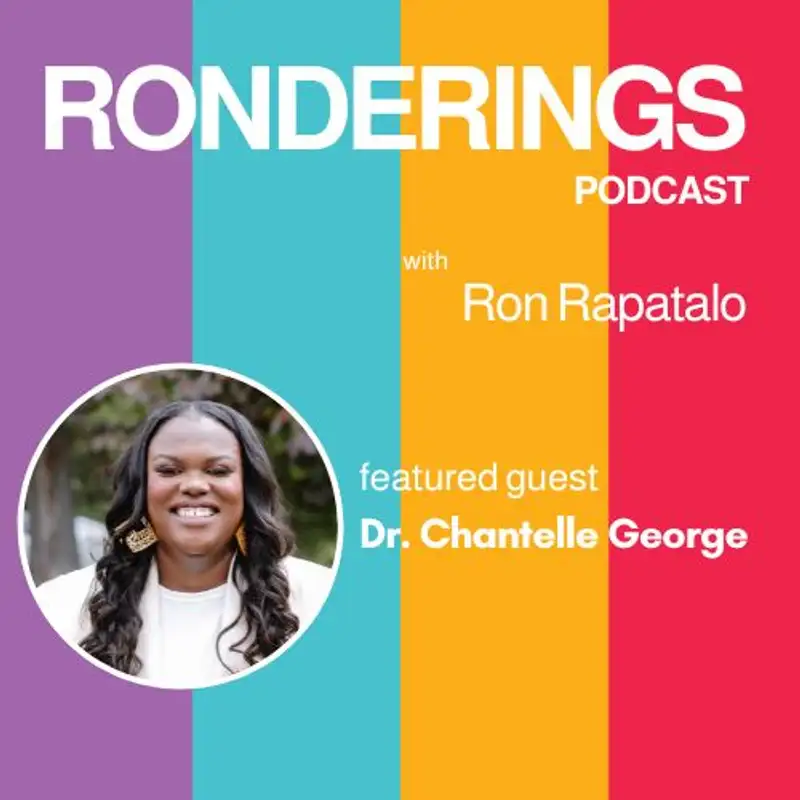
Ron Rapatalo:Today on The Ronderings, I get to sit down with someone whose story is equal, parts discipline, culture, and deep purpose, doctor Chantelle George. Born and raised in Lafayette, Louisiana, Chantelle comes from a lineage of educators. Her grandmother taught for over thirty years and shaped the women who shaped her. She grew up speaking French in an immersion program, trained in dance for fourteen years, and early understanding of rigor, sisterhood, and showing up fully. She's also a daughter of an air force veteran who flew B-52s around the world and a mother who spent more than two decades preparing future nurses at Dillard University.
Ron Rapatalo:Now as both a nationally recognized consultant and a caregiver navigating the VA system for her father, Chantelle brings a multidimensional lens on what it means to lead with heart. Professionally, Chantelle is the CEO and founder of CG Consulting, where she builds the connective tissue between K-12, higher ed, workforce, and community organizations, Systems that rarely talk to each other, but absolutely must if we want real pathways to mobility for first generation, low income, undocumented students, and students of color. Her commitment is simple but transformative. Institutions have to become student ready, not just expect students to be college ready. This conversation is about identity, purpose, resilience.
Ron Rapatalo:The question Chantelle is bravely asking herself right now, who am I without the titles, the accolades, and the achievements? So let's get into it. Hey, friends. Before we get started, I wanna share something that's been a big part of my own journey. Two years ago, I published my book Leverage.
Ron Rapatalo:That experience cracked something open for me. I saw how publishing isn't just about pages, about owning your story, sharpening your voice, and amplifying your impact. The part that meant the most, readers reached out to me to say they felt seen. That's when I knew this work mattered. I loved it so much I cofounded Leverage Publishing Group with friends who would make know this world inside and out.
Ron Rapatalo:Now we help leaders, entrepreneurs, and change makers turn their ideas into books and podcasts that actually move people. Got a star in you, and I know you do. Let's chat. Find me on LinkedIn or at leveragepublishinggroup.com. Because the world doesn't just need more books.
Ron Rapatalo:It needs your book. Alright. Let's get to today's episode. Peace. Ronderings universe, I have my dear friend, dear friend, the amazing doctor Chantelle George is on the mic, and I wanna shout out previous Ronderings guest, Donnell Butler, for recommending that I bring Chantelle on the podcast.
Ron Rapatalo:So how are you doing?
Chantelle George:I'm doing well. How are you?
Ron Rapatalo:I'm hanging in there. You know? As of the time of this recording, I just did a competition at my gym, so I needed to settle down a little bit and get some food in my belly. But I'm I'm good. I'm excited to be on the podcast with you and learn about you a little bit more.
Ron Rapatalo:So you and I know each other through Education Leaders of Color Circle. So shout out to our fam at Edlock for me also getting to know you through that. So Yes. Well, Chantelle, let's get right into it.
Chantelle George:Let's do it, Ron. Let's do it.
Ron Rapatalo:What is your story?
Chantelle George:What is my story? That is such a that that is a great question and and and a lot to unpack of my story. I would say, you know, my story begins in Lafayette, Louisiana, 12/09/1987. So my birthday is actually coming up in a couple weeks, but my story begins there And with an amazing grandmother, mother, and father who were very supportive of this, the the child, the number two. So I have an older brother, so I'm I'm the second.
Chantelle George:It's just two of us. But story starts there. I grew up as a third generation college student. I always start to start with that because my grandmother really was the center of, like, who I am. Right?
Chantelle George:She she grew up in Grand Patil, Louisiana. So for those who are familiar with the small towns in Louisiana, that's where she grew up and raised three daughters, the oldest being my mom. And that is that is the roots of of doctor Chantelle George. That is the beginning of my story is really growing up there, growing up in a small town, all things Louisiana. So that's good food, that's football, that is accents that kind of come out if I'm on the phone with my family, it'll come out real clear.
Chantelle George:That's France, France, France, So we grew up speaking French on both sides of the family.
Ron Rapatalo:Word. Okay. Word, word. I wish
Chantelle George:used to be fluent. So some things that people don't know about me is my mom put me in French immersion in kindergarten. So k through sixth grade, I studied all my subjects on. So I had science and math and all the things, French textbooks. I used to be in stores with my mom and just, like, having full conversations in French.
Chantelle George:And so actually, one of my, like, disappointments as almost, you know, in my late thirties now is I I can when I hear it, I can pick it up, but I'm I'm not as fluent, if you will, as I was when I was younger. But, she made a decision to put me in French immersion. That was the language at the time still is right in Louisiana. That was the language at the time. Now it's more Spanish immersion, and there's such a ton of things that kids can be a part of.
Chantelle George:But yeah, French immersion. So kindergarten through sixth grade, I was full blown francais. And when I got to high school and college, I tested out, like tested out a French, passed all the credits and all of the things. But it's something that I'm like really trying as I have traveled internationally a lot now as an older woman. I am big on languages, and I'm like, man, I gotta get back in my French.
Chantelle George:I wanna learn Español. So anyhoo, mom put me in kindergarten through sixth grade French immersion. She was a registered nurse for over twenty five years, went to Dillard University. My grandmother went to Southern, so shout out to HBCUs. Always have product of HBCUs.
Ron Rapatalo:Okay.
Chantelle George:And my dad my dad was in the air force, and so he's a veteran. And so growing up with veteran and a nurse was Did you have
Ron Rapatalo:to travel around a lot or did you all say that you did not catch you?
Chantelle George:My parents had me, they were older. So my dad was already working at PHI petroleum helicopters, if you're familiar with that. He flew and worked on B-52 jets. So I grew up learning and understanding his very smart engineer mindset, but retired pretty much. And I was kind of like in middle school, so we didn't have to travel too much, but he lived in Okinawa, Guam, Thailand.
Chantelle George:He has a ton of stories that he continues to share with me. It's like I've learned so much more about my dad the older I've gotten. So I grew up with that environment, you know, very hardworking people who were very adamant about education. Education was really the center of our world. My brother and I, obviously a grandmother who taught for thirty years, she retired twice, went back to the to the classroom.
Chantelle George:Wow. So I always knew I was gonna pursue college. It was just a matter of where am I going and how am I going to pay for it? Was really the questions that I had, you know, senior year trying to figure out all of the things, but that's the upbringing. That's the background of where I've come from.
Chantelle George:And I really, you know, I love being from the South. I love Louisiana. As someone now who relocated back home right at the height of COVID, it's been interesting to be back home the past five years as an adult in the same area, you know, seeing the same things, the good, bad, and the ugly when it comes to our state and really kind of understanding it now from a business perspective, right, or like an education perspective rather than growing up. But it is home. We're looking forward to Thanksgiving and Christmas, obviously, that are coming up.
Chantelle George:It feels great to be close to family. And what I have learned a lot along the way is home will always be home. So no matter where I decide to move around, because there's still a lot of places I wanna be able to go to and live, I can always come back home. So Yeah. So that's a little bit a little bit of a a burden.
Ron Rapatalo:Did you have the opportunity to visit your father when he was stationed in all these wonderful places? Like,
Chantelle George:This was before I was even born.
Ron Rapatalo:It was. Yes. This is
Chantelle George:this is late seventies.
Ron Rapatalo:This is
Chantelle George:early late seventies. And so I came my brother came in '83. I came in '87, and he was already back home, you know, stationed here, eventually retired. And so we he's he's getting up there in age. His health is not the best.
Chantelle George:And it was me and my brother have talked about this stuff like, man, we we might have missed that window to go to Thailand with him because he had kinda mentioned this to us probably right before COVID.
Ron Rapatalo:Yeah. For us to
Chantelle George:go, like, as a family and, you know, kind of follow in his footsteps types of things. But you never know. He has a passport. He got his passport. He has a passport, so you never know.
Chantelle George:He's he just turned 78.
Ron Rapatalo:Beautiful, okay.
Chantelle George:Yeah, just turned 78. So blessed that he's still with us. Like I said, his health has been really not the best at all, really honestly. I wear a caregiver hat that many people don't know. I am caregiver power of attorney, all of that jazz for him.
Chantelle George:So we've been back and forth between VA hospitals and tried to get him on a liver transplant and all of the things.
Ron Rapatalo:No many folks I've talked to. My wife is the caregiver to her mom. The caregiver to her dad before he passed. Absolutely. It happened in my family too with my mom.
Ron Rapatalo:My second oldest brother was the caregiver for twenty years. And so Yep. You know, we suck as a country when it comes to, like, supporting our elderly as well as supporting our caregivers. I mean, suck is my nice way. I I have lots of expletives on because I've seen it personally where I'm just like
Chantelle George:It's a lot.
Ron Rapatalo:The amount of energy and onus that's put in, like, then are the decrepit health care system unless you can pay for it.
Chantelle George:Mhmm.
Ron Rapatalo:It's just a lot. And then taking care of our veterans. I mean, that's enough that's another thing. Going to you probably
Chantelle George:have to enough time.
Ron Rapatalo:No. We do not. I've I've heard I've heard enough stories.
Chantelle George:We don't have enough time. Yeah. As I go back, I continue to go back and forth with the VA on certain things. Mainly, it's like the biggest frustration is
Ron Rapatalo:Yeah.
Chantelle George:Just tell us what he has access to. Right? It's like you have to find out from, like, other veteran families of like, he actually can get a free wheelchair or free this or, you know, just the things that it's like, why isn't like shared publicly of like sharing the things that exist for veterans, right? It's always like finding it around other people or or meeting the right magical person in the VA office. We all know how that goes.
Chantelle George:It's like the one person you meet and you're like, oh my god, I need to sit with you for an hour. They they give you all of the things.
Ron Rapatalo:Yeah.
Chantelle George:But but equally blessed that he does have this as we think about a world where, you know, Medicare, Medicaid, a lot of those things are up in the air.
Ron Rapatalo:Yeah.
Chantelle George:Fingers crossed and blessed that, you know, hopefully, we don't have any any issues based on he does have VA medical support and all of those things. But it's it's not easy caregiving. You know, I I share this a lot. It's it's the hardest hat that I wear has been the hardest hat I've worn since 2017. Trying to juggle taking care of a parent, making sure, you know, they have what they need.
Chantelle George:And even if you are like living with your parent and doing all the things and like quitting your job, I have colleagues who have done that versus someone like myself who is working, who does have support of a family, it's still equally demanding and hard and and really one of the hardest things and the hardest hats that I wear.
Ron Rapatalo:It it makes me wonder. Right? Because we share being Edlock members. Right? I I just know, anecdotally, there are a number of us.
Chantelle George:Mhmm.
Ron Rapatalo:Who know someone in Edlock, if not ourselves Yeah. Have our caregivers. Right? And so in my mind, I'm like, that could I I wonder that's Yes. Planting it as an It's my my wondering.
Ron Rapatalo:It's not a Rondering, to be clear. Right? But can there be a resource or some kind of, like, webinar for membership to, like, talk about that? Right? Yeah.
Ron Rapatalo:In terms of, like, resource because I think so many of us, you figure it out on the fly. You do. So much of this is figured out on the fly, and it is literally state by state at some level. I get that too. Right?
Ron Rapatalo:So there's but I imagine there's probably there are people that are just expert in this, I imagine. Right? They can, like, help us. But something I wanted to get into that we talked about in our green room conversation is that you were a pointe dancer for fourteen years.
Chantelle George:Fourteen years. Yes.
Ron Rapatalo:Talk to me about that. How did you get into that? Like, how did you get into that? What was it like, etcetera?
Chantelle George:For sure. For sure. So again, amazing mom who just created opportunities for me. At three years old, she signed me up for dance. And I was like, the rule was they have to be potty trained to start dance.
Chantelle George:Shout out to Grace Hamilton, Hamilton Academy of the Arts in Lafayette. Grace Hamilton still has her studio. I still get to connect with her. Thirty plus years of creating black ballerinas in Louisiana. So we started at, yeah, she's amazing.
Chantelle George:Started at three years old. So three years old all the way till senior year of high school, I was in dance. And so I was in basketball, softball, but dance was the thing that I was consistent in for that long. And so that's ballet, that's pointe, that's tap, that's modern, that's African, that's jazz. It's all of the things.
Chantelle George:And it really became like, it was an outlet for me, something that I really enjoyed. It kept me in physical shape. So that was something I was always looking into of, like, how do I stay physically fit? And it it created the first world of, like, sisterhood and,
Ron Rapatalo:like Ah, yes.
Chantelle George:Working and being around other girls and meeting them from different schools because we don't we all didn't go to the same school. But we kind of all grew up together, and we all still keep in touch. Mean, we have an alumni association. We go back
Ron Rapatalo:We do.
Chantelle George:Like yeah. We go back and judge recitals. Like, we do all of the things. Oh, wow. Dance has has really been continues to be such a big avenue for so many girls, you know, across the country.
Chantelle George:And it was I enjoyed and loved it all the way till senior year. And then when I got to college and even early twenties, I still found opportunities with adult ballet classes just, I'm like, it's never too old to put the leotard back on. But yeah, so fourteen years of dance and it taught me so much about just discipline and work ethic and we will travel, Ron. Like, we that was another opportunity for me too. Like, first flight was going to a dance competition.
Chantelle George:You know? First traveling away from family was with Yeah. Other dancers, you know, and being able to see the art of dance and that for people who wanted to pursue dance professionally, like, that existed. That was something I didn't really know until I got older into the company. But but, yeah, I had a great great time.
Chantelle George:Still love it. Still connect with so many dancers that I got the opportunity to dance with. And my niece is in dance now, so I go to her dance recitals and and, like, relive my whole life in the audience. So it's a good time.
Ron Rapatalo:Yeah. There's something you mentioned, you know, in doing pointe dancing and all the other kinds of, like, dance that you did, the discipline, the hard work ethic, right, which I imagine translates to, like, how you lead and how you've been able to build your business. Right? Because I think when we don't provide those opportunities for our kids to have that, because I would argue strongly, it is not just discipline in academics because that frankly may not be where we as kids find our necessarily passion to find the discipline. Right?
Ron Rapatalo:I'm not saying that you find passion by being disciplined. Sometimes it happens the other way around. Like, you have to find the passion by being disciplined. Right? Because you realize, oh, because I think when you get better at something, you can you can develop passion too, to be clear.
Ron Rapatalo:And not everything that you are good at is necessarily a thing you become passionate about off the bat.
Chantelle George:Right? Exactly. Exactly. Yes. Yes.
Chantelle George:I we are a competitive family. If my brother was the
Ron Rapatalo:other screen This is why you and I get along well. Military family, mom's a registered nurse. I mean, my mom was a nurse's aide. My two of my siblings are LPNs. I mean, it's like, damn, it's like, wait, are you Filipino too?
Chantelle George:Wait a second. Right. We are competitive. Like I was laughing and saying that my brother was at the third square on here. He would be like, yep, we don't play about competition.
Chantelle George:If you follow the Enneagram, I am the number three, the achiever. Like I have tried not to shy around around like, yeah, I strive for achievement. That is who I am. I've gotten better because I can see how like the extremes of those could be. But for something like dance, even basketball, even softball, like all star, like I am gonna strive and be the best.
Chantelle George:And if I enjoy it is even worse because I'm gonna like push myself to the limit to try to be the best that I can be. I am horrible with failing. I think I still am of like, oh my goodness, the like failing rejection is still like the, oh my God, I did get it right. Like, I still have that in me as like the five year old, but I've always been that way. And it's it's funny because, even like going, like being in therapy for years now, even like having those conversations-
Ron Rapatalo:Shout out to those of us doing therapy. Shout out
Chantelle George:to therapy. Like all types of therapy from the BetterHelp app, which I love to like just sitting on the couch with someone, like all of the things, but we like unpack like my always like wanting to like figure out the next thing, what's next, what's next, the achieve, achiever of Chantelle. And a lot of it came at as a young age. I've always been this way. Like I've always remembered being like, I want to be the best.
Chantelle George:I'm going to work really hard. I'm going to be kind to people, but I am aggressive. I am a competitor. And also realizing how like, sometimes that is not the best, like, not the best person to be, but sometimes that's that's not accepted in every environment. You know, sometimes that rub rubs, you know, rubs people the wrong way, and that is not their style.
Chantelle George:So I've learned how to, like, kinda mesh depending on who I'm working with and all of this. But I I'm a I'm a natural competitor, and I really don't think that's that's gonna change, you know, honestly.
Ron Rapatalo:Yeah. When you spoke of Enneagram, I think when I did it, like, a couple of years ago, I think it was a two x three.
Chantelle George:Mhmm.
Ron Rapatalo:Right? Mhmm. You know? So like you, like, sounds like you're very empathetic, very social, but, like, I am, boy Yeah. High like, I'm not what I like to call, like, Kobe, Serena, Michael Jordan competitive, but I'm not bar.
Ron Rapatalo:Yeah. When when that button hits, it's what I like to call to folks who I imagine, Chantelle, if folks don't see you in that element, they'll like, oh, Chantelle is so nice, and she's, like, super social, and she likes to talk to people. When you see us in our competitive element, I like to call it, like, I get my Brooklyn persona, my Draymond Green Mhmm. My motherfucker energy on. Right?
Ron Rapatalo:It's a real, like, you know, this is I mean, once again, people aren't gonna see this, right, unless I share the audio clip in, but but, like, I'm gonna show you. I look like this.
Chantelle George:Yeah. But game face on.
Ron Rapatalo:Well, I'm not here. You you know, it's like even the competition I mentioned to you, did this morning. Right? It's like, I don't like half assing things. Like, I didn't super Yep.
Ron Rapatalo:Prepare for it because I did a power lifting meet, like, two weeks before that that I've been prepping for for eleven weeks. But I did a mini run through of the competition the day before because, like, I don't you know, for me to be like, you'll get this as a competitive person, but I'm just gonna say it out loud. In my competitive brain, to do a competition, be like, I'm just gonna try. Try for fucking what?
Chantelle George:No. I'm gonna I'm I'm
Ron Rapatalo:You know what saying? I'm like, I I want to do my best. And there's a balance, right, of like, I wanna win whatever winning but winning for me is like, I am doing my best. I can't control what other people do. But if you're in a team sport, it's different.
Ron Rapatalo:Like, then you have to, like, kind of feel out, and I'm sure playing basketball and other like Yeah. When you're playing around other people, then it's like, when I remember those times that I would play team sports. Right? You know, you have to be you can't just be the best player because the best player isn't often, at times, gonna be best for the team. You have there's a balance of that stuff.
Chantelle George:You have to balance.
Ron Rapatalo:You ball hogging. You trying to no one likes that.
Chantelle George:No. No one does. No one does. And to your yes. To your point of the balance.
Chantelle George:And I think I've, like, learned that along the way of, like, how to balance my achieving energy, if you will.
Ron Rapatalo:I know. Yeah.
Chantelle George:Which, again, it's it's it's difficult and it's different depending on who's around you. Like, luckily, I've been blessed to have a supportive system who, like, appreciates my energy and also, like, who are gonna be real with me and be like, girl, you need to calm down, like, for real.
Ron Rapatalo:Yeah. I feel like a peace.
Chantelle George:And as I've gotten older and have worked through, because I, you know, I would say like, it is a it is it is who Chantelle is to her core, but I also see the extremes of it of like, when I need to process of like, when does it make sense to be competitive when when it doesn't. I I'm per a person that values preparedness. So to your point, if I'm walking into a speech or a presentation or just sometimes even, like, an initial check-in, like, I'm a a whole group. I have her agenda. I'm probably gonna share a screen with a PowerPoint I've created just because it also keeps me, like, a peace of mind to just know that I have prepared regardless of anybody if anybody else has prepared.
Chantelle George:Like, I just I it's just how I operate, Ron. Right? And so Yeah. What I have been curious, I would say the past five years or what I've been kind of like the unlearning of this is, you know, who is Chantelle outside of the achievements?
Ron Rapatalo:Oh, that's a big life identity qui yeah, word. Is an
Chantelle George:unpacking because I've I've had to get super and I'm still working on this, right? I've had to think about, like, without the PhD, without company, without the years of experience, without the things on the wall, as my grandmother would say, right, like, who am I? Who am I to my core? And so I am I am still, like, unpacking and getting clear of, like, if all of this were to just vanish, can I stand on my two feet without it all? And there are moments where I'm like, oh, I don't know.
Chantelle George:Right? Or, like, what are the things? And so now I can tell you, like, it's it's a southern girl who loves football. It's someone who loves to travel, who cares deeply about her family, who is getting clear on what why is achieving such a big part of who I am and and allowing myself to be that person, but also focusing on, like, outside of all of that, what are the other areas of your life that you want to excel in, right? That you haven't really put too much focus on before.
Chantelle George:So that is a part of the unlearning that I'm currently doing in my like late thirties.
Ron Rapatalo:Right, let me keep it real. A lot of us have write a book sitting in our goals list, maybe for years. I sure did. Good news is there's more than one way to get it done. If you've got more money than time, a ghostwriter can help bring your story to life.
Ron Rapatalo:If you got more time than money, a great book coach can guide you through the process step by step. If you've already written a thing, you'll want someone to shepherd you through publishing so you don't waste time or cash. Here's the thing though, no matter how you do it, the real win is writing the right book. The one that builds your credibility, grows your business, and actually makes a difference. That's what the team at Books That Matter is all about.
Ron Rapatalo:Head to booksthatmatter.org and get some feedback in your ID or manuscript. Don't sit on it any longer, your book could be exactly what the world needs. Right. But you just gave me an alley oop here, because I was gonna ask you about LSU, right? In our green room conversation, we talked about Juror Gurrow, You know?
Ron Rapatalo:Yes. Your love of LSU. Right? You were recently honored as a Distinguished Young Alumni at the LSU A.P. Tureaud Black Alumni Chapter’s Legends Event, which is huge.
Chantelle George:Yes.
Ron Rapatalo:So tell tell me about your time at LSU and what you do there because that resonates a lot with, like, how much I love my Violet pride in NYU. Like, NYU is a huge part of my identity. So I wanted to elevate LSU in this conversation with you.
Chantelle George:Absolutely. I love LSU. I'm actually preparing to go to the game later this afternoon. Not a surprise. Surprise.
Ron Rapatalo:Just wanna put that.
Chantelle George:Yeah. That's what the game of the season. But I have a great story about LSU. So LSU actually was not my first choice of of college. Yeah.
Ron Rapatalo:Take care. Yeah.
Chantelle George:Again, mom, Dillard, HBCU, grandmother, Southern HBCU. I went to Howard. So I was all like Howard, Spelman.
Ron Rapatalo:Yep. H u. Yes. Yes. Yes.
Ron Rapatalo:Thank you. Uh-huh.
Chantelle George:Be with her toward the campus, and I was like, okay. Like, this is this is it. And mind you, for whatever reason, it didn't really click like moving to DC is like, oh, you're moving far from home. Like, you're moving far. It's cold.
Chantelle George:Of the things. And so literally
Ron Rapatalo:Not a quick Amtrak ride away from where you was in Louisiana. You know what saying?
Chantelle George:For a reason. I just it didn't click for me until a couple weeks before high school graduation where I really had I probably, like, well, the first, like, oh, shit moment of, like, come to Jesus of, like, oh my goodness. Am I really gonna do this? And so I decided that I was like, I don't wanna go that far. It really is far.
Chantelle George:I really wanna stay closer to home. Okay. But where am I going? Because the funny part is everyone I knew was going to LSU. And I was like, I don't wanna go to the state school.
Chantelle George:Like, it's an hour away. At the time, I don't know anything about LSU football. Like, just didn't didn't move me. It wasn't something that I was, like, considering. But I had been to campus, obviously, a few times.
Chantelle George:But it wasn't like my top choice, to be honest. And so I it is I literally it's so funny because I share I shared this with my orientation students of like, I came to the last orientation in August, went to register for classes, Ron, didn't go to the extra things, like, came home and was like, okay. I bought LSU. And then I moved on campus. You know, my parents moved me in.
Chantelle George:Of course, met a ton of people, like, the first week. And probably within the first month, I was like, oh, this is it. Like, this is everything. Like, met people walked around campus.
Ron Rapatalo:Yes.
Chantelle George:My first LSU game, started joining organizations, and just immediately felt like I'm in the right place. As massive as LSU is with hundreds, six, seven hundred students in your class, you know, freshman year Yep. Where it's easy to just feel like you're, you know, a number, if that makes sense. But I always I see, you know, whole girl, achiever. I sat in the front, I went and introduced myself to the faculty.
Chantelle George:I went to their office hours. Like, I did all the things to feel like I had a community there.
Ron Rapatalo:Yeah.
Chantelle George:And so I bleed purple and gold, right? I had such an incredible undergraduate experience so much that I'm the person that continued to work in higher ed, because I see all of us are folks that are just obsessed with the college experience.
Ron Rapatalo:Yeah.
Chantelle George:Higher education, but really, it was that, it was being a recruiter, working orientation, being involved with student organizations, doing all this leadership LSU, all of these things where that molded me into who I am today around like, I've always been a leader and helped me understand leadership and working with other people and all of these things. And it opened this idea of like, oh, you can actually like have a career in higher ed. Like it's something that you can actually do, which I didn't know. Right? I didn't I didn't know any of that.
Chantelle George:I went in there and I studied biochem. Like, I was gonna be a doctor. I went pre med.
Ron Rapatalo:See? I knew you were like, we were a kid with spirits. I was
Chantelle George:a neuroscience major at NYU. History, MCAT, prep. I'd I live for I still live for all the STEM. I was a part of all the STEM scholars, still have such a big connection to STEM. I think it's incredible for people to be exposed to STEM.
Chantelle George:Yes.
Chantelle George:I knew between junior and senior year, Ron, I knew I was like, yeah, I'm not enjoying microbiology as much as I'm enjoying helping people figure out student organizations. Bingo.
Ron Rapatalo:Yeah, you.
Chantelle George:I knew. And I started to know, like I had a whole year left and I remember telling my parents, I was like, guys, I don't know if I'm going to medical school. And luckily they were very supportive. They were like, okay, well, like, what are you gonna do? I'm like, well, not changing my major because I'm getting out of here in four years.
Chantelle George:So I'm gonna roll with it. And then I'm gonna figure this out. And I had, I had mentors who at the time were, like, the vice president of student affairs, the dean of students. That helps. Yeah.
Chantelle George:Like, you should really go higher ed. Like, you should really go into a graduate program right after. And so that kinda, like, propelled
Ron Rapatalo:the Yeah. Rest of the
Chantelle George:career once I graduate. You're it looks
Ron Rapatalo:you're an incredibly natural connector. When you talk about dad, grandma, these folks that you met, particularly in higher ed when you were at LSU, your dance instructors. Right? You just knowing that, well, it's not where you wanted to be, but instantly in a month that shifted because you were you made connections. Right?
Ron Rapatalo:I think I imagine it's kind of the same advice I gave when I started to be really involved at NYU because I did very much the same things you did. NYU was my fifth choice.
Chantelle George:Mhmm.
Ron Rapatalo:And because I was like, I went to a high school that was like Ivy League or bust, for lack of a better term. I didn't get accepted into the Ivies. And to be clear, getting up to getting accepted to NYU was not shabby. No. And fast forward thirty years later, it's like, it's the dream school in America.
Ron Rapatalo:It's like, it's global. It's like, oh, shit. Like, damn. I've grown with NYU. And I did like you did.
Ron Rapatalo:Right? For me, it was like my native New Yorker lens of like, well, I'm gonna make this happen because like my parents, I'm a hustler, smart, and just figure it out. And so I just started talking to people. I got involved in all these things. I advocated for myself enough, right, without knowing the system.
Ron Rapatalo:But like, I got to meet people and my undergrad experience, very similar. It sounds like we did a lot of similar stuff. I was an orientation leader. I was an RA. This student
Chantelle George:Exactly. It's a connection.
Ron Rapatalo:Right. And my college experience, it was interesting. I, you know, I had work study. Yeah. And so my job for four years became my first job out of college.
Chantelle George:Mhmm.
Ron Rapatalo:And what's interesting is that doing that was such a seminal part of, like, my NYU experience. I now I decided not to go into higher ed in terms of career, but being involved in the Alumni Association, NYU for now, count it, twenty eight years and counting. People think I work at NYU, which is really funny to me. It was just like it was like, are you I'm like, nah, fam. I'm just like an super volunteer, but because I love it so much, like, pouring back and giving back was such a big part of it for me.
Ron Rapatalo:But you gave a lot of things. I wanna ask you about, like, your higher ed consulting business, because it sounds like your experience at LSU and what you learned, but also some of the things you might have wished you did differently became a big part of, like, I need to start sharing this expertise and what I learned for for myself and from others into supporting others who look like me. Yes. Right? Tell me, like, let's fast forward because I'm not gonna go through the career trial.
Ron Rapatalo:What do you do today, Chantelle? Because certainly from how I know you in Edlock circles and how other folks describe you, like, you're a higher ed expert. You're a college success expert. So tell me a little bit about that.
Chantelle George:For sure. For sure. So currently, I am the CEO and founder of CG Consulting. We are a national firm that focuses on everything from high school to career pipeline and all the things in between. Right?
Chantelle George:Yes. Postsecondary, as we have defined it, education after high school. And so that looks very different for students than what it did for me in 2006. So it's not only just going to a four year university, it's community college. It's now AI certifications, HVAC certs, all of that jazz.
Chantelle George:But I I knew that when I started my graduate program at the University of Houston in in higher ed, so getting super deep into student theory and all of the things of I wanted to ensure that my purpose on earth was to ensure that every student had at least access to get there. Right?
Ron Rapatalo:Yeah.
Chantelle George:Whether they had choice and decided this is what I wanna do, this is what I not wanna do, but at least we've created some sort of environment that they know that it's possible, and they have the tools and resources to get there if that is what they so choose. And so I did the whole gamut around higher ed to k through 12 to nonprofit to workforce to back to higher ed. And I did that, Ron, because I wanted to understand the different components of it inside the institution of higher ed and then the factors on the outside of it. And so working, I always say higher ed adjacent. So understanding k through 12 is super important because that's how it's transitioned.
Chantelle George:They're coming over. Understanding the nonprofit sector is super important because so many nonprofits, and as you know, so many CBOs are partnered with higher ed education higher ed institutions Correct. To support students to and through. And so I it's funny because all of my steps in my career were ordered. Like, I I didn't see myself in k through 12.
Chantelle George:Like, I wanted to be a college president. That is literally what was my mindset Wow. Of, like, I wanted president George. Right? Like, vice president George.
Chantelle George:Like, that was literally it it still is. I think it's still a it's still an area that I'm considering.
Ron Rapatalo:That happening.
Chantelle George:Yeah.
Ron Rapatalo:I could see that happening for you.
Chantelle George:Exactly. I just appreciate what the college experience can do for any student, right, if they have the opportunity to get there. But working in those different capacities allowed me to see institution from the outside of like, okay, if I'm a large nonprofit supporting college assets and success, this is what this looks like. If I'm a superintendent, this is what this looks like on my end. If I'm an employer, right, this is what this looks like on my end.
Chantelle George:And so creating CG Consulting was my way of like, let's figure out how do all of these things intersect? And how do we support people who are on these different lens? And so if I am the head of a CBO, what should I be thinking about to ensure that I'm preparing and and supporting all of my youth into the post secondary choice that they're creating? If I am a superintendent, what does that college transition look like Right. To the university?
Chantelle George:Because a lot of times, Ron, it's I work in higher ed, and that's all I know. Right? Yes. Work I
Ron Rapatalo:work in
Chantelle George:a district. I teach, and that's all I know. I'm an employer, and that's all I know. I I work in nonprofit, and that's what I know. And and they are incredible people I've gotten to work with, but they really have their one side of, this is what I know because that's all they worked their entire career versus someone like myself is somewhat of a unicorn who have worked in multiple
Ron Rapatalo:facets. Yep.
Chantelle George:But but that is my superpower, and that is what CG Consulting is, is I'm able to go into those spaces in those different arenas and help people connect the dots of like, hey, here is where you intersect with post secondary education. And and here is how it can help you either build, improve, or grow your program so that we are reaching more students. And so we work with a lot of nonprofits across the country that are focused on this work. We do a lot of strategy, a lot of partnership engagement. What does it look like to partner with institutions, employers?
Chantelle George:And I've really been in that, I call it that unsweet sweet spot in the middle of K through 12 workforce and all of the things in between. Because there's so much that's happening now specifically around this area of post secondary education. And so our firm really focuses on the strategy and the partnership work to really help those leaders think through how to better support young people, specifically those that are low income, that are first gen, that are undocumented, that are students of color, etcetera, who really need that additional support and really need those resources to be able to help them get through choosing and then being successful because success used to be graduation. Right? Like, graduate from your credential program, graduate from college, etcetera.
Chantelle George:But now it's like, did you get that first job that can help you get out of economic poverty? Right? And that's the big workforce employer piece that had it's not new, but I feel like it's newish to those of us who feel. But it is it's the goalpost now. So now, like, universities have to figure this out.
Chantelle George:CBOs have to figure this out. Districts also are figuring this out of, like, did we do our job? And did that student make the amount of money to be able to think about
Ron Rapatalo:the debt
Chantelle George:the debt that they owe? And going into the workforce. So that workforce employer piece has become a really big avenue and something that as a company, we've dive deep into this workforce employer piece to ensure that it's not just finishing, but it's like, can you land that job and that career right after
Ron Rapatalo:the credential or the degree? Yeah. I've seen that particularly in the K-12 ed space, which is where I spend the most time Mhmm. Professionally, is how much economic mobility, workforce development have gotten into K-12 ed entities, whether nonprofit, charter, or district. Right?
Ron Rapatalo:Because when I follow at least what had been around federally, we can talk about what is not happening federally, unfortunately. Right? But there was a lot of money around workforce development, like, under the Biden administration, as you're well aware, the bill the the Build Back Stronger, I think is what it was called, the Build Back Stronger. Right? That workforce develop initiative, there was a lot of money.
Ron Rapatalo:Yep. And I hate to oversimplify, but I'm gonna oversimplify for a second, is you gotta follow the money. If you want the money in order to do good work, you have to follow what is at least happening from philanthropy
Chantelle George:The funding.
Ron Rapatalo:Or federally or state. Right? Because that allows you to do the work on top of, like, where
Chantelle George:Yep.
Ron Rapatalo:You're making money. Right? But I think it's it's one of those things in me following the work. I think there are, at least in my watch of it, attempts at more breaking the silos and like intersectional work between these entities that frankly haven't always played ball well together. Although I think a lot of their, like, you know, kind of, like, success measures are all intertwined.
Chantelle George:Yeah. For sure. You're trying to cross sector. Right? Yeah.
Ron Rapatalo:Yeah.
Chantelle George:I used this analogy, Ron. I said and I I said it a lot through my through during my career of at what point does a superintendent and college president sit together? Like, when does it happen?
Ron Rapatalo:The the only times I
Chantelle George:can think of that happening beginning, events potentially.
Ron Rapatalo:Yeah. I mean, the place based partnership world, which I've started to get into, is one where I see it happening, but that assumes there is a place based partnership for the United Way, something hyper local that is supporting that work for a city, a state, a county, etcetera. But that doesn't cover all of America, to be clear.
Chantelle George:Well, it doesn't. It and in those instances, it's usually, like, it's funded. Right? You're forced to be Well, that's a room, that's
Ron Rapatalo:all Yeah. Convened. And we know the folks that are funding this. I mean, you
Chantelle George:Right. Right. But if they're not
Ron Rapatalo:funding it and what their priorities are in terms of funding, then what happens? It happens naturally.
Chantelle George:Like, it really wouldn't happen naturally. And I remember, like, I would convene colleges all the time. Like I would call it college groups. So whether it's the head of financial aid, head of admissions, head of retention, or partnership, or either a large charter or a CBR or whatnot. And so I would be like the convener bringing everybody into a meeting space.
Chantelle George:And there were several meetings where like, they had never been in a space until I convened them. And it was mind boggling because I'm like, if you are a large district or a large charter, and you are sending ten, fifteen, 20% of your students to x institution, you guys should be BFF. Like, you there is no reason why You you don't but
Ron Rapatalo:we know how this stuff happens. Right? When I think about this in a hyper local level, right, I think about, like I'll use NYU as an example because it's one that immediately comes to mind. Right? Still anywhere around 10% of students of NYU, to my knowledge, or at least back when I was there in the nineties, came from three high schools, Stuyvesant, Bronx Science, Brooklyn Tech.
Ron Rapatalo:Now maybe and probably there were partnerships of some kind between the principals of those schools, but was there someone then at the central office level of the New York City Department of Ed that was cultivating that? Right? I don't know. Maybe maybe it was happening. Right?
Ron Rapatalo:But I think what often happens is my knowledge then of my higher ed friends is the relationship is often based on at the principal level solely. And there's only so many damn principals you could be talking to. And we know how this you get into the weeds. Right? Which then gets into, well, where can I spend my time?
Ron Rapatalo:Because I have limited resource. Even if you're a big institution like LSU and NYU, you look at your map. Where are the percentages of students you're getting? Because you have you have number goals.
Chantelle George:I mean So
Ron Rapatalo:it then starts leaving out your talented low income student of colors that, like, you ain't going out to my local high school around the way in Queens because it's, like, only two two students came from me. Well, That's reality. It it happens so much. Yeah.
Chantelle George:It does. It does. Even at LSU, right, there's high schools right in the front of LSU. And I've been to those high schools. And some of those students are like, LSU is right there, and I haven't even been on campus.
Chantelle George:And I'm like, but it's in your backyard. But then How is that possible? But it's the reality that we live in. So I'm always challenging and pushing.
Ron Rapatalo:Yeah, good for you.
Chantelle George:Being those spaces with, you know, deans of enrollment or college presidents or whomever and saying like, notice your backyard. How do you provide access for those students? Because they are students who are smart, who could do well and this and that. They just don't even see that as possible to walk into an LSU. And so it's it's on this idea of like, it has we have to be are students ready?
Chantelle George:Are they college ready? Are they college ready? But I'm like, are institutions student ready?
Ron Rapatalo:You have to be
Chantelle George:student ready to get to provide access to all of the students that are coming specifically that patient.
Ron Rapatalo:I would love to hear your perspective on that. Right? Because Mhmm. I've been mentoring first generation students at NYU for a number of years. Right?
Ron Rapatalo:I'm technically not first generation because in my definition, one of my parents went to college. Right? So I think in the definition, it's like both parents did not go to college. You're the first of your generation to grad and so Mhmm. I have the youngest of seven, so I had siblings graduate.
Ron Rapatalo:You know, I like to say I'm, like, one and a half, one and a quarter. Right? But all that said, right, I think sometimes, let's be clear, the things that institutions could be doing in colleges to be student ready is like well, if there is a first generation program, but only services so many students. Right? Yeah.
Ron Rapatalo:Or there's a students of color center. Right? Okay. Right. But it's like what I watch at these institutions is like there are siloed things, but there's not always, what I say, is like an institutional strategic initiative of saying, what does it mean to be student ready based on the population of students that you're serving and what needs that they have by whatever whatever data you wanna cut.
Ron Rapatalo:And so from your perspective, because you've been able to, like, see these things Mhmm. If you were to advise a college institution of what student ready would mean, what does doctor Chantelle George, the expert, say?
Chantelle George:Yeah. Yeah. That's a great question. It has to happen at scale, and it has to start with the board. Like, usually, there's a board of regents who the college president, right, reports to
Ron Rapatalo:Oh, I know them folks. It
Chantelle George:has to be, right?
Ron Rapatalo:All Something my friends, to be clear, like, yeah. Like
Chantelle George:And and it has to be embedded in the institutional mission and strategic plan, Right? It can't just be a one off to your point of like, we have a, you know, a Latinx cultural center, or we have a black affinity group, which all of those are amazing and and have and they were a part of my dissertation as being like the levers for my students complete it. You need that, and you need the embedded mindset of like, as an institution or as a system are going to focus on what it means to be student ready. It usually falls if it's just like one director or one center or one department that's focused on his work versus like, our president believes in this. And from from the meal plans to the scholarships to the tutoring center to the residential colleges, to the safe spaces, everything will be aligned to what we believe in in regards to being student ready.
Chantelle George:And being student ready means that we have looked at our data, we've gotten super clear on the students that we serve, and we're going to create not only programming, but policies and funding to really support to really support that endeavor. And so it really becomes the policies, the programming, the funding, aligning to this because you can say, hey, I wanna be student ready, but if no funding is going to your student center or no focus is going to your cultural centers and your district, then it's like, okay, well, how student ready can you be if there's no resources there? So it's aligning the policies that we have. We talk a lot about dual credit policies, we talk a lot about fifteen hours, have to have fifteen hours or twelve hours to be full time and all of these things that matter. But your policies, your programming, your funding have to align to this, to the vision of really being student ready.
Chantelle George:And you have institutes, have the Georgia states, right, that are models, you have a lot of institutions that are doing the work around centralized advising, but you have to ensure that all of that is really, really aligned. And this the idea is obviously of being culturally responsive is like students have to have voice in those spaces, right? I would say the work code that you have 50% of the classroom happens that you can create as a faculty or teacher, but the other 50% is when your students arrive and they start to navigate and be who they are. And so it's really allowing the student voice and having sure that students are a part of that strategic plan process and they are a part of those that are being made, I think are components of what it means to be student ready.
Ron Rapatalo:Quick pause in the action here. I know a lot of us leaders, entrepreneurs, folks just trying to do good work, and felt that grind of pushing a boulder uphill by ourselves. The learning is you don't actually have to do it all alone. Genius discovery program at thought leader path like having a think tank in your corner, it's not some cookie cutter formula but your story, your plan of impact, giving you the clarity and assets to take the next big step. I've seen people go through this and walk out with their voices amplified and they sharpened.
Ron Rapatalo:Some even launching podcasts like this one, Bronzerix. So if you're tired of grinding in the dark, you're ready to step into your impact with right support, check out geniusdiscovery.org. I mean, so much of what you said I mean, the last question I wanna ask before we get into the Rondering question, right, is we are well aware, not only in k 12 ed, not only higher ed, but throughout this country. Right? These affinity groups that you've talked about, that you are a part of, that I've been a part of, that were so integral to our college success and our sense of belonging.
Ron Rapatalo:Mhmm. Are under attack. One thing is at play. Right? You have these things, you know, even having student celebrations.
Ron Rapatalo:Right. Like, there's these are starting to get cut across the country. The only safe term in talking to my higher ed friends that are doing this, right, is that terming things first gen is still safe enough right now because it's it seems innocuous.
Chantelle George:Right? For now.
Ron Rapatalo:Right. For now. Right? And it just then becomes, like, the literature, the research says that for many students, that when you have these affinity spaces, right, they that creates these spaces for students to be able to see themselves and what's possible on top of the other supports that a university can provide. So for me, it's like, what are you advising
Chantelle George:Yeah.
Ron Rapatalo:In your college portfolio in particular? Like, how do like, navigate this? Right? Because some colleges are gonna rightly so state by state, be gun-shy. Like, Chantelle, we just gotta call us something else.
Ron Rapatalo:We can't do that anymore. I'm sure you've already been told that. Right?
Chantelle George:Oh, yeah. I'm I'm working with some large intermediaries right now who are Yep. Literally focused on anti-DEI. Like, how do we be our best selves given we are in a state where there is a full mandate on this? Right?
Chantelle George:And and and it's it it's been a big conversation for the past three to four years. Yes. So Yes. To change names on buildings. They've had to change names of cultural centers.
Chantelle George:They've had to change people's titles of, like, you are no longer the dean of diversity, equity, inclusion. You're the dean of student engagement or community engagement or whatever the names that are being thrown out there. Yeah. And it is a wild wild west. That's why I'm scared.
Chantelle George:It is the wild wild west. And even for someone like I am a TRIO alum. And so TRIO, federal funded program that supports students from middle school all the way through college. Every year, it's up for debate of, like, are they gonna get funding? I mean, it serves millions
Ron Rapatalo:of
Chantelle George:first gen, low income students, etcetera, on high school you're talking about upper bound. You're talking about talent search.
Ron Rapatalo:Yep. I mean
Chantelle George:student support services, McNair. I mean, the list goes on.
Ron Rapatalo:Oh my god.
Chantelle George:Isn't it? Yep. We are all like, well, how would it like if they lose funding like that is we're talking about millions of students across the country who won't get support and all of the things that they are normally getting.
Ron Rapatalo:That's right.
Chantelle George:Programs. And so it's a it's a both and it is from a mandate, you have to make these changes. But I've a lot of institutions, obviously, a lot of leaders are figuring out how to navigate it, like, we're still going to do this work. We're still going to be committed to these students. We are going to campaign.
Chantelle George:We're going to call our poll our politicians. We are going to host on LinkedIn. You know, we've seen it all, right? We're going to send out emails. We're going to do all of this stuff to advocate for students because they need those programs.
Chantelle George:And the research has shown that those programs provide impact. Are increasing retention and completion numbers across across The US. And so it's it's it's a lot of the conversations that we are in, it's supporting institutions to ensure that they can make those changes. And what I think a lot of states didn't realize or maybe are realizing now as many states are like learning from the ones that have already kind of passed these DEI laws is that you can't ask a lar I want to say a large institution. It is hard to ask an institution to say, hey, we need you to recreate all of these things in six months.
Ron Rapatalo:Yeah. Right.
Chantelle George:You know, I remember when Texas when SB 17 passed in Texas, it was like, okay, like, do we do? Mean, we're talking about massive institutions that have to completely rearrange policies, HR trainings. I mean, the list goes on. And so there needs to be a toolkit. And maybe that's something we're caught up on how to, you know, flip your institution in six months, but it it was really difficult for a lot of them.
Chantelle George:And it still becomes difficult because every year now now we're going into 2026, and it's so much unknown. There's so much unknown. There's so much what's gonna happen? Will we get funding? What's the next law that's gonna pass?
Chantelle George:Specifically, depending on what state you're in, who's your governor. Right? That's a big piece of Yeah. This is how is this all gonna shake down? And here in Louisiana, obviously, there's a big conversation where we have had anti DDI laws get all the way up there, but luckily, we've been able to kinda bring them down.
Chantelle George:But it really could be a matter of time before they are passed.
Ron Rapatalo:And That's right.
Chantelle George:All of these institutions are going to have to shift. But it's it's a big conversation, and it's like goes aligned to what we talked about before. It's like, how do you beat student ready when all of these things are up for attack? It's it's it's difficult.
Ron Rapatalo:Yeah. Oh, well, Chantelle, I probably have 80 other questions to ask you higher. We probably need, like, a higher ed expert, you know, past Rogers, that's you, Oscar Wang, Donnell Butler, amongst others. Right? Y'all need to be on an Edlock.
Ron Rapatalo:I'm sure I hope you are talking to the folks at Edlock of, like Yeah. That would be really ripe to be part of the convening, which I'm sure you'll be in '26 in LA. You know?
Chantelle George:We need a panel.
Chantelle George:We need a panel to bring in some higher ed systems leaders as well to talk about their experience because a lot of states, I mean, all they have is to lean into states that have already been through it, To say like, hey, Texas, how did you do it? Hey, so and so, how did you do this? And it's yeah, it's it's it's a it's a different arena. And even for the K through 12 districts in nonprofits, right? Like that is,
Ron Rapatalo:yeah,
Chantelle George:that is, it's harder for them to because the the laws, like, when we think about affirmative action, that changed the whole game for partnerships on the K law side.
Ron Rapatalo:Yes. It did. Yeah. Ronderings recordings always have my loquacious daughters in the background. It's part of
Ron Rapatalo:the fun of Ronderings
Chantelle George:I love it. I love it. It's to me
Ron Rapatalo:is like, daddy, we're gonna order lunch. I'm like, okay. When I when I hit my hit stop on this. But let's get to the Ronderings question. Yeah.
Ron Rapatalo:What lesson or value do you wanna share with the audience today, Chantelle?
Chantelle George:I do. We've talked about so much.
Ron Rapatalo:And go.
Chantelle George:Ronderings. But the one thing that has really been on my mind, and I shared this in my LSU legend speech is
Ron Rapatalo:Yes.
Chantelle George:It's not just who you know, but who knows you. And growing up, it was always like, it's who you know. It's who you know. It's who you know. And then as I've gotten older, I'm like, I know a lot of people, which is great.
Chantelle George:Like, I've built a really great relationship with a ton of folks, But it's really who knows you and who knows your work and your value. That is so important. That is that is my rendering. And what I'm constantly thinking about of like, I can know a ton of people, but that may not push my career forward or push my relationship forward. But who knows Chantelle and who can speak about her in a room that she's not in?
Chantelle George:And so that's been my wandering for
Ron Rapatalo:a That makes so much sense to me. Right? Because I think one of the things you and I are incredibly acute, strategic, intentional about is we obviously know a lot of people. You can't then have people advocate for you if you don't know enough people at some level. Right?
Ron Rapatalo:Because some of this is a probability game at some level. Right? We only have so much time to spend with people, but I think something you and I do really well is the branding of who we are as leaders in our businesses.
Chantelle George:Yeah.
Ron Rapatalo:Right? And I think that's what I often say is, unfortunately, I would say it should be the one zero one, but it's often the two zero one, the three zero one of how leaders get out in space where they have their own business, whether they're senior leaders of talking about who they are, what they value, what people should be coming to them for. Right? Because so many of us are taught people would just see us for what we do. I'm like Right.
Ron Rapatalo:The only people see all these different coffee brands. Like, why do people go to Starbucks even if Starbucks isn't always the best coffee?
Chantelle George:Always the best. Like, I'm not Not for I
Ron Rapatalo:get Starbucks a lot. I like Starbucks personally. Right? But you get into, like, coffee stops, like, that coffee's off and I'm like, okay. Alright.
Ron Rapatalo:Alright. Coffee stops. I get it. Right? And so a lot of the differentiation of who we are becomes how much time you pour into others and how much you build the brand of you, which I don't think is always a bad thing.
Ron Rapatalo:I just think that amongst our crowd, people feel some kind of way of like, well, I don't wanna talk about myself. I say that a little derisively and dismissively because I'm like, yo, fam, like, if you do enough of that for how you seek your authenticity and how you want to, like, get the word out about you and your work, that can pay dividends when done right for the communities and the people you want to serve. And for me, it's like, it's a both end. It's not a, now you talking about yourself. Which is sometimes I often feel, no one would come like that at me because I will check them real fast, to be clear.
Ron Rapatalo:Like, Brooklyn, where I'm like and Yeah. I just think it's a part it just is. Right? We live in an attention economy and an influencer economy, and, like, it just is.
Chantelle George:We do.
Ron Rapatalo:It'd be nice if you look at them and if there was a meritocracy, I'm just gonna find the best person. It shouldn't happen like that. So Yeah. Either play the game, you don't.
Chantelle George:It's important. I think I had a couple mentors who shared with me. They were like, you can be doing the best work, but if no one knows about it I mean then here we are. Right? And so I do think with platforms like this, social media, for the good of it all, right, is important.
Chantelle George:And for people to know, like, who are you outside of this? Like, what kind of doom and are you? And as you know, like a lot of the relationships and the opportunities, whether it's to be on a board or to sit on a panel or to come to a happy hour or whatever it is, it's the character of a person, Right? And and if they've never met you, they only have they could look at your website. They could, you know, try to figure it out.
Chantelle George:But it's until you really have, like, broken bread with someone is when when it when it makes sense. And so it's so important, this idea of, like, not just who you know, but who actually knows you.
Ron Rapatalo:Yeah. My selfish reason for doing these renderings, like, you know, 69 plus published episodes and many more coming Yeah. Is it gives me insight into people's characters. People that I've known for a minute, missus has been on this, my best friend, coaches, former man, like but seeing how people tick and the way that my brain thinks, which is like yours, like, then I've just remembered all this stuff. I will never ever forget your fourteen plus years at point dancing and how important LSU is to you.
Ron Rapatalo:Yeah. You are a college football fan extraordinaire for LSU from, you know, like, and thinking about the impact of your air force veteran dad and your mom. Like, you know, those are the things like, yes, I may remer snippets of, like, what you do professionally, but I'm like, I remember, like, how Chantelle grew up and how that, like, gave her the kind of, like, foundation to be who she is today. Like, those are the things, like, I like remembering these podcasts. Like, of the other stuff, I like because I don't that's what I like to remember about people.
Ron Rapatalo:So thank you for sharing that that that story and that wisdom with us. So before we go, how do people find you? What would you like to promote?
Chantelle George:For sure. I'd love to promote our company, CG Consulting. You can find all of that information on at chantelgeorge.com. It'll give you all of the insight, our team, the amazing work we've led over the past five years, the ins and outs, everything from sports to NFL work to nonprofit work to university work. We really crossed the gamut.
Chantelle George:And so chantellegeorge.com We're also on LinkedIn, Instagram, Twitter @chantellegeorgeconsulting. You can find us all there, all of the posts, all of the information, the events, the panels, the speaking engagements, the amazing team that we have. Another big part of creating this team of consultants, I really wanted to see more black and brown consultants in this space. Had been in this space for so long and had not seen us.
Chantelle George:And so that's really important. Always Joe Burrow hire me to throw a football, to teach him how to throw a football. The answer is no, because I've never thrown a football. So I would say we cannot keep hiring technical support and consultants who have not done this work. So I wanna leave with that nugget, and thank you so much for having me, Rob.
Ron Rapatalo:Absolutely, Chantelle. And to use the reference I like to close Ronderings with, which you'll appreciate as a huge football fan, is one of my heroes, right, who played two way sports. You know where I'm going. It's not Bo Jackson. I love me some Bo Jackson.
Ron Rapatalo:I always end Ronderings episodes with words of Dionne Sanders, and he always come in hot with amazing guests like Chantelle George. Peace, y'all. Thank you. What a gift of a conversation with doctor Chantelle George. Her journey from French immersion classrooms to pointe shoes custom made for size eleven feet from pre med labs at LSU to become a national leader in college success shows us what happens when you lean into your gifts even when the path is not linear.
Ron Rapatalo:Chantelle reminds us that transformation in education isn't about tweaking around the edges. It's about institutions taking responsibility, aligning mission and practice, and building systems where students, especially first generation and underserved students, are actually centered in decision making. We also went somewhere deeply human, the identity work she's doing in therapy, the caregiving load she carries of grace, and the self reflection required to ask, who is Chantelle beyond the achievements? That's a question many of us avoid and one that liberates us when we face it. My rendering today, it's not just who you know, but who knows you and how your authentic character travels into rooms you're not in.
Ron Rapatalo:Chantelle lives that truth. To follow her, check out chantellegeorge.com or find her across social platforms at @chantellegeorgeconsulting. And as always, thank you for listening. Did this episode move to you? Share with someone who cares about students, justice, and building students worthy of our young people.
Ron Rapatalo:Peace. Before we wrap, I've gotta give a huge shout out to the crew that helps make Ronderings come alive every week, Podcasts That Matter. Their mission, simple but powerful. Every great idea deserves a voice. So if you've been sitting on that spark of a show or story, don't overthink it.
Ron Rapatalo:Just start. Head to podcastmatter.com, and let their team bring your vision to life. Till next time. Keep pondering. Keep growing.
Ron Rapatalo:Keep sharing your voice with the world. Peace.
Ron Rapatalo:Thank you for listening to today's Ronderings. I enjoyed hanging out with me and my guests, and I hope you leave with something worth chewing on. If it made you smile, think, or even roll your eyes in a good way, pass it along to someone else. I'm Ron Rapatalo, and until next time, keep rondering, keep laughing, and keep becoming.
Listen to Ronderings using one of many popular podcasting apps or directories.