 Episode 86
· 01:01:39
What's up? I'm Ron Rapatalo, and this is the Ronderings podcast. Around here, I sit down with guests for real, unpolished conversations about the lessons and values that shaped them. And I'll be right there with you, sharing my own take, laughing at myself when I need to,
Ron Rapatalo:and wondering out loud about this messy thing called life.
Ron Rapatalo:Glad you pulled up a chair. Let's get into it.
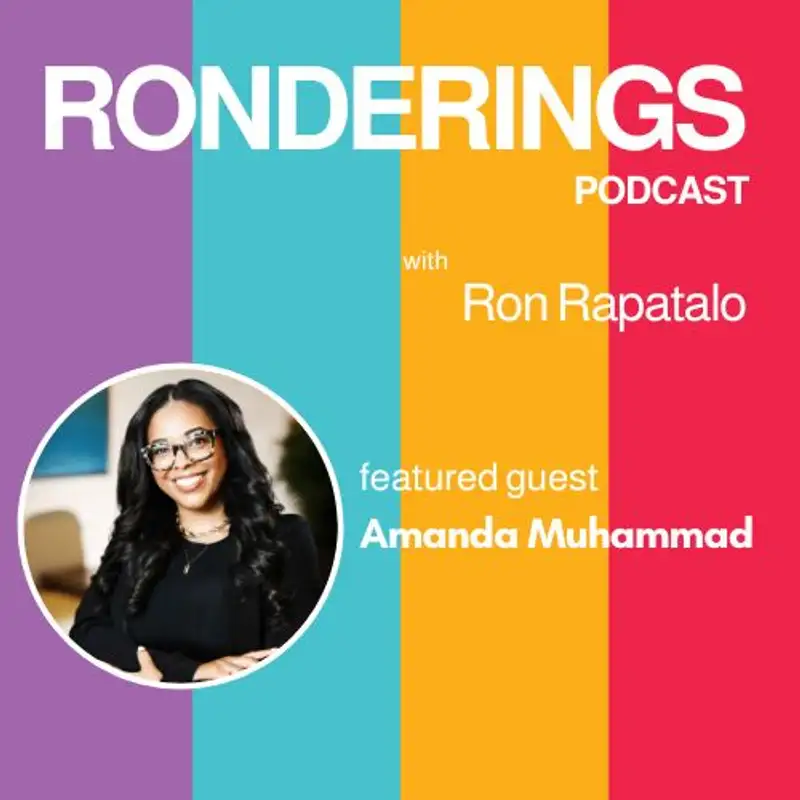
Ron Rapatalo:Today on Ronderings, I'm sitting down with Amanda Muhammad, someone whose work sits the intersection of movement, mindset, faith, culture, and the future of work. Amanda set out to become an entrepreneur. She studied management and HR, planned its traditional corporate path, and then life intervened. Family stress, burnout patterns she couldn't unsee, and a quiet introduction to yoga and mindfulness began to change how she understood stress, not just as a mental issue, but something we hold in our bodies, our workplaces, and our systems. Started as a personal practice, became a professional calling.
Ron Rapatalo:Today, Amanda runs a boutique professional development firm working across corporations, nonprofits, schools, and workforce programs, helping individuals manage stress, teams build psychological safety, and organizations rethink how culture actually functions. In this conversation, we talk about faith and inspired action, why psychological safety breaks down even in well intentioned workplaces, what's the next twenty, thirty years of work might look like, and their corroding, make your life bigger. This one is about integration, not balance, and might change how you think about work, rest, and who you're allowed to be. Let's get into it. Hey, friends.
Ron Rapatalo:Before we get started, I wanna share something that's been a big part of my own journey. Two years ago, I published my book Leverage. That experience cracked something open for me. I saw how publishing isn't just about pages, about owning your story, sharpening your voice, and amplifying your impact. The part that meant the most, readers reached out to me to say they felt seen.
Ron Rapatalo:That's when I knew this work mattered. I loved it so much I cofounded Leverage Publishing Group with friends who would make know this world inside and out. Now we help leaders, entrepreneurs, and change makers turn their ideas into books and podcasts to actually move people. We've got a star in you, and I know you do. Let's chat.
Ron Rapatalo:Find me on LinkedIn or at leverage publishing group dot com because the world doesn't just need more books. It needs your book. Alright. Let's get to today's episode. Peace.
Ron Rapatalo:Ronderings fam. We have another exciting guest on the pod. I have new friend who I met through my homegirl and very recent podcast guest Cecilia Paz Aguilar introduced me to new friend Amanda Muhammad. Amanda, how are doing today?
Amanda Muhammad:I'm doing just fine. How are you?
Ron Rapatalo:I'm good. I'm good. I'm good. I remember when we chatted. Right?
Ron Rapatalo:We were talking a lot about, like, self care. You were making me feel FOMO because you live in Dallas, if I remember correctly. Did I get that right? And you were like, oh, I'm poolside. I'm like, really?
Ron Rapatalo:Yeah. Really? Yeah. The only pool so admittedly so we threw at the time of this recording, it's mid December, so folks know. Right?
Ron Rapatalo:My wife hooked up my oldest daughter with a hotel suite, yes, as a 12 year old, so she can have a sleepover with, like, seven of her besties. Now what's cool about that, aside from my daughter having a great time, is the Westin had a nice hot tub and pool. That's the access that I get in Jersey. The everyone's in a blue moon, like, you know, because when I hit up the hotel, it's like, they got a hot tub. Mhmm.
Ron Rapatalo:I find myself in it. Yes, absolutely. So Amanda, let's get right into it. Okay. What is your story?
Amanda Muhammad:Well, I am just a girl from Kansas City, more specifically Overland Park, Kansas. Okay. Now I'm in Dallas and have gotten there through just continuously following what I've been curious about. So, a lot of times I tell this story, I kind of start at my college story to how I got to what people know me for now, which is having this professional development company. When I was in college, my family was going through a really hard time and I was not coping well.
Amanda Muhammad:And I didn't register what I was experiencing as being really stressed or being really anxious. I just knew that I wasn't sleeping well and I was doing different things to help myself get to sleep. And I had one of my brothers who was off at college down the street or down the road. And he took this like exercise science class and he calls my mom up and he's like, mom, I know what you need to do for your stress. You need to breathe and you need to stretch.
Amanda Muhammad:And she's like, whatever. But she ends up signing up for this yoga class. And so she takes a yoga class. She invites me up from college. I went to the university of Kansas.
Amanda Muhammad:So she invites me up from college and has me go to this class. And at the final resting pose, I'm in this pose called Shavasana. It's where I'm in between being awake and being asleep. After class, I turned to my mom and I go, mom, somebody was snoring so loud. And she's like, Mandy, that was you.
Ron Rapatalo:Wow.
Amanda Muhammad:What is this thing that you just had me do? All I did was a little bit of movement, a little bit of breathing, a little bit of centering. And you mean to tell me that for the first time I was able to get rest, like past the point of me even know that knowing that I was actually resting. And so I got hooked. My mom got me this little purple yoga mat from like Ross or TJ Maxx, and I started rolling it out and just like, I don't know what I'm doing, but I do know that when I'm doing it, I'm feeling a little bit different.
Amanda Muhammad:Right. And then also along around the same time, my mom was gifted a book at church called The Secret by Rhonda Byrne. And so I got ahold of that book and learned about the power of my mind and the power of positivity. And some of these things were things that kind of came naturally to me. I was always a bubbly, optimistic person, but now I was using, I was learning how to use them more strategically.
Amanda Muhammad:I was learning the actual power behind how I showed up in my life and how I thought about my life and how I grew through my life. And so it was this tool that just kind of like sat in my back pocket, like to say. And in college, was studying management and leadership and human resources and thought that I was going to climb the corporate ladder and become somebody like human resources director. And that was cool. I went into corporate and that's what I thought I was doing.
Amanda Muhammad:And I was also studying my, I eventually worked on my master's in organizational leadership. But as I would look around at the people that I was working with and different environments as I transitioned through companies, I saw this kind of universal thread. That was that a lot of people were really stressed, really, you know, just strained at work and not many of us were talking about it. It was more so like a, well, this is just how it is. And so you just like get through it versus finding resources.
Amanda Muhammad:But I had those tools in my back pocket. And so along the way I became certified in yoga and mindfulness trainer and compassion fatigue trainer, and was working on my master's in organizational leadership. The last stop that I made in my corporate career or working for someone else, was a teacher, I was an educator. And in this space specifically, it was like, man, it's so different than sitting in a cubicle at work, but still like people are extremely strained and stressed. And I was like, you know, it's such a different environment.
Amanda Muhammad:Like you've got art on the walls and there's color and you're getting socially appropriate hugs from the kids. Like it's great. But then why is there still this strength? And so I began teaching yoga to the teachers and I began teaching mindfulness practices to the students. And then I became certified in practices that allowed me to teach other teachers how to bring it into their classrooms.
Amanda Muhammad:And so I just followed these threads and these nudges. And at one point I just decided I was like, I was working full time at the school. I was making a beeline for it as soon as I left school to go do trainings at other schools under different companies. And eventually I decided, I said, you know what, like, I am good at this, you know, humbly like, I love it.
Ron Rapatalo:Yeah. I'm
Amanda Muhammad:seeing such an empathy. And I was like, I'm going to do this. And no matter what, like, worst case scenario, I'll Uber, I'll work at Trader Joe's, I'll go back home to Kansas City and stay with my parents. But I'm going to give it a shot because I can see that not only do I love it, but it's impactful.
Ron Rapatalo:Yeah, what was your family's reaction when you decided to make this career inflection?
Amanda Muhammad:That's a really good question because I didn't tell them. So I waited for a year before I told my parents that I quit my job, which is actually, now you're like, taking me back to that time because I didn't tell them. And I would have so much anxiety throughout the days because, you know, especially like if I wake up and I'm like, not at work, I had been working for so long. I felt like I was holding this big secret from my family. But the reason why I didn't say anything was because I didn't want anyone in my head, or I didn't want to get any thoughts or any seeds planted that I shouldn't or couldn't do this.
Ron Rapatalo:Yeah. And
Amanda Muhammad:not because my parents don't believe in me, but because they care so much about me that they don't want to see me in any kind of pain or strain, especially unnecessarily. Yeah. I chose not to tell them and I waited for the year. And when I did, both of them had the same reaction, which was like, well, guess you've done it for a year now, you know, but they're proud of me and have been extremely supportive as I've gone on. But it to me at the time, it felt like the right decision to not tell anyone.
Amanda Muhammad:Also, I didn't tell a lot of people. I was just kinda out here in the trenches, like, figuring it out. And yeah. So
Ron Rapatalo:Yeah. What did you learn in that year in terms of being in the trenches that made you know this is really the right path for me now that if, like, I've done it for a year?
Amanda Muhammad:Oh. Well, I think one of the biggest things for me was so there's this book. Oh, no. It's not sitting up there. You know what?
Amanda Muhammad:I just took it down to, but I can tell you about it. I'm like, do I? I usually have a couple copies sitting right around here. But there was this book, and it was called The Prayer of Jabez, a thirty one day devotional. And someone at my school gave it to me before I left.
Amanda Muhammad:Her name was my same name as my mom. So she gave me this book and I was like, I had quit my job. I did not have a lot of money when I quit my job. I really was figuring it out, super naive. When I opened this book, and I started going through this thirty one days of this devotional, and around halfway through, I landed a contract.
Amanda Muhammad:And I liked the way that it was kind of taking me through this method of prayer of asking and surrendering and knowing that there's limitless opportunities and abundance available and what God wants for me and all this stuff. And I finished it. And when I finished, I was like, That was really good. I'm going do it again. And I did it again.
Amanda Muhammad:And halfway through, I landed another contract. And I was like, I like that. I'm going to do it again. And I did it again. And I kept about halfway through, I realized I keep landing these big contracts right when I'm halfway through this book.
Amanda Muhammad:And I did that for years. But what that time really taught me was the how much of a faith walk than entrepreneur was entrepreneurship was. Yeah. No matter what you believe in, it's just knowing that this is going to work out. And I learned the power of moving my hands and feet.
Amanda Muhammad:So, you know, we talk about manifestation and things like that. Yes. We'll think it's just about like asking and believing. It's like the book, The Secret. It says, ask, believe, receive.
Amanda Muhammad:But I learned about the inspired action piece and translating to the prayer to Bez, I learned about the whole concept of faith without works is dead, right? So really learned how to trust that things were going to work out while I was trying things, throwing stuff at the wall, seeing what stuck, getting back up when things didn't work out, just trusting that everything was working together for my good and for my favor, and that everything is working out for me. Like, it was a full year of just like mindset priming and just trusting that it was gonna get better and better. And it did.
Ron Rapatalo:I have to make sure that you've referenced the book and the links that you'll share with this episode because that sounds like something that it is so impactful. I wanna make sure we share with the audience. But the the prayer of Jabez reminds me of a phrase that I've said and that I've used as a mantra, intend what you manifest.
Amanda Muhammad:Intend what you manifest.
Ron Rapatalo:Yes. And there's something really powerful, right, with movement, which you learn from, you know, what happened in college, right, once you started moving. Right? And the the thing that what you experienced in college and learned from your brother is something I remember having Bikram yoga teachers tell me all the time when I used to take Bikram yoga. Now, like, taking anything that's called Bikram is yes.
Ron Rapatalo:He's a Yeah. Yeah. You know, a sexual abuser. But nonetheless Correct. Right?
Ron Rapatalo:Issues in tissues. I remember this one yoga instructor in particular, I'm going to shout him out because I'm connecting him on Facebook, Adam John Roper, right? You say it all the time, it's like, it makes a lot of sense. And you know, when you think about the neuroscience of movement, right, there's a lot of how much movement is related to cognition. Tons of really good research.
Ron Rapatalo:I remember taking a, going to a parent professional development workshop at my daughter's Montessori school some years back, and as a former neuroscience major, oh, cognition, oh, right? And I remember the ending phrases like, you know, I think they're four I am. And the neuroscientists were like, you know, we need to add movement to that. It's like, I move, therefore I think therefore I am. Right?
Ron Rapatalo:And so there's so much power when we move that allows us to release, be able to rethink, reshape that I think we don't often use. And I'm curious is my next question. How much of that, if at all, you learned in your OD master? I'm guessing not a lot. Right?
Ron Rapatalo:Because I would imagine that if this was taught to you, maybe you might have stayed in HR in a lot more explicit way in corporate rather than like, wait a second, I'm learning this on my own. I need to create something because that's not really happening in my space.
Amanda Muhammad:Yeah. A lot of what I've learned was more so embodied. It was was through my experience. Yeah, I was thinking about how, you know, how much of my like, wisdom has preceded the science. Like, it's instead of me like going out and researching being like, that makes sense.
Amanda Muhammad:Yeah. It's been something that I've experienced. And then I read the research and I was like, I knew it, you know? And it's like those experiences, like I I knew that this was so true because I had lived it.
Ron Rapatalo:Yeah.
Amanda Muhammad:In my work, you know, one of the trainings that I do is called Trauma Informed Mindfulness. And it actually revolves around the concept that we don't just hold stress in our minds, we also hold it in our bodies. And then I always say exactly what you said, our issues are in our tissues. And so I think that that movement piece is, I know that that movement piece is so powerful. It's not even just the internal processing of stress and trauma movement piece, but it's for everything.
Amanda Muhammad:Nothing, if something is not moving, it is dead. Right? And if you think about, I think that's the same emotion. And it's because of traffic that they're talking about, that's happened in seasons where something has happened. And it's just like things get stagnant.
Amanda Muhammad:And when things are stagnant, think about what happens to pool of water when there's not any movement, when there's no circulation. That's where you get disease, right?
Ron Rapatalo:Yeah. On
Amanda Muhammad:moving your limbs, your muscles, they atrophy, right? And it's anything else in your life. It's about breathing life into things and keeping things in motion, right? I had to learn, I'd say this was two years ago, had this point of just how important it was to just keep taking steady motion. It doesn't mean you have to go the same power all the time.
Amanda Muhammad:It's about how can we just keep the cycle going? You know, it's like when you're riding a bike, you can keep cycling, but then you can coast a little bit, but then you can get a little nudge so that it keeps going. And so I'd say, no, I did not learn that in my organizational leadership background. I didn't learn it in my management leadership HR background, and I didn't learn it even in my business psychology work on my PhD right now. I learned it from life.
Amanda Muhammad:And I learned it from, you know, witnessing so much in my business, in my personal life, in my friends' lives, the impact of staying in motion and allow action to come after the things that you think and say or before.
Ron Rapatalo:Yeah. It's so interesting. Right? Because you mentioned your brother was getting his master's in exercise science at the time he gave this advice to you and your mom. Right?
Ron Rapatalo:And then I'm thinking about, right, as my brain goes all over the place, I had a recent guest whose episode is gonna be published soon, who worked at Apple way back in the day and got really excited about learning about neurosciences. So now she's this big, like, neuroscience, like evangelist who uses it in her coaching. Right? And it makes me wonder, like, why these disciplines between, you know, OD, right, the business psychology are not talking to that part of the neuroscience and that part of the that says, hey, you know what? These things should be interconnected.
Ron Rapatalo:Right? It it almost seems like a travesty that you had to learn it on your own. And then my curiosity question is hearing about your brother, right, and being ex in exercise science, right, does that concept of embodiment just running your family? I'm curious, right, because I think you learn like there there's a part of me that goes, I'm wondering if that is a Muhammad family trend of something like learning through embodiment.
Amanda Muhammad:Yeah, that's a really good question. So one thing I want to clarify, my brother, he wasn't getting his master's in exercise science. He was just taking a workout class. Oh, he's taking a workout class. Yeah, but hear this out.
Amanda Muhammad:So he majored in education and has been in education since he graduated. We also have a family dojo back home in Kansas City. So yeah, he's like a superstar karate, like he travels the world. He's a beast. I read though, that's very interesting of educators in different formats.
Amanda Muhammad:Like my mom, what I didn't share was when I went through that class with my mom and on the other side of that, we both got really interested in yoga. My mom is a certified yoga instructor and one of the best in the game, if you ask me. So my mom is a yoga instructor. She became one later in life. She's also a doula.
Amanda Muhammad:My dad, my brother trains under my dad at the dojo and is an educator as well. And honestly, I was in college that I had that yoga experience. But growing up in the dojo, I had been meditating, small moments of meditation my whole life. So that's because of that experience, right? So there is this like underlying thread where we all kind of have these embedded practices of spirituality, of faith, of, you know, consciousness that we just kind of grew up with that have popped back up in our lives.
Amanda Muhammad:Yeah. There's definitely a threshold there. But, you know, whether it's karate or whether it's yoga, back to the issues and the tissues, right? The beautiful thing about both practices is the integration that happens. And so understanding that, you know, your head is in one place, your body's in another place, both of those practices are somatic practices that can integrate.
Amanda Muhammad:Right? And so it is unfortunate that in my studies, didn't learn that, but I'm so glad that I know it on this side. Because as an external consultant, it allows me to go in and communicate that in a way that really lands with these audiences. It is something that's actually been heavier on my heart. As I think about how do I want my business to evolve, it actually is exactly what we're talking about.
Amanda Muhammad:I talk about stress management and psychological safety, but what I really understand is just how much like managing your stress, being present, having that self awareness, the role that that plays in who enters the workplace, see it through, and the way that you're able to contribute and receive psychological safety. So much deeper work, and spiritually, could be taking place with every single person that endorse and to interact with another person. But they're not making it there in our classes. And so it really is a gift and a direction that I want to lean into to be able to bring that perspective into the classroom, not the classroom, but into the companies and schools that I'm working with.
Ron Rapatalo:Right. Let me keep it real. A lot of us have write a book sitting on our goals list, maybe for years. I sure did. Good news is there's more than one way to get it done.
Ron Rapatalo:If you've got more money than time, a ghostwriter can help bring your story to life. If you got more time than money, a great book coach can guide you through the process step by step.
Amanda Muhammad:If
Ron Rapatalo:you've already written a thing, you'll want someone to shepherd you through publishing so you don't waste time or cash. Here's the thing though, no matter how you do it, the real win is writing the right book. The one that builds your credibility, grows your business, and actually makes a difference. That's what the team at Books That Matter is all about. Head to booksthatmatter.org and get some feedback in your ID or manuscript.
Ron Rapatalo:Don't sit on it any longer, your book could be exactly what the world needs. So let's fast forward now in terms of like your current business. Tell me a little bit about what you do, some of the different workshops and things, and then more interestingly, read some of the observations you're making from working with the various clientele that you're working with.
Amanda Muhammad:Sure. So I have a boutique professional development company, main focus is on stress management and psychological safety in the workplace. So my focus, especially early on was on what are some of these things that we can do throughout the day to manage our stress specifically, I would always say quick, actionable things that we can do that are additive over time, right? That kind of interrupt this cycle of experiencing stress and just responding to it. So I would go in and I would talk to folks about different breathing exercises that they can do and practices that are powerful, like gratitude and the power of our perspective.
Amanda Muhammad:And so teaching folks about what that looks like and how they can begin using it and, you know, giving them different tools and strategies that they can kind of put into their toolkit with time that work evolved into, okay, we're looking at ourselves and the person that's coming into the workplace, but what about at the team level and the organizational level? I always knew that it mattered, right?
Ron Rapatalo:I knew
Amanda Muhammad:how much of a slap in the face that it could feel like to people to be like, you're telling me that I'm the one that has to do the work when the organization's doing all this. And what I say is I'm telling you that the organization doing a bunch of change is going to take time. So in the meantime, as you continue to show up to your job each and every day, here are some things to help you get through the moment, through the day, through that time where you just need to take a deep breath before you respond and say something that's going to make you lose that job that you do have. Right. And so now my work has expanded more into psychological safety and looking at what does that look like at the individual, the team and the organizational level, because there's multiple layers of accountability.
Ron Rapatalo:So that's
Amanda Muhammad:my whole thing is that we all have a role when we come in and we're working as a team, we can't place our happiness, our joy, our, you know, whatever, just in the hands of someone else. Like we have to take accountability, control of our own life. And here are some things that we can use to do that. So that's been the majority of my work on the stress management psychological safety side. More recently, my work has also evolved into tackling some of the gaps of soft skills.
Amanda Muhammad:So working with a lot of the clients that I do work with, and mind you that spans across industries. So yeah, work with all kinds of companies, nonprofits, schools, large corporations. But I keep hearing consistently a lot of griping about our incoming workforce. They don't communicate. They can't take feedback.
Amanda Muhammad:They, you know, blah, blah, blah. And I always ask the question, well, where did they learn it? And then it's like, well, I don't know. And so I wanted to take the resources that I have and help the people that have the students before they get into the workforce, whether it's a workforce development program, the career center at your college, the career and technical education programs at your school, giving them resources to help the students start thinking about things more critically and seeing the impact and consequences of what they can do before they get into work. So that's what my work is expanding into now is facilitator resources for them.
Amanda Muhammad:So my work really is just about how we can not only be more aware of what our best selves looks like and what that has, but also, you know, the across our organization with them.
Ron Rapatalo:I wanna dive into the organizational work that you do. So I'm gonna make an observation, right, in terms of, like, my own journey of, like, seeing a lot of this stuff around how much we need to pour into our own care is, I think, terms that I've seen, right, in the space that I've been reading is, you know, the difference between self care and collective care.
Amanda Muhammad:Mhmm.
Ron Rapatalo:Right? And my mind, when I think about, well, particularly organizational kind of like, you know, what what they're responsible for, it makes me think about what can organizations do around collective care. Knowing that, I think something you observed early on when you were in your master's program, right, is how stress leaders were and how stress educators were. Right? And I think my own observation of talking to many leaders over the last twenty plus years is that there's a lot of organizational conditions and policies that create the ecosystem that makes stress a lot easier to have happen.
Ron Rapatalo:Right? So I'm curious for you, right, if using your OD lens, you're an embodiment lens, what policies are you seeing at the workplace? Like, oh, these are things I'm seeing as trends across sectors. Like, if we start tackle these things, the kind of self care that you're teaching would be something that this is my mind, supplemental rather than like, that's like, I think in my estimation from hearing you talk is like a real like lifelines folks, because they don't do that. This stuff, as as we know, isn't fixing itself anytime soon quickly, unfortunately.
Ron Rapatalo:Right? So I'd love to hear what you think.
Amanda Muhammad:Yeah. So there's a number of psychosocial factors that go on in an organization that if we don't address are just breeding grounds for a lack of psychological safety and where people it makes it harder for people to take care of themselves. I'm glad that you are seeing that because that is exactly my full approach. Like, as I think about psychological safety, it's like you have this thing where you'll have employers that are like, oh, you should really take better care of yourself. Work life balance, like you want to bring in someone like myself to talk to your employees about work life balance.
Amanda Muhammad:You address their workload, right? That's a slap in the face. We say that we want you to feel like you have opportunities here. We want you to feel like you're constantly having opportunities to learn, but you're not setting them up with those opportunities. So it's about creating an atmosphere that allows for that fertile ground for the psychological safety to take place.
Amanda Muhammad:So if you're giving advice to your employees to take care of themselves, to their growth, you want them to long run and be loyal employees. What kind of atmosphere are you creating for that? Right?
Ron Rapatalo:Yeah.
Amanda Muhammad:Seeing the same trends that you're seeing, whether it's giving up, giving employees an opportunity to give you feedback, right? Like how often do we talk about having that seat at the table, where, you know, we instead of just throwing things at folks, what do they actually say? What do they actually say that they need? What is their feedback? And then when you get that feedback, are you doing anything?
Amanda Muhammad:Have you just wasted an opportunity to build trust? Because once again, here you guys go asking me for my opinions and what I need and not doing anything with it. Well, why would I be honest and put that feedback on a survey that may come back to you? And now I'm going to be told. So everyone needs to do the deeper work of being able to take that feedback and being really mindful and thoughtful of what they're setting up.
Amanda Muhammad:So even at the leader level, like, yes, there's policies and things that have to be changed. But you've got to think about the minds that are sitting in those chairs making those decisions. If they're not well, if they can't see beyond, like, their immediate needs, then they're not gonna think in the collective care. Right?
Ron Rapatalo:Yeah. Yeah. You know, it's hard, right? Because I think this is me as a young Gen who's been in the senior leadership, like, title for a number of years. Right?
Ron Rapatalo:Is I've grown up with my peers and some became senior leaders before I formally did in my mid forties. Right? Is I find within my particular young Gen X, maybe a little older Gen X and like older millennial crowd, values that disturb me in terms of like leadership traits, right, which is, well, sounds a little like boot camp in the military, the following statement I'm gonna make, right? It's like, well, I work this way. I work this hard.
Ron Rapatalo:Therefore, it is my implicit expectation that others work this hard too.
Amanda Muhammad:Mhmm.
Ron Rapatalo:End quote. Right? Or you just have to figure it out and tell me what you need. Right? There's a lot of like, I think, things that we were taught in the workplace that I think had then become perpetuating that versus remodeling workplaces that allow for folks, our younger folks in particular, to feel, as you said, the psychological safety to say such things.
Ron Rapatalo:Because as we know, just asking for feedback doesn't mean that folks will all be honest because you have to be acknowledged as a power differential. Right? And how is that feedback gonna be be said? And then what are you actually then saying or expecting people to do in the day to day? Is your project management task like as the Wazoo.
Ron Rapatalo:Right? Are you getting emails of asking you things to do without there being proper prioritization where you have to feel I have to answer things. Right? Or we're working on holidays. Right?
Ron Rapatalo:And people would just expect to do that. Right? Because may they may be hourly versus salaried, right, and so they're trying to earn the money, but like, what's then the organizational expectation around work? It's just, so I'm curious, like, what I just said, for me it's like, how do we if I'm like putting the mirror between myself and like other folks in my age group, how do we put the mirror on those of us that are at the damn seat of power, to start making these changes? Because it's on us at this point.
Amanda Muhammad:Yeah, it is. I think that one, people, you have to look further than where we like, just right in front of you. There's a lot of value in being in the present moment. But especially in positions of leadership, you got to recognize you're not going to be there for forever. Right?
Amanda Muhammad:None of us are. And so even with, when you have a younger workforce that's coming in, I think there's, there's definitely been a big like pool and there's a lot of cultural shifting that's going on right now between whose way is the right way. Is it, you know, the, the Gen X folks that are, you know, stern in the way that they've worked and how things have always been done? Or is it, you know, the younger folks that are coming in and they're like, well, we have our boundaries and we have this and we have that. And every organization's answer to this is going to look different and it's going to depend on your blend of the workforce.
Amanda Muhammad:But you're not going to make it far without conversation and just trying to force your way on someone else. Like, obviously, if there's some level of friction, there needs to be a greater conversation and consideration for the trajectory of your workplace. Because here's the thing, it's just like I say with educators, right? Like if we're looking at a school, we jump straight to students and we jump straight to making sure the students and those students. If we don't have quality educators in front of those folks, then we have nothing.
Amanda Muhammad:Until the same thing goes on in our workplace and with the folks that we have that are coming in, we have to ensure that it's an environment that they want to be in, that
Ron Rapatalo:they stay
Amanda Muhammad:in. So you can press your way all that you want. But you've got to think about the long term outcomes that you're actually wanting. Think of it like sales. What the outcome that you're striving for?
Amanda Muhammad:And how do you get there? So for your organization, it just might look a little different, especially if you are running into some of that tension, some of that friction, you've got to look at what kind of workforce do you need to be sustainable, and you're going to have to move in that direction. Like, there's going to have to be give on both sides. Because you also, you know, folks coming in, we can't make specific changes in demands for every single person's individual opinion and feeling. But, you know, you can bring thoughts like that to the table and use it as you're considering what you want your workforce to look like.
Ron Rapatalo:Yeah. So let me ask you a future prediction question. Twenty, thirty years from now, if we get this right so that we have sustainable workforce or people are hell of a loss, burnt out, but reasonably productive. I don't wanna say so overly productive that, like, you know, psychology bills are for the wazoo. Be like, that creates other industries to be clear.
Ron Rapatalo:Right? You know what saying? Maybe that's good for, like, the wellness industry. It may not be good for, like, you know, people's psychological and, like, physical wellness. Right?
Ron Rapatalo:Mhmm. But let's say we get this right in twenty to thirty years in the workplace around the kinds of things that you have built your PD company. What does that future workforce look like? What the the future of workplace look like?
Amanda Muhammad:Well, I think that we would definitely have, you know, that collective care that you're talking about, you'll have more grounds for that. There will be more innovation, there will be more, you know, I think we'll just have more engaged employees and a more engaged workforce. Now, the other side of my prediction is I think we're moving towards a gig economy, where you're going to see people that are pursuing multiple passions and multiple interests, which is what we're seeing with a lot of our incoming workforce. Is that you? That's me too, even that's
Ron Rapatalo:not true.
Amanda Muhammad:Right? Simply finding different things that I'm into and ways to, you know, keep my company afloat, but also what is to keep my interest. Think about the world that we live in. Like, we just are scrolling, like, we're constantly you know, there's so much stimulation. So I think that I do think that more gig work and opportunities for people to explore other interests will be brought into the fold.
Amanda Muhammad:And I think a lot of that will be a result of our younger workforce, because they're being told right now to jump every couple of years and to understand that and get a lot of experience in a lot of different ways and really like spread yourself as far as what you can bring to an organization. Right? So I think that we have to have those environments for the people that are in our doors. Think, I don't know how how long we have with folks staying at one company for ten years, and I just Yeah. Know that it's gonna look like that.
Amanda Muhammad:So I think it looks like having a really strong foundation for the people are there for the people that are there while they're there.
Ron Rapatalo:Yeah. I'm gonna make an observation in dealing with this pain currently, right, is that if we move towards this gig economy and people may not be as full time employed, especially when I'm watching out this market, right, where it's a lot harder to get a full time job across sectors. Right? And this is, like, stuff that I'm seeing within the company I work at. Right?
Ron Rapatalo:Mhmm. Is how then do folks get health care insurance? We're watching that a lot of folks, if you're a small business or you're a consultant, like, getting health you know, you're you're trying to go through the ACA and get health care insurance, good luck. It is crazy expensive.
Amanda Muhammad:Yeah.
Ron Rapatalo:Right? And so we have multiple things to look at. That is what we're moving towards, which I think makes a lot of sense. Right?
Amanda Muhammad:Mhmm.
Ron Rapatalo:How then does the collective care look like in terms of policies to take care of you? Because we've asked for the workplace to have a lot of, like, things that they're doing for care. But if, like, less people are gonna be at the workplace in terms of full time benefits, how then is that spread out? Right?
Amanda Muhammad:That's a great observation. I don't I do know that I've I've been seeing more and more companies that are popping up with insurance solutions for entrepreneurs. I'm starting to see that a little bit more. And I think that people will, or companies will kind of jump on that, you know, of course, they're going to find their way to make their money. Who
Ron Rapatalo:knows? Of course.
Amanda Muhammad:Yeah. Collective care will come externally. I know for me so much of I mean, as an entrepreneur, my collective care comes from the environments that I intentionally go into to get that care. Right? So it may look like more stepping out and looking for opportunities to create community and do things like that.
Amanda Muhammad:I think that a lot of folks minds will become more entrepreneurial in nature. Right? And so with you, you start to, you know, find your different ways to take care of yourself and build that village. I don't have coworkers that I go and sit with every single day. Like, my coworkers are across The United States, you know, my contractors.
Amanda Muhammad:But what I do is I link up with other entrepreneurs. And I am a part of so many different, like, groups and organizations here in Dallas and really involved in my community. And that's where I get that that more you know, I guess the the workplace camaraderie type energy is because I create it, I go out of my way to make sure that I have connection to other people.
Ron Rapatalo:Quick pause in the action here. I know a lot of us leaders, entrepreneurs, folks who are trying to do good work, have felt that grind of pushing a boulder uphill by ourselves. The learning is you don't actually have to do it all alone. Genius discovery program at thought leader path like having a think tank in your corner. It's not some cookie cutter formula, but your story, your plan of impact, giving you the clarity and assets to take the next big step.
Ron Rapatalo:I've seen people go through this and walk out with their voices amplified and they sharpened. Some even launching podcasts like this one, Bronzerings. So if you're tired of grinding in the dark and you're ready to step into your impact with right support check out geniusdiscovery.org. Amen to that. It's interesting.
Ron Rapatalo:So I found out on LinkedIn through someone I once worked with to teach for America, his name Eric Leslie. He had announced he was a ambassador for Foundation for Social Connection. And so I have been, for as long as I can remember, absolutely semi obsessed with connection.
Amanda Muhammad:Mhmm.
Ron Rapatalo:And I'm now an ambassador. Right? And I think one of the things that I found on social connection and related to doing this podcast is how much I didn't realize until I had read something on Instagram through a Filipina therapist, Doctor. Stacy Litam, she talked about, I didn't know the term collective care, believe it or not, until I think I had seen her like post about it a couple of different pictures, right? I was like, and one of the things in the mountain of different things that collective care looks like is storytelling.
Ron Rapatalo:I'm like, oh shit, wait a second, my podcast is collective care because much like when I post on LinkedIn, I've been doing it because I've been on LinkedIn for twenty years, which is crazy, that I've learned as I've posted, as I've shared, as I have my newsletters, I have this podcast, I'm able to reach more people that I could ever possibly talk to in a given day in a lifetime. Mhmm. Right? And so that's given me joy. It gives me a lot of joy to do this.
Ron Rapatalo:Right? And so my question back to you is outside of what you do for work. What gives you your joy? Art. Say more.
Amanda Muhammad:I love art. So I love performing arts. I love literary arts. I love it all. This year has really been about like rebuilding for me in a lot And of I decided to so I pick a word of the year every year.
Amanda Muhammad:And this year's word was omnipresence.
Ron Rapatalo:Oh, my Was that yours? Well, I used it. Funny story. Have you seen the LinkedIn year in review thing that has been making the rounds about then the last person you've interacted the most with? Yeah.
Ron Rapatalo:Ask how many times people have posted that I'm the person they interact with on LinkedIn. And so it was so here's the funny part, right, is two guys I I connected. One's a current client of where I work at Strong Controlling. Know him for a decade. His name is Rich Harrison.
Ron Rapatalo:When my buddy Nicholas Pascal was living Philly and was looking to move to Dallas with his family, I connected Nicholas Pascal with Rich. Rich post you know Nick? It that that
Amanda Muhammad:A long ago. Everybody. Yeah. He was in Dallas and yeah.
Ron Rapatalo:Okay. Yeah. Small, small we we talked recently. Right? So it's like the world tends to work in very serendipitous, like kind of synchronous ways.
Ron Rapatalo:Right? And so Rich posted, oh, shout out to Ron. He's the person I interact with the most on LinkedIn. And then Nicholas then responds, it's the same with Rod for me too. I was just like, oh my god.
Ron Rapatalo:And then I put in my comment, I'm the president.
Amanda Muhammad:Oh, exactly. But you know, that's that's amazing. I love I love that. I've gotten a couple of those messages myself.
Ron Rapatalo:Of course, you have. Skandrid spirits. Come on now. Right.
Amanda Muhammad:But so, like, my word of the year was omnipresent, and it was actually on the other side of I had this conversation with my friend. Like, we went to dinner, and I was just telling her, was like, you know, things are kind of rough with work, and, you know, just going on and on and on. And she's listening to me and then she's in that she doesn't use as kind of words as I'm saying, but she's like, are you going to do about this? Right? Because like, just, it's, she gave me space to like talk it through.
Amanda Muhammad:Right. Back to action. Right. So she has me read the 10X rule and there's a chapter in there on omnipresence and I listened to it. I just like, it fired me up and I said, you know what?
Amanda Muhammad:That's my word for the year. And I'm going to go everywhere that God invites me to go. Like, I'm going to say yes to as much as I can possibly say yes to without completely burning myself out. And this year brought me so many opportunities to reengage with art. And it's just reminded me of how much I really love it.
Amanda Muhammad:I danced for sixteen years, did tap and jazz. I was a first time home feminist. Right? And so Excuse me. Right?
Amanda Muhammad:Okay. But like, I love Well, is
Ron Rapatalo:where this has not surprised me about the embodiment you talked about your family. Right? And, you know, we often I think when I think about like workplaces, right? You know, workplaces tend to be many of what your mind is, right? And they tend to like stifle the physical and I would say spiritual nature of you all,
Amanda Muhammad:Absolutely.
Ron Rapatalo:And yet so many of us are so multidimensional, it's like we are yearning for workplaces, for spaces generally that allow our the multiplicity of our identities to show up. Right? Absolutely. So another thing, this year I went to one of
Amanda Muhammad:the coolest events that I've ever went to. Okay. This nation here that we have, it's called Business Council for the Arts. Okay. That's the little book up there that says I love Dallas Arts, that's where it's from.
Amanda Muhammad:But it's actually about connecting the business community with the arts community. And so giving employees opportunities to reengage with the arts. And the way that I think about it in my, like, in my world, I'm like, oh, we're bringing back play. Right? Like giving Mhmm.
Amanda Muhammad:Opportunity to play. When we were kids, like, we would express ourselves in different ways and perform and do different things, act out things with our Barbies or whatever we did. Right? But to me, art is my play. So like, I will go pull up somewhere, even if I have, you know, a slew of emails and proposals to get to, I'll do it from the from the cafe at the Dallas Museum of Art.
Amanda Muhammad:Or I will, you know, when I'm traveling, I'm at a museum and I like to go out in like nature and take walks and dance classes with my friends like, and it's it's the most fun and like welcoming and just kind community that you could ever be a part of. Yeah. But yeah. And then I have, like, paint parties with my friends and have them over and we literally will paint. I'd had I had a big one for my birthday, but I'll have, like, folks come over one on one or go out and do something that we have crafts.
Amanda Muhammad:Me and my friends from college got together and we got these big like soup bowl mugs and we painted on them and had our little Oh, cute. Thank you. Dope. Okay. Getting out and doing something that is just different.
Amanda Muhammad:And for me, it usually comes back to some kind of, like, art. So I'm not a big, like, concert person, but I love going to, like, a gallery, a museum, live live jazz at the museum, you know, just, a little a little something. I love it much. And I feel like when I do those things, it really recharges me and brings me back to life. Also to make a note, I know it sounds corny, but when you do what you love, it really doesn't feel like work.
Amanda Muhammad:Some of it does.
Ron Rapatalo:I hear. Yeah, I hear you. So
Amanda Muhammad:I have to keep in perspective because people, they always mean well. People will be like, Oh, you work too much or you do whatever. And I'm like, that's probably what it more so feels like if you don't really enjoy what you're doing. To me, like it feels aligned. It feels fun.
Amanda Muhammad:It feels easy. So that same tension towards my work and that need to get away from it. So now, most recently, I know that you all will be hearing this a little deeper into the year. Yes. It looks like my word for 2026 is integration and looking more at how you really integrate that life and really own what my life looks like because it does look different.
Amanda Muhammad:My work schedule looks different. I'm fine pulling up to the bar with my friends and doing emails at 10:00 if if that's what we get to do and have, you know, have a good time. Yeah. It's about finding ways to blend the things that really bring me joy and not putting myself in
Ron Rapatalo:a box of what life has to look like. Art. Amen to that. Right? And I think you talking about how much art and movement has brought you joy.
Ron Rapatalo:Right? It's no surprise to me that you are just really creative, and it's allowed you to see things from a different lens. Right? Because I think and I think about the arc of the Rondering's guests that I brought together and why I can totally see why Cecilia asked me to chat with you, right, is kind of the line that I've given for the last, like, couple of months is multi hyphenated leader who practices sacred syncretism. This alignment of the person, professional, the spiritual.
Amanda Muhammad:Love it.
Ron Rapatalo:And thank you so much, Flick, because you bottle that. Like, hearing just this episode, like, this makes all the sense of the world and people's incredible spidey senses and knowing of people like you that I've now am getting to know. I'm like, it is so incredibly powerful to see that there are more of us than not that are really trying to, like, not live in the boxes that might have been initially traded for us, that we are then creating our own containers and taking, you know, in the words of Bruce Lee, taking what works and discarding what does not. Right?
Amanda Muhammad:Yeah. I think there will be so many more of us as more of us, like, allow ourselves to demonstrate it and to show people that it's possible. You know, it's kind of like that saying, like, you can't be what you can't see. And I know for me, as a woman, you to expand my circle and my environment, I've seen more women who are living a life that's more aligned with what I thought I wanted. But now I'm like, oh, yeah, no, for sure.
Amanda Muhammad:I want that. And it's kind of taken me some time, but that's what exposure and living and putting yourself out there does that. So I try to make sure to like thank people when I see them modeling and embodying things that were just kind of like a thought for me. And like when you're living in it, it's like it's like opens a door. So it's permission.
Amanda Muhammad:There are so many people that are trapped in roles and feel trapped in those roles because they're just doing what they were told to do. And it's like when you can kind of color outside those lines a little bit and let yourself remind yourself that like, it's okay to explore what interests you to get reconnected to who you actually are. And you do not have to wait until retirement. You can do those things now and you will only be better for it. Like when I get to go into spaces and I can be creative and I can get that recharge, like everything on the other side comes out better.
Amanda Muhammad:Like my content, like I just feel more connected to my work when I can bring more of me into the thing that I'm doing. And that's what I really felt like, you know, we talked earlier about that, like, the way that I found how the the movement piece, I didn't get it through my, like, education side.
Ron Rapatalo:Yeah.
Amanda Muhammad:You know, it's like about finding those opportunities to kind of integrate that into your life and letting, you know, letting life show you and build on what you're already doing, you know?
Ron Rapatalo:Well, man, that we reached that time in the Ronderings podcast for me to ask you the title of the podcast. What is your Rondering? What's the lesson or value you wanna share with the audience?
Amanda Muhammad:I wanna share something that I recently heard that I just thought was really, really powerful.
Ron Rapatalo:Okay.
Amanda Muhammad:So it was talking about how we need to make our lives bigger. Right? And when you have it's so basically, she started by saying like, when you have a there's a kid and they want ice cream and they don't get the ice cream, it's like their whole world is shattered because that ice cream is so big in their small world. Right? You know, like, that's like I
Ron Rapatalo:have a six year a soon to be six year old. I've seen that many times.
Amanda Muhammad:Yeah. Mhmm. And in our adult lives, if we're not careful, we can do the same thing if we keep our life too small. Right? So if work is everything or if your relationship is everything and then you have a breakup or something goes south at work, then you've lost everything.
Amanda Muhammad:And so the larger that you make your life, meaning exploring those interests, going out and doing the art, taking the classes, making new friends, making your life a little bit bigger, then when those things happen, the impact isn't as hard. The other way she put it was like, if you were to take a cup of salt and just like eat it, it's a lot of salt. But if you put a salt into a big thing of water, like the ocean, then it's not going to be as strong. Right? And so thinking about life that way too, as far as putting things in place to cushion the impact of when things inevitably happen.
Amanda Muhammad:Like we can't control the things that pop up in our life in the ways that life can be so hard, but we can control how we respond to it and how we lean into different things to to help us to find peace and other other outlets in the midst of what we have going on so that that one thing isn't our everything. Right? So that was that really landed for me. I felt like I was really intentional about doing that this year and just wanna encourage others to do the same. It's like I always say too, with people, like if you just have one friend, it's good to have the one friend.
Amanda Muhammad:But if that friend is not in the season of having the capacity to handle what you have going on, then what are you going to do? Right? So you want to set yourself up well to be supported, to be supportive, and you do that by making your life a little bit bigger.
Ron Rapatalo:I love that as a parting thought. I feel like I read something recently. I love following folks who do personal development, leadership development. When someone that I recently started following in Instagram has a book out about excellence. I forgot the name of the book.
Ron Rapatalo:It's by the time this records it, I think it'll be out officially. But his name is Brad Stolberg, and the whole thing he talked about is how having multiple identities you can lean on depending on the time of season is more helpful than not. Very similar to what you heard.
Amanda Muhammad:Yep.
Ron Rapatalo:Right? Because depending on the season and depending on, like, you know, one thing you want, it's like if you're so reliant on one part of your identity, the work identity, right, or, you know, being that other thing personally, right, if something goes wrong, you don't have other things to lean on to help you port back into, it just becomes super unsettling.
Amanda Muhammad:Yes. No. Absolutely. Absolutely. You know, have you read the book, The Alter Ego Effect?
Ron Rapatalo:You're putting me on to like way too many books, but no, I have not. I, you know, I only say that because with my mild ADHD, I have all these books, including, like, on below my laptop I should be reading. It is obnoxious how many books that I've gotten in the last two years. I'm like, I'm gonna read it. I know.
Amanda Muhammad:Yeah. No. I'm a collector. I have literally my whole work closet. Like, it's shelves of like books.
Amanda Muhammad:Seriously. And there's ones, you know, you pull from them. I get a lot of books gifted to me. I go to a lot of events and
Ron Rapatalo:they give away a book like Same.
Amanda Muhammad:Yeah. Hundreds of books in that closet. No joke. But anyways, there is this book called The Alter Ego Effect. And that was actually really helpful for me in this whole omnipresence season.
Amanda Muhammad:So basically, of the lines of logic or an example that they use is Beyonce. You know how Beyonce has Sasha Fierce, right? So when she went on stage, she embodies Sasha Fierce, and that's who's doing the performing. So this year, when I decided that I was going to do this whole, like, omnipresent thing, and I knew I was going to be really upping my, like, social life and going out there and going in spaces that, like, I don't usually frequent. I did the same thing, but what I did was immigrate, my absolute favorite entrepreneur.
Amanda Muhammad:And what I would do is I would take orange Tic Tacs and I would pop the Tic Tac before I go into an event and I'd say, I am imagery. And eventually I didn't have to do it anymore. I realized there's literally a, a old box of Tic Tacs in the drawer next to me.
Ron Rapatalo:Oh my God. Wow.
Amanda Muhammad:I read at one, at some point I stopped doing it and I no longer needed it. But it was just this, like, little boost, this alter ego that I would walk into a place with. And it was fun for a while to be able to do that. And, like, embody this character, and then you, like, do this kind of virtual to kind of turn it off or whatever. But, like, you know, it's just having a little bit more fun with life and playing with all of the things that you're interested in and the avenues that you can explore and letting that refill your spirit and letting that help you as you're navigating different seasons.
Amanda Muhammad:So much of us rest in just what we know. And back to, you know, having a larger life, I just really encourage you to explore what else am I interested in? What else what is this teaching me? What else is available to me? Reconnect with things that you did when you were young, when you were a kid, those little things that are like, oh, what would it be like to take that class or I saw this, you know, whatever.
Amanda Muhammad:Follow those things. You never know what's on the other side of those nudges. But if you keep letting life like nudge you and not doing anything with it, you're going to be in the same position, like living the same life over and over. And so, yeah, just think it's about following following those inklings and letting yourself embody other parts of you that are like yearning to be awakened.
Ron Rapatalo:Well, thank you, Amanda. You're welcome. Last question. How do people find you? What would you like to promote?
Ron Rapatalo:Sure.
Amanda Muhammad:I spend a lot of my time on LinkedIn. So No way. You too? I do. Just a little bit.
Amanda Muhammad:Yeah. I've done a lot of things in. Definitely follow my personal and business page, Mako Mindfulness. And as far as what I want to promote, I'd love to support your organization. So I do training and development on stress management and psychological safety.
Amanda Muhammad:And as you heard here, I'll be weaving in a lot more of that self awareness and recognizing how when we are well and when we take good care of ourselves, the version of us that that allows to step into the workplace and how it's we're all better for it. So, yeah, would love to talk training and development with you. Or if you're working with those students that are entering the workforce, definitely contact me about our pinpoint platform so you can get your facilitator resources. So you'll find me hanging out over there if you wanna have any further conversation about what we talked about, but thank you so much for allowing me to be a guest on your show and create a great day.
Ron Rapatalo:Absolutely, Amanda. I always like to end my podcast. And because you're in Dallas to be apropos, one of the great Dallas cowboy players, it just pains me to say he's a Giants fan, but I love him as a I'm
Amanda Muhammad:a Chiefs girl. Okay.
Ron Rapatalo:But you I figured you were because you're from Kansas City. I was gonna ask you that earlier. Right? But
Amanda Muhammad:don't I have a thing. Cowboys.
Ron Rapatalo:It's the yeah. I don't like the Cowboys either, but I love me some Dion Sanders. So the word of the in the wise words of Dion Sanders, we always come in hot with amazing guests like Amanda Muhammad. Peace y'all.
Amanda Muhammad:So much. Thank you.
Ron Rapatalo:What I appreciate most about this conversation with Amanda is how grounded it is. There's no performance here. Just loved experience, deep reflection, and a real commitment to integration over compartmentalization. Amanda reminds us that stress doesn't live only in our calendars or inboxes, lives in our bodies, our silence, our systems, and our expectations. And when work becomes the only container for meaning, every small problem feels enormous.
Ron Rapatalo:When your life is bigger, filled with movement, art, curiosity, faith, and community, the weight shifts. We talked about psychological safety, generational tension in the workplace, the future of the workforce, and why leaders have to think beyond immediate needs if they want anything sustainable. We also talked about art, play, why stillness without attention become its own kind of disease. This episode sparked something for you. Sit with it.
Ron Rapatalo:Follow the nudge. Widen the container of your life just a little? As always, keep Rondering, and I'll see you next time. Peace. Before we wrap, I've gotta give a huge shout out to the crew that helps make Rondering's come alive every week, podcasts that matter.
Ron Rapatalo:Their mission, simple but powerful. Every great idea deserves a voice. So if you've been sitting on that spark of a show or story, don't overthink it. Just start. Head to podcastsmatter.com, and let their team bring your vision to life.
Ron Rapatalo:Till next time. Keep Rondering. Keep growing. Keep sharing your voice with the world. Peace.
Ron Rapatalo:Thank you for listening to today's Rondering. I enjoyed hanging out with me and my guests, and I hope you leave with something worth chewing on. If it
Ron Rapatalo:made you
Ron Rapatalo:smile, think, or even roll your eyes in a good way, pass it along to someone else. I'm Ron Rapatalo, until next time, keep Rondering, keep laughing, and keep becoming.
Listen to Ronderings using one of many popular podcasting apps or directories.