 Episode 114
· 01:19:38
What's up? I'm Ron Rapatalo, and this is the Ronderings podcast. Around here, I sit down with guests for real, unpolished conversations about the lessons and values that shaped them. And I'll be right there with you, sharing my own take, laughing at myself when I need to, and wondering out loud about this messy thing called life. Glad you pulled up a chair.
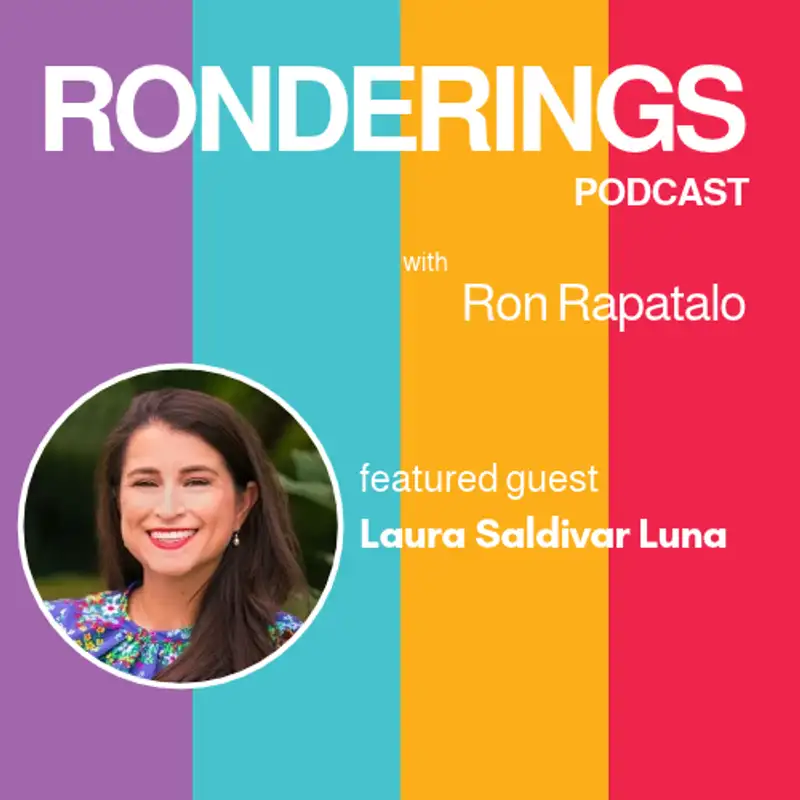
Ron Rapatalo:Let's get into it. Welcome to another episode of Ronderings. We explore the stories, lessons, and leadership journeys that shape who we are becoming. Today, I'm joined by Laura Saldivar Luna, founder of Pinata Possible, former founding executive director of Teach For America San Antonio, and someone whose own journey shifted from chasing external achievement to pursuing internal alignment. The first forty years of her life, rather than what many of us are taught to do: boxes, climb the ladder, and keep reaching for more.
Ron Rapatalo:But after accomplishing many of the goals she set for herself, she faced the question that many leaders eventually wrestled with. If I've done everything I was supposed to do, why do I still feel disconnected from myself? This conversation will be talked about burnout, leadership, bling, messy middle transition, while what feels like falling apart may actually be expansion. You ever carried the weight of serving others while quietly losing pieces of yourself? I think something Laura's story will certainly resonate.
Ron Rapatalo:Let's get into it. Ronderings universe. So I gotta say, I think this may be... And look. I've had a lot of amazing fucking guests on Ronderings, including my best friend in the world, Chris and Memora, my wife and the mother of my two beautiful kids and soon to be number three baby boy, Seanida Rapatalo, and Laura Saldivar Luna put it on right before we hit the record button and said, Ron, what would make this the best fucking episode ever?
Ron Rapatalo:And so I said my cheeks would hurt, and we'd have so many ahas. And so y'all in for a treat because Laura Saldivar Luna is on the mic. Laura, how are doing today?
Laura Saldivar Luna:I'm doing so well, Ron, and I can already feel my cheeks full of laughter ready to burst forth.
Ron Rapatalo:We all laugh about some things. I don't even know this is gonna go. This will be hopefully a lot less offensive is the Kevin Hart roast, but even funnier. Yes. Yeah.
Ron Rapatalo:I know. Because roast a lot of high bar, but it's like a lot of like, oh, and like, oh, damn. I don't wanna laugh at that, but I'm laughing. I hope this isn't being recorded and laughing. My my my.
Laura Saldivar Luna:Well, thankfully, all these laughs are gonna be recorded. So let's go. It's gonna be some fun here today.
Ron Rapatalo:You should know, and all the episodes I've recorded, I probably only edited, like, a handful. It's rare. It's... This is always like a dry run. This is like a Colbert show episode.
Ron Rapatalo:I saw him live record with the missus several years ago, and it was one of the most amazing things I watched because he's such a fucking professional. It it was like, anything we need to do? And the production crew's like, nope, we're good. I was like, damn. He...
Ron Rapatalo:Dry run. Which is pretty amazing when you think about it. Like someone, like, on a show like that, that obviously it's recorded and they can do things and they add to it, but it was flawless.
Laura Saldivar Luna:Deep trust of self, deep trust of the other person, deep trust in the conversation that it goes where it's meant to go.
Ron Rapatalo:I love it. So Laura, on that, What's your story?
Laura Saldivar Luna:Okay, Ron. I have to tell you. Every time I hear you ask this question, one thing comes to mind.
Ron Rapatalo:Okay.
Laura Saldivar Luna:I don't know if you're gonna get this reference or if the audience is gonna get this reference. But when I was a kid growing up, there was a show on PBS called Wishbone, which was this tiny dog that would go on historical adventures traveling through the greatest literary classics of all time. And in this show, there was a signature theme song, and it would begin with, what's the story? Wishbone. And every time I hear you on an episode say, what's your story?
Laura Saldivar Luna:I cannot help but think about this tiny dog going on all the adventures. That's the story Wishbone.
Ron Rapatalo:Oh my god.
Laura Saldivar Luna:So now now I'm gonna reground myself because it's like, what's the story, Laura? And, you know, Wishbone, he would have all the costumes. He would go on the greatest adventures, and he would he would pull you into the story. So So what... I can't believe today.
Ron Rapatalo:I never watched Wishbone because when it comes to, like, PBS, I know. I feel embarrassed. I'm like, damn, Ron. I thought you
Laura Saldivar Luna:still can. It... Is it still can. Go go YouTube, Wishbone, and you're gonna find this teeny tiny dog wearing historical period pieces racing through time and the greatest classics. And it will make you smile, and it'll make you sing, what's the story?
Laura Saldivar Luna:And then it'll ask you about what your story is, which is what we're here to do.
Ron Rapatalo:Look at that. You're putting into universe a dog on PBS that already did my fucking pot. That is crazy. So I'm gonna just
Laura Saldivar Luna:Is one of us supposed to be a dog in this scenario, Ron? I mean, is one of us supposed to be a dog?
Ron Rapatalo:No, bro.
Laura Saldivar Luna:I am the dog. I am I am the... Do you know that reference? That's when Harry met Sally. Okay.
Laura Saldivar Luna:Anyway, we're off to a great start. What's your story, Laura? Okay. So my story is this. I'm gonna say for the first forty years of my life, I had what I call my original story.
Laura Saldivar Luna:And this was a story that was very much shaped by this moment when I was six years old. I'll never forget this. I was elementary school student, and I went to this citywide math competition. It was called superstar math. And all of the kids were there.
Laura Saldivar Luna:We took these math exams. And then at the end Yeah. There was this big awards ceremony and, you know, the stage with the trophies and all that. And so I was sitting in the audience. I was like, this is pretty cool.
Laura Saldivar Luna:You know, we're all here. We all love math. And when it came time for them to call out the results of who were the top scoring kids, my name was called as the first place first grader for superstar math. And so I walked on the stage with my first grade teacher. I got this trophy.
Laura Saldivar Luna:I'd never held a trophy before. And, Ron, I had this wave of something wash over me where I thought, I don't know what this feeling is, but I want more of it. And so this whole first story and chapter of my life, I'll say, was really shaped by going after that feeling of success. And I had kind of equated success to accomplishment, to achievement, to winning, to making sure there was more, better, faster, all of it. And oh over my gosh.
Laura Saldivar Luna:Over time, that worked. You know? I started to see success after success, and I climbed, you know, the the career ladder, and I accomplished all the milestones. And the other thing about this, Ron, is that my mom had really laid out a picture of possibility for me when I was a kid, and she had built on this idea of success. You know, Laura, you're gonna go to high school, graduate from high school.
Laura Saldivar Luna:You're gonna go to college, graduate from college. You're gonna see the world, live in your own apartment, get a job you love, get married, have kids. She really painted this picture of what she thought success would be for me, and I just followed all those steps. So in my first story, I really was moving through life, trying to get to the next steps as shaped for me by the world around me and by my wonderful family. Yeah.
Laura Saldivar Luna:And that story, I think, can be really honored and celebrated. I love it. It worked for a very long time. And I remember I had this conversation with my mom. I said, Mom, know, I've kinda...
Laura Saldivar Luna:I've checked all those boxes that you laid out for me. What am I supposed to do next? You know, I've had the kids. I had the wonderful marriage. Now what?
Laura Saldivar Luna:And she said, I'll never forget that she started crying. And she said, Whatever you want. And I got very scared by that question, Ron. Got very scared because I was not really sure what I wanted. I knew what the world had told me I should want.
Laura Saldivar Luna:I knew what my wonderful parents had gifted me as the vision as they could
Ron Rapatalo:see it.
Laura Saldivar Luna:And now I was at this kind of breakdown point of, okay. What's the next chapter? And that was coinciding in my life with this period of massive disruption where the career I had built was starting to disintegrate. My marriage was needing some real repair after many years together. My mothering, I was really trying to look at that and say, who am I for my kids?
Laura Saldivar Luna:And who am I separate from my kids? And who am I in general? All this big kinda life breakdown Right. Was happening at the same time. And I asked myself, like, what do all these things have in common?
Laura Saldivar Luna:Why are they all breaking down? And I really had to just look at myself in the mirror and say, I think it might be me and how I am relating Oh. To my life. So now, all that to say, now I am in my second story. I'm in the story of reimagining and redefining what success can look like on my terms in a way that honors every step of the way that got me to this point, that honors the breakdown that caused me to relook at all that and say, okay.
Laura Saldivar Luna:What if this is still serving me? What if this do I wanna reimagine? And then the uncertainty in this next period of life of, what do I really, really want? What does it look like to build a life that centers that question and gives me the permission to be all that I wanna be in a way that feels really, really? So that's my current story.
Laura Saldivar Luna:It's feeling very much alive. Yeah. Very fun. And very righty. Yeah.
Laura Saldivar Luna:Ripe. That's the word I would use. Ripe for what's next.
Ron Rapatalo:I wanna dive a lot into the second pajina de tutoria. Right? Oh, look at that. See what happens. At that.
Ron Rapatalo:-When the Spanglish comes out here and there, I'm gonna sound really Puerto Rican. So funny story, I've said this on other episodes, right, is most of my close friends are in the Latine diaspora. And because I grew up in New York City, surprise, surprise, what are the most of the Latinos and Latinas and Latinx folks in New York City
Laura Saldivar Luna:Yeah.
Ron Rapatalo:Were Puerto Rican Dominican. And so most of, like, my knowledge of hearing Spanish is super Puerto Rican. And so when I start to, like, speak because I think people sometimes assume every once in a while that I will speak Spanish. They are correct. It does come out, especially on the subway when I'm asked for directions.
Ron Rapatalo:And so they're like
Laura Saldivar Luna:Love it.
Ron Rapatalo:You know, whatever way that pe is, like, not how, like, Caribbean Spanish people say, excuse me. Right? But is more. Right? And so see, these are things that I know in terms of differences.
Ron Rapatalo:And then they'll start, like, saying things. I'm like, oh, translate? Because my Spanish translation takes a while in my head. And I'm like, and then I'll describe like, oh,. Like, oh my...
Ron Rapatalo:They're like... And then it's funny. I think I can't help but think when other people see my eyes, they go, motherfucker Filipino from New York. Of course, I speak Spanish. You crazy?
Ron Rapatalo:But Already got the laughter going.
Laura Saldivar Luna:This is happening. This vision
Ron Rapatalo:When you when you put it out in the green room convo, was I like, you gonna get Ron Ron to chat with you.
Laura Saldivar Luna:Well, I'm telling you.
Ron Rapatalo:What's host Ron and Ron who lets his hair down. You gonna get both. Love it. I love it. So when I heard this first story of your dream, Laura, I couldn't help but put the headline of the external dream.
Ron Rapatalo:Mhmm. Not yours.
Laura Saldivar Luna:Mhmm.
Ron Rapatalo:Other's dreams. The dream that is often put before us, particularly as people of color. Get all the stuff that's outside of you. Right? And so I guess I want to juxtapose that with now what I might say in the headline is the dream, the inner dream, the dream that's Laura's dream.
Ron Rapatalo:Talk to me about how you are seeing Laura's dream play out vis a vis the journey of this external dream which obviously got you lots of amazing things. Oh, yeah. So talk... It's almost like a play by play of, like, hey. I am finding this out now in my inner dream, my dream, and juxtapose that with this external dream, obviously got you to be where you are.
Ron Rapatalo:But in some ways I might say you've had to take what's worked and discard the rest to get to your second page in your current dream
Laura Saldivar Luna:yes yes that is a perfect description yeah of it First dream very much this kind of look outside of me. Yeah. Go get the thing so that I can then feel and be a certain way. Mhmm. X accomplishment.
Laura Saldivar Luna:Y result is going to lead to the feeling that I'm craving.
Ron Rapatalo:Mhmm.
Laura Saldivar Luna:Now in this new way of living, in this new paradigm for life, I'm realizing that I can access the feeling that I really, really want, that state of being first. Mhmm. And then that shifts how I relate to anything outside of me in the external world. But starting in the inner world first and honoring the experience I'm having in my inner world first then doesn't require me to be dependent on anything outside of me to go well, to fail, you know, nothing out there really matters if I can cultivate within me a commitment that no matter how it goes, I'm continuing to dream. And that is a really big part of how I choose to live life now, is to get clear on what that dream is, to declare that dream, and to act in alignment with that dream every step of the way and to restore myself back into the dream if ever it escapes me.
Laura Saldivar Luna:So you're right. It's like the internal world, my inner world shapes my outer experience. Whereas I think in my first chapter, was very much dependent on outer things going well to define for me if I was okay. And so I honor all that learning because it was very necessary and very helpful for me to have all those experiences to then have a set of things to look at and say, let me step back from all that. Hold on.
Laura Saldivar Luna:Wait. What if that is working? What if that is not working? And if I'm just gonna be on this hamster wheel of more achievement, more accomplishment, more success, and still not feel satisfied, still not feel happy, still not feel peaceful, Let me look at that and see if there's another way. So now I am in the exploration of Yeah.
Laura Saldivar Luna:The other way with starting first. Let me feel joy. Let me feel peace. Let me feel success now, And then create from that place into the external world.
Ron Rapatalo:I imagine that growled in this allows you to be a kick ass coach. It does. Because you've gone through the journey. Right? And I imagine the...
Ron Rapatalo:Well, talk... So talk to me about your coaching practice and and how that... And and your approach and and who you serve.
Laura Saldivar Luna:Yeah. So my coaching practice is called Pinata Possible. And for people who are not familiar with a pinata, a pinata is very popular Oh, I I live in San Antonio, Texas.
Ron Rapatalo:That's like saying, oh, I've vived every tacos before. I'm like, are you fucking honey? You can't be on the damn podcast. And then you know fucking taco. Don't know what the pinata is.
Ron Rapatalo:Some... That's crazy town.
Laura Saldivar Luna:Oh my Pinatas are filled with infinite goodness inside... I mean, it's just, you know, while you can't always see what's inside the pinata, you know you want it. You know, you're like that... Whatever is in there, I wanna break through and I wanna get to that. And it's...
Laura Saldivar Luna:You know, you typically have pinatas at places of celebration. People are in community. There's a big circle. And so I named my practice pinata possible because the pinata for me Yeah. Is a metaphor for how I see human beings.
Laura Saldivar Luna:Human beings filled with infinite potential within, who are oftentimes going through life feeling like they're falling apart, feeling like they're breaking down, feeling like something's wrong with them, they just need to hold it all together. And yet what's actually happening is the expansion out of the previous unstruct and limiting form to be fully expressed, to give what you have on the inside into the external world for it to be shared, for other people to benefit from it, for the community to gather and come together in celebration, and for you to transcend those limitations and actually now be in a form that is far more expansive than what you once dreamed. So this is my my metaphor for humanity. It's also core to my methodology for how I coach because the same cycle that is part of breaking open a pinata links to how I see leaders taking steps to get into the game, to cycle through the action regardless of if you open the pinata or you don't. You try again.
Laura Saldivar Luna:Having them be clear on what a vision is, having them know that the vision is there even if they can't see it just yet, Knowing that they are supported by a circle of people who are witnessing their experience, and they are also observing and witnessing. So the pinata is really my metaphor for tapping into the infinite inner potential, being fully expressed, and allowing what sometimes feels like the disintegration and the breakdown to actually just be the opening and the expansion to the breakthrough of new possibility and full expression.
Ron Rapatalo:Speak about what
Laura Saldivar Luna:So that's my question, please.
Ron Rapatalo:That's such an incredible visceral, full of joy, like breakthrough weight to talk about your coaching practice because audience, look, I'm gonna assume that people have broken through a pinata. But just in case you haven't, let me tell you Ron Rapatalo's experience with it. Because this shit is funny. Yes. So I went back when you talked about the name of your coaching practice.
Ron Rapatalo:I thought of my oldest daughter, Sofia. I'm thinking of the two or three times I've cackled in absolute laughter. I mean, peeing your pants, I'm dying of laughter because... Remember the first pinata that she broke. Because Sofia breaks pinatas because she swings like she is Giancarlo Stanton at the plate, hitting a fastball at a 120 miles per hour.
Ron Rapatalo:I mean, I would see the other kids swing, and it's like like like a feather and, like, that that... Like, missing it. And, you know, because there are different ways. Sometimes you could do it where, like, you're not blindfolded. Sometimes you're blindfolded, spun around 80 times.
Ron Rapatalo:I'm like, oh, this is a hot mess. Like, oh, well, you gotta get out of way. Because I'm getting
Laura Saldivar Luna:That is totally leadership, though, Ron. Right? That is leadership. Blindfolded, spun around, don't know where you are, and trying to get to the result. Yes.
Laura Saldivar Luna:Yeah. Okay. Keep going, boss Sofia.
Ron Rapatalo:He would come to the pinata, and I swear to god, as soon as she touched it, hit it, it was like fucking magic. It was like this. And I would go, swear by this. Swear by that. Come on now.
Ron Rapatalo:I would say, oh. I didn't want it. People were like, holy shit. She's a crazy ass. And I was like, this is eventually going to break because she would hit this thing so hard.
Ron Rapatalo:And then she'd walk away proudly. It's like, you my daughter. I see you. And, like, as when it breaks and you see all of that damn candy every... It is Mhmm.
Ron Rapatalo:Man, the kids go... And then sometimes there might be coins in it. There... Sometimes I've seen money. Right?
Ron Rapatalo:There's some... I'm I'm always really impressed. What actually gets me inside of pinata? So I'm gonna ask my transition, Oprah Winfrey, Barbara Walters question to you, Laura.
Laura Saldivar Luna:Oh.
Ron Rapatalo:If you were to think about the pinata you were breaking in your external dream world and the pinata you're breaking now, what's inside both of those for you? Oh. See? I Oh, this is good. Ball in.
Ron Rapatalo:Yes.
Laura Saldivar Luna:Yeah. Okay. So here's the thing. In the first dream, my first way of living, what was in the pinata for me was how can I ascend to new levels of impact? How can I get the titles, get the connections, get the resourcing that somehow shows the world that I'm of value?
Laura Saldivar Luna:That's really what I was trying to break through into. But every time I would break a bit the piyata, if I extend this metaphor, and, you know, the accomplishments and the candy would fall out, it would be like, okay, eat the candy and then like, womp womp. What now? You know? It was like, okay.
Laura Saldivar Luna:Now... Okay. Let me let me do another one. Let me get more candy and more candy and more candy. And eventually, I was like, hold on.
Laura Saldivar Luna:I'm getting all this candy and why... And then it almost becomes a little bit like an addiction. It's like, well, how do I get more candy? How... Where's the next pinata?
Laura Saldivar Luna:Where's the next party? Where's the next... Right? And there was never a settling into, let me savor this candy. Let me really enjoy...
Laura Saldivar Luna:Let me share this candy. Let me pass this candy out to other people because you know what? I don't actually need all this candy for myself. Mhmm. So now as I kinda look at this second story, the second chapter, this this new dream, this new paradigm that I'm in, I almost hold it as a question of like, how can I savor whatever is here right now more?
Laura Saldivar Luna:So it's not about let me go get more candy. Let me just look. Do I have candy right now? Maybe I don't have candy right now. Maybe I have something else.
Laura Saldivar Luna:Maybe I have nothingness. Can I savor the nothingness as part of the beauty of life? Right. And that's a very different orientation. Because sometimes the pinata opens and, you know, I don't really like the candy that comes out, but I still wanna grab it and I still wanna look at it and appreciate the fact that it's here.
Laura Saldivar Luna:Mhmm. Sometimes it opens and it's my favorite candy. I'm like, oh, yes. Let me really hold on to this because as soon as this is gone
Ron Rapatalo:candy. No. Favorite candy. Go ahead. Boom.
Laura Saldivar Luna:Oh, my favorite candy? Okay. M and M's, Haribo gummy bears, sweet tarts, depending on the mood that I'm in. And you
Ron Rapatalo:This is gonna sound bougie. Here's here's the array of favorite candy. Twix bars, Reese's peanut butter butter cups.
Laura Saldivar Luna:Mhmm. Mhmm.
Ron Rapatalo:Bravo Rosher. Mhmm. The Symphony Mhmm. Like chocolate with the toffee and the nuts, that particular bar, they don't make them anymore, but if you could have Mars bars inside of, like, my pinata, that would make me really happy. Well, of course, gummy bears.
Ron Rapatalo:But then, I'm then thinking about my girls and I, and the missus going to 99 reg. All of that Asian gummy candy is ridiculously good. Oh my god. Give me some lychee gummies. Give me some watermelon gummies.
Ron Rapatalo:Give me some mango gummies. Give me the ones where it's like, it tastes like mango, the inside, like you're opening a mango, that kind of gummy. I mean, I could go on and on. It's like, no wonder
Laura Saldivar Luna:The variety.
Ron Rapatalo:No wonder that I'm, like, borderline prediabetic. Damn it. Laura, you can't eat. Eat the pinata.
Laura Saldivar Luna:See, this is why, you know, we just gotta savor it because sometimes, Ron, we don't need more. We just need to savor what we have.
Ron Rapatalo:But you know what? I'd really want my pinata right now. It's a favorite frozen treat these days. Chocolate covered strawberries. The true fruit.
Ron Rapatalo:Oh my gosh. Oh my... That is just wrong. We eat it and, like, Amy, daddy, can I get a snack? Because I know what you want.
Ron Rapatalo:Can get some fruit, daddy? Thank you. I love you. And then my mom is like, what the hell happened to the bag? I'm like, meow.
Ron Rapatalo:Because we have a cat. She's like, the cat didn't eat it. Cat's allergic to strawberries. Like, meow. What you Oh, gosh.
Laura Saldivar Luna:I just could totally relate.
Ron Rapatalo:For me. I'm like, uh-oh.
Laura Saldivar Luna:Dad is
Ron Rapatalo:in trouble again eating all the things. I have a reputation in my household being, I'm gonna bring my mother back into this conversation. Funny story, which was not originally funny when she said it. Oh my god. My mom is so gonna pinch me and, like, annoy me from heaven.
Ron Rapatalo:So I'm the youngest of seven in my family, Laura. So that... And I grew up with four other brothers and two sisters. So growing up, feeding us was like an ordeal because that... We ate a lot of food.
Ron Rapatalo:And so God bless my siblings at times, especially my third oldest brother. We wouldn't always listen to my mom saying, guys, don't eat the pud until I come home from church. My mom was your stereotypical, super, ultra religious, Roman Catholic Filipino mom. Go to church, hook the lunch beforehand, can't touch till you get home. My brother Jess, like, he eats it.
Ron Rapatalo:And I I should... Let me not do my impersonation. My brother Jess, may he rest in peace. It was like, bravo, I'm gonna... I don't...
Ron Rapatalo:I'm hungry. I was like, mom's gonna be mad. He's... I don't care. I'm hungry.
Ron Rapatalo:I'm gonna being hated. Right? My mom comes home. She looks like, where's the pug? Who hit the pug?
Ron Rapatalo:And then she says... This is the funniest line. And my mom... Somebody's the greedy eater and the here. And I'm like, oh my god.
Ron Rapatalo:It's like, God. And so and then it just became a thing where we would then say to her, are you the greedy eater? Who's the It was so bad. And so I just can't help but think that I've become the greedy eater in my family. I'm the greedy eater.
Ron Rapatalo:I have no... And so I've done it to, like, my my my oldest daughter, Sofia, when she she tells the story to this day when she had McDonald's and she was sick and she was six. I ate her two cheeseburgers. I was like, what? I just buy you more.
Ron Rapatalo:But, daddy, you hate it. I barely want it. Like, so goodbye. And the the missus, I did it recently where she put out lunch, and I, of course, should have asked her. Look.
Ron Rapatalo:She's pregnant. So this is my bad. This is, like, bad husband, bad bad behavior. Right? I then eat the leftover Jo Jollibee.
Ron Rapatalo:She's like, Ron, I'm so... Like, Ron, I wanna call you. She's like, Ron, seriously? Like, what did I do now? Like, what...
Ron Rapatalo:She's like, you ate the... Was like, uh-oh. Could I buy you more? She's like, don't talk to me. No.
Ron Rapatalo:Like, uh-oh. She's mad.
Laura Saldivar Luna:Oh my gosh. That is hilarious. Yeah. At least, Ron, you have the the awareness that the greedy eater might be you in this case. And the awareness opens up the choice on if you wanna convict You
Ron Rapatalo:know? So what would happen then, Laura, is that if and when the apocalypse happens, I'm gonna be the first one who dies. You know why? Because I could not stay in my fucking house and let the zombies pass. I would be hungry like, I gotta eat something.
Ron Rapatalo:I'm gonna get food. And then the zombie... Oh, god. I'd be attacked and I would be eaten. It'd be horrible.
Laura Saldivar Luna:Ron, and then you'd be as... Then you'd be a zombie and then you'd be eating constantly Yeah. Through the apocalypse.
Ron Rapatalo:That's my dream. That's the manifestation of what I But that would be
Laura Saldivar Luna:Do know?
Ron Rapatalo:That would be a very Sisyphean dream. Oh, I don't wanna be eating cutlery.
Laura Saldivar Luna:Mean, let's let's just say, as a coach, you know, I love witnessing people in their authentic dream. And so we could explore that if that's really at the heart of your dream, Ron.
Ron Rapatalo:I don't wanna be eating like a... You know?
Laura Saldivar Luna:Yeah. Because then you'd only be eating brains, and that would not be... No. Mm-mm.
Ron Rapatalo:I couldn't eat other things. That's not safe. Like, I had a... I was traveling from Fresno this week, so I literally got back from a red eye this morning at the time of recording. So thank God I took some naps.
Ron Rapatalo:I'm like, I'm awake. Thank goodness. And I was in the San Francisco Airport and went to one of the fried chicken stands because I love a good fried chicken. But said, Ron, don't just eat fried chicken and biscuits. So I got a fried chicken kale salad.
Ron Rapatalo:Super Oh. Super delicious.
Laura Saldivar Luna:Go ahead,
Ron Rapatalo:salad with it. What? I can't have my fried chicken. I still have my fried chicken. But it was cut up nicely, and I had the ranch on it, eating the salad.
Ron Rapatalo:Was like, I'm I'm living the dream. That and the blue moon, that's good. That's good. That was good.
Laura Saldivar Luna:But Ron, when you when you are living the dream and you pause to notice, I'm actually living the dream right now. I am. Like, that is that is what I'm talking about, you know, in the second chapter of life. Yes. Being able to say right now, if I'm really present in the rightness and I look around and I listen and I savor and I taste and I smell and I feel like, where am I?
Laura Saldivar Luna:Wow. I can be really present with life. I can appreciate life. Anything can come at me and I can be like, let me get present in that next moment. So, you know, it's it's true what you're doing.
Laura Saldivar Luna:And it's a both and. Right? I can have my chicken, and I can have my kale. I can blend it all together
Ron Rapatalo:Yeah.
Laura Saldivar Luna:And have that both and kinda life. Doesn't have to be either or. Or I
Ron Rapatalo:paid an extra dollar to get extra kale. I I felt really happy with my decision. Really happy.
Laura Saldivar Luna:Think... I mean, I'm hearing great alignment
Ron Rapatalo:I mean from you I
Laura Saldivar Luna:was with this decision.
Ron Rapatalo:I was in line considering that when... Like, shout out to the city of Fresno because, look, the fresh produce, the fresh meat, all this stuff, there's not. It's very hard to have a bad meal in Fresno because you just... It's all the fresh fruit. The best strawberries I've ever tasted came from being in leading an affinity group session in person a couple of months ago and just eating the fruit that they had out for breakfast.
Ron Rapatalo:I ate the strawberry. They looked at me like, why is he overreacting? So I'm gonna replay it for you. So I would... Maybe I'll just have to play this video clip so people could see how absolutely ridiculous I get when I eat good food.
Ron Rapatalo:And I, like, turn into, like, I don't know. So, you know, pick out the strawberries, put it on my plate, eat the strawberry, go, oh my god. The straw... Where is this coming from? She's like, this is just a strawberry from Fresno.
Ron Rapatalo:I was like, this... It tasted like mana. It was so sweet, so juicy. I mean, I've never tasted a strawberry like that. It's like the first time I ever ate a Concord grape.
Laura Saldivar Luna:When These memories, they stay with you. Right? When something's really savored.
Ron Rapatalo:Yeah. And neuroscience major nerd alert here, we can keep those memories in terms of, like, taste, particularly smell, because Yes. Smell bypasses our thalamus in our brain, which is kind of like the relay center in your brain, and so there is a very strong like memory around smell that we have in our brains as a result.
Laura Saldivar Luna:You know, the synchronicity of it all, Ron, because today I went to a community circle where we were setting intentions and alignment with the because today is a new moon.
Ron Rapatalo:Okay.
Laura Saldivar Luna:And there was a gorgeous plate of strawberries on the table. Because we were saying, like, how do we ground into the energy of right now, which is spring? Yes. How do we ground into the energy of now? And let's all just, like, savor this strawberry.
Laura Saldivar Luna:Oh. And what does that... And it's funny because we're talking about, like, you know, there's the systems of oppression, and how do we continue to, like, be who we need to be? Take a bite of the strawberry. Okay.
Laura Saldivar Luna:Wow. Yeah. We come back into the grounding in the now and the hour that we have. Okay. And now we're talking about where we wanna go from here.
Laura Saldivar Luna:Okay. Goodbye to the strawberry. So it's it's really resonant what you're saying about this experience of just appreciating, you know, what's in your hand right now and how that can fuel your body. And I I am a huge believer now, especially in this, like, second chapter of my leadership. Yeah.
Laura Saldivar Luna:Because one of the things that I've learned is how to reconnect with the wisdom of my body. Because the body is so wise, infinitely intelligent, and it's always communicating with us through sensations, sending us those signals. And over time, you know, especially with all the conditioning of the systems around us, we override that, we ignore that, we bypass that, we tell ourselves, you know, we need to keep going even in spite of that. But when we can really slow down and tune in, like, your... Our body is actually telling us a very clear yes, a very clear no.
Laura Saldivar Luna:Yeah. What's in alignment for us? What's misaligned? And when we can re tap back into that, then we have available to us the most beautiful compass Mhmm. For being able to navigate through any uncertainty towards any path we really, really want.
Laura Saldivar Luna:And I think that's been something I've been unlocking. And strawberries help.
Ron Rapatalo:They do.
Laura Saldivar Luna:You know, savoring something can help.
Ron Rapatalo:Yeah. I mean, we can probably end up having the rest of this episode sound like a food show, honestly. Food.
Laura Saldivar Luna:Easily. Easily. Talking about...
Ron Rapatalo:So I was in Fresno. Shout out to my dear friend Cecilia Pazagilar, who is also very dear friends with someone that we love and cherish, Laura, David Nungarai. Shout out David Nungarai and your new job I'm as so proud of this dude. He's like... And he's one of the most, like, sweetest, most generous people.
Ron Rapatalo:And, Laura, you and I know lots of sweet, generous people, especially from the TFN I would say he lives at that tier. Like, I'm gonna shout out other people who I know live at that tier. At least he's my, like, personal, like, teach for America saint because he's by far the nice person I personally know. And this is not to mean that Davy's not like this, but I'm gonna say the one name that people teach from America circles and Ed circles up. Oh, yeah.
Ron Rapatalo:That person's, the nice person on the planet. Michael Vea. He's likes... Do you know Michael Vea? Does that name ring a bell?
Laura Saldivar Luna:I don't think so.
Ron Rapatalo:No. I don't think I core and teach for America in New York City. I'm... In in o one. So the story I know about my buddy, Michael Vea.
Ron Rapatalo:And see, you say his full name. No one ever calls him Michael. It's Michael Vea. It's not Mike Vea. Michael Vea.
Ron Rapatalo:He's got one of those names.
Laura Saldivar Luna:My husband's that way too. David I always have to refer to my husband as his full names like David.
Ron Rapatalo:You served
Laura Saldivar Luna:me on his full
Ron Rapatalo:names like that. You have to say it's like my... One of my best All the power. Michael Ryan. It's not Michael.
Ron Rapatalo:It's not Mike. It's Michael Ryan. Hey. Have you seen Michael Ryan yet? Where's Michael Ryan?
Ron Rapatalo:He's he's just... It... Yeah. It's the three. It's the three.
Ron Rapatalo:Mhmm. And so he's such a gentle, generous soul. I don't think I've ever heard Michael Bay a curse. One. Two, I think even when he has to give critical, like, feedback or say things about people, he's so nice about it.
Ron Rapatalo:You would think, like, that's that's you saying something disparaging? Something you don't like? Like, wow. That's that's so nice. What the fuck?
Ron Rapatalo:He... I don't think he's a bad bone in his body. I've not seen it. Aw. And so he went to college with a bunch of other Teacher America folks.
Ron Rapatalo:Shout out to Carrie Swanson, Sharon Yeager Rosser, who also did Teach for America in 2001 in New York with him. And so there were... There's this Northwestern crew, and Carrie and my homeboy, Chris and Memora, taught in the South Bronx together. Chris did Teach For America in 2000. That's a lot of, like, my...
Ron Rapatalo:Like, how I really got deeply connected with Teach For America. And here's the funny story. So Chris got into the core through my ex girlfriend Ingrid Baez, who was a campus campaign manager at NYU at the time.
Laura Saldivar Luna:Oh, wow. Wow. Campus campaign managers. That... That takes me Yeah.
Laura Saldivar Luna:Back in
Ron Rapatalo:just goes back to, like... And then Ingrid, I remember knew when Billy Kearney... This is going way back to me. She was actually a regional recruitment director in, like, the late nineties. This is, like, a hell of a long fucking time ago.
Ron Rapatalo:Long time ago. And so that's my own teach for America, like, well, there's more to the origin story than that. So Oh, I'm gonna ask you because I'd be remiss considering our own history and time at Teach For America and all the amazing people we know is to hear about Laura, and America. Even though I don't think that's how Teach For America be said in Spanish. I'm like, Ron Rapatalo.
Ron Rapatalo:Branding conversation? That's what... That's not how we say it. Ron Rapatalo. There's...
Ron Rapatalo:We say it different. I love it. Please tell.
Laura Saldivar Luna:So my Teach for America story is a fascinating one.
Ron Rapatalo:I
Laura Saldivar Luna:remember the recruiter visiting my college campus. I went to Georgetown in Washington, D. C. And I remember sitting with the recruiter. Shout out to Georgetown.
Laura Saldivar Luna:I remember sitting with the recruiter and thinking, there is no way I am going to apply for this program because it terrified me. I I told myself there's no way I'm gonna get into that. That sounds too selective. And also, I'm the first in my family to go to graduate from college, and I knew that if I... Everybody told me you're gonna be a teacher, you're gonna be a teacher.
Laura Saldivar Luna:So I was an English major and a Spanish major, and they said you're gonna be a teacher, I said I don't think so. Like, I can do other things.
Ron Rapatalo:So I
Laura Saldivar Luna:was trying to, again, prove to people, you know, I can I can do it?
Ron Rapatalo:I can
Laura Saldivar Luna:do all the things. And so I remember I met with the recruiter, and I said, you know, I don't I don't think I'm gonna apply. But then after I did not apply and all the deadlines passed, they got an email and said, hey. We've got this other thing at Teach For America. We've got a one year fellowship in our New York City headquarters where you can come and learn the ins and outs of how the nonprofit is run.
Laura Saldivar Luna:And by the way, you can work on our recruitment team, which was, like, an engine at that time of, like, really going after Yeah.
Ron Rapatalo:All And I've seen that engine work in the national I was like, Shout out to Elissa Kim, Laura Cover. Yeah. -And all of those folks. -The Monique Iyang on the admissions team. I mean, that team was...
Laura Saldivar Luna:-That's right.
Ron Rapatalo:The people that worked on that team are, like, they're doing some of the most big fucking things in the social impact space in America.
Laura Saldivar Luna:Incredible humans. And I got to... So that's... That was my first job out of college. I moved to New York City.
Laura Saldivar Luna:I worked in the headquarters, and I got to learn all the ins and outs. And I had so much access to all the people across the organization because the organization was a much smaller entity at the time. And it... Massively growing. So I learned so much, and I worked on the recruitment team.
Laura Saldivar Luna:And I was so committed to our recruitment goals that I joined the corps myself. No. I'm just kidding. I actually joined the corps because it became very clear for me as I started to learn the language of systemic inequity. I was like, oh, wow.
Laura Saldivar Luna:This is why I was feeling the way I felt at Georgetown University, like I was behind all my peers because I was part of a highly inequitable system in my hometown of San Antonio. And what can I do in my life's work to make sure that this doesn't keep happening to more kids like me? So I set as my dream. I wanna be the founding executive director of Teach For America in my hometown of San Antonio in the next five years. And I would just walk around the headquarters telling people this, telling anyone who would listen to me that this was my dream.
Laura Saldivar Luna:And so I said, I'm gonna join the corps because I wanna serve students, and I wanna make sure that I can continue to bring this back home to Texas. I moved from New York City to Rio Grande City, Texas. That's where I was a core member in the Rio Grande Valley.
Ron Rapatalo:Oh, wow. And Was Alyssa the ED when she was... Or was she already passed?
Laura Saldivar Luna:No. She was not. She was not. But I got to cross paths with her at that point. That's when I first met her.
Laura Saldivar Luna:And I remember having a conversation with her. I was like, you know, I wanna be an ED one day because she, at the time, was managing all the EDs.
Ron Rapatalo:Yeah.
Laura Saldivar Luna:So sure enough, Ron, like, I I ended up going back to work for Teach For America after my time in the core, and I worked on the admissions team. So I got to see all these angles of the organization. And sure enough, five years after I declared the dream, I became the founding executive director of Teach For America in San Antonio. And I got to welcome Wow. The first 100 core members.
Laura Saldivar Luna:David Nungaray was one of them. It was just a a group of incredible humans. And I got to see them work in the very same schools that I attended as a kid growing up in San Antonio. And I got to live the dream of contributing something meaningful to a community I cared so deeply about. And now I see those core members all over the country doing remarkable work.
Laura Saldivar Luna:I've had the opportunity to coach many of them, you know, as they are doing that incredible work. And it just nourishes my spirit and heart to know that I could be part of something that convened people Yeah. In a place, in a way, towards a mission that really mattered. Yeah. So I was founding ED, and then I got promoted to be the chief people officer of Teach For America.
Laura Saldivar Luna:I was the chief people officer during the era of COVID, which was a wild time.
Ron Rapatalo:My lord.
Laura Saldivar Luna:Deep racial reckoning, deep organizational reinvention, deep humanity of things coming up under the surface of what people have been carrying for many, many years. So I learned so much.
Ron Rapatalo:Wow. When my Teach
Laura Saldivar Luna:For America chapter came to a close, you know, was an opportunity for me to look back with a lot of pride and also for me to look with a curious eye as to, like, what of that no longer serves me or how I want to lead and live in this next chapter?
Ron Rapatalo:So let's get into that because I think one of the things... Like, we're having the candid conversation. Right? I reflect a lot about my own Teach For America experience and what was great about it, but also things that didn't work for me. Right?
Ron Rapatalo:And I'll say one of the things for me professionally and personally that didn't work for me, and it still doesn't. Right? I I had to learn pretty quickly. I'm like, that part of it? So surprise, surprise, even back then in my late twenties, and it was my first job working k 12 ed, as someone who was gonna be premed and this fantastic doctor, meandered to a couple different careers before I had my own Teach For America story of joining the national office and national office manager.
Ron Rapatalo:And one of the things that I know that made me successful working Teach For America, which I believe strongly at the time, was not incentivized nor really honored, my relationship acumen. And so one of the things that I'd always felt in the role, right, which I think I carried into other roles, I'm like, this works here, but it's not really celebrated. Doesn't really fit in the way that the core values exactly speak, and the way that, like, we all talk here, even though people know I do these things well. Like, I'm not this incredible brain of a process person. I'm good enough at it.
Ron Rapatalo:But people often did things as a national office manager. Why, Laura People liked me. Like, a lot. And I think at a place...
Ron Rapatalo:And this is not just a Teach for America op... This is a lot of workplaces, right? I think I have found in my own leadership journey, my own manifestation of, like, the genius of Ron that makes me special is the fact I tap into people so well and so deeply. People often do things for me. I have to include, like, Cecilia, god bless her heart, picked me up from SFO and drove me to Fresno so we can hang out.
Ron Rapatalo:She have to do that. She didn't... Because she... Like, we're, like, work BFFs. You know what I'm saying?
Ron Rapatalo:She was like Yeah. Let's do it. You've been so good to me. I'll do it like, sure? Okay.
Ron Rapatalo:And so... And we had a great time. Right? And so... And yet I find in, as you talked about, Laura, the the opening of the pinata of, like, what the external dream is.
Ron Rapatalo:The external dream is often, I found, in rubrics and competencies on the accomplishment, on the on the outcome. The relating to people the way that you and I deeply do, I don't think was often celebrated or seen as well Mhmm. In workplaces. Mhmm. Right?
Ron Rapatalo:And is the thing that, like, I fast forward since the day, I know how to navigate and cultivate trust in ways that I think people, frankly, only people like you, David, since there's only a handful of people, and this is not to say the other people I'm not saying aren't good people. Not to say that. I just have a particular orientation. I see the entire world through trust and relationship. And I found the Teach for America at that time.
Ron Rapatalo:That was not the orientation of the culture at all. It was... And I still hit outcomes, right? Because look, I'm a nerds nerd. You you impress on me for outcomes?
Ron Rapatalo:I want to slap saying, well, you motherfucker. That's the teach for American mother. Like, you not gonna outperform me. I'm that dude. Like, if I put that Ron on, like, then wear my Nick shirt, hopefully.
Ron Rapatalo:Then, oh, boy. This might be... We might have to place a soft bet, Laura, because I'm sure you're rooting hard for your Spurs. Boy, there might
Laura Saldivar Luna:be That would be that would be an accurate assumption,
Ron Rapatalo:Ron. Really? Well, yep. Because you're from San Antonio, root for this... I...
Laura Saldivar Luna:Oh, yes. Would have thought...
Ron Rapatalo:I mean, me being from New York, I wouldn't be loud and obnoxious wearing a Knicks t shirt at the recording of this? No. I... No. What?
Laura Saldivar Luna:You know, there's there's a soft power that speaks really Uh-oh. Here we go. The
Ron Rapatalo:here we go. Here he's like, I'm gonna hear all the Wemby now. He's like, Ron, we had the Duncan and Robinson , like, don't don't remind me because then I'm gonna, like, start drinking in my chair. Like, yes. The Knicks haven't won a championship since what?
Ron Rapatalo:'26. I'm like, oh, man. Obsession. The
Laura Saldivar Luna:Spurs are a great example of what it means to lead, to build a team, and a lasting to sustain leadership. Yeah. So... No. I'll take that, Ben.
Laura Saldivar Luna:I'll take that,
Ron Rapatalo:Well, I have to figure that out offline. So what did you end up at your time at Teach For America, right, finding what didn't work for you? Right? So for me that, like, uber outcomes orientation, while I still understand that is a large part of how just about every organization functions, I've had to learn to lean into, like, what makes me special to lean in to still hit those outcomes and not the other way around. That's what worked for me.
Ron Rapatalo:I had to discard, like, Ron, they'll be so focused on the outcome you lose humanity.
Laura Saldivar Luna:Yes. That really resonates with me, Ron. I've... I learned a very important lesson Yeah. In my chief people officer role at Teach For America because I don't think I had yet learned how to show up in support of people Yeah.
Laura Saldivar Luna:Without taking on the personal responsibility into self. So I'll give you an example
Ron Rapatalo:of this.
Laura Saldivar Luna:No. I think I I wanted to deliver so much for our people to have a a strong experience because I saw what happened. You know, if the staff was strong, it rippled out to how we could impact our core members, that rippled out to how we could impact our alumni, that rippled out to how we could impact our students. And so starting at that level of self, starting with our internal systems and bringing those into alignment felt very, very important to me. And in doing that work, a lot comes up from under the surface.
Laura Saldivar Luna:And so, you know, I I remember very clearly that there were these moments in that role where I felt like I was showing up to serve the people but facing so much resistance to do so. And at first, I thought it was they're resisting me or they're resisting, you know, the the idea that I have when really what it was is that people were resisting what was within them that felt unresolved. And I think it was exactly what you're talking about. There was this deeper level of humanity, relationship connection that was often missing because we could easily go get results at the expense of ourselves and our humanity. And really, that's not what we want for our kids.
Laura Saldivar Luna:As we were learning and growing and finding the lesson of how can we get great results not at the expense of ourselves, but really in honoring our humanity individually and collectively, there was a lot of fragmentation to repair within ourselves, individually, internally as an organization, and then externally in our larger movement. And so I don't think I had really realized at that time just the magnitude of what that could make possible, restoring repair to that fragmentation. And so I just started to take a lot of things personally of like, oh, I don't know how to solve this, and this person's upset, and this team over here. And so when... By the time I left Teach For America, felt very fragmented myself.
Laura Saldivar Luna:Wow. Because I think I was just taking on all the things that I didn't know how to solve and making them my personal issue. Right. And what I learned from that though is it could actually be of much greater service the more I restore myself to wholeness because then I can hold whatever's coming at me. And that's...
Laura Saldivar Luna:As I look back now in Teach America, I think my purpose there was to help restore as much wholeness as I could. And then when it was time for me to leave, it was very, very clear, right, that Teach For America needed to go in a different direction of restrategizing in a way that was not what I was bringing. Right? I was trying to expand and grow, Teach For America at that time needed to kinda constrain Yeah. Downsize and all those things.
Laura Saldivar Luna:And so the humanity of it is what I took away matters the most, and that is where I felt most authentic. And that's what I have decided to bring forward now as I serve organizations, teams, and leaders all across the country.
Ron Rapatalo:I have found... And I wanna riff on this with you for a second. I I have a couple of different streams to go into here with you because it's something I think an awful lot about. I like you of a coaching practice. Right?
Ron Rapatalo:And I would argue I informally coach a hell of a lot of people. Right? I have, like, my Mhmm. Very small group of people formally pay me because for me, that's a different accountability. If you're paying me, you got a cannibal run.
Ron Rapatalo:If if I'm informally coaching you, frankly, I'm just giving you advice. But it's still a very similar energy, mind you. It's just I'm not following up as hard. It's like... It's a it's a little bit of, an implicit take or leaving.
Ron Rapatalo:Right? And Right. I think one of the things I found with leaders... Let me give my TLDR here because we can impact this a little bit is I think leaders understand they need to be whole when they're leading. Yet, I would say the systems and cultures, when the higher up you go and you're like Icarus to the sun, you're looking to protect yourself.
Ron Rapatalo:Right? And so I find that focusing on being whole while you're also trying to hit these ambitious results and also support all these people, it's easy to not choose yourself. And let me get to my first question because this is gonna be in in the world of, like, thinking being provocative, I think a little provocative. Burnout of leaders. I think something we do not talk about, and this is on my mind, is I think a lot of leaders that burn out often on their way to figuring out they're being burned out unintentionally and at times intentionally hurt other people.
Laura Saldivar Luna:Yes.
Ron Rapatalo:Talk to me about your experience of, like, helping peep... Leaders who are dealing with that burnout heal, not only themselves, but repair the relationships they've had with others where they've unintentionally, intentionally hurt the people that they are managing or supporting. Because I don't think... When people talk about burnout, find it's very single, like, heal the leader. But I'm like, y'all, sometimes you...
Ron Rapatalo:If you use the analogy... Shout out to my friend Lisa Friscia for giving this analogy in one of her Substack articles she posted on LinkedIn. She's like, sometimes you're getting your own oxygen mask being burnt out. You might inadvertently elbow someone in the way to grab that oxygen mask. And then my thought was, what if you're intentionally elbowing somebody because, like, fuck.
Ron Rapatalo:That's my oxygen mask. Real real. It's hot. Because it... Yeah.
Ron Rapatalo:Right? So I'm a let you riff.
Laura Saldivar Luna:Yes. Well, what I really hear to say about this is sometimes leaders think they are serving people by burning themselves out.
Ron Rapatalo:They know.
Laura Saldivar Luna:They think the more they hustle Oh my god. The more they give, the more they do. I'll give you an example of this. I have a vivid memory of being at an executive meeting with my incredible colleagues at Teach For America, and we were doing a, like, big strategy session. And we were sick.
Laura Saldivar Luna:It was flu season, and people were, you know, not well. I remember being in my hotel room and, you know, shivering under the covers, but I still need to show up to the meeting. And we all traveled here, and, you know, it's an import... And little did I know we were, you know, on the brink of it becoming COVID, and then we were gonna be confronting this in a much deeper way. So all of it for a reason.
Laura Saldivar Luna:Right? If I had slowed down enough in that moment to know it then, right, it was there to teach us. But I remember us showing up and it being... You know, we're exhausted. We're not a 100% in our health, and we're still here Yeah.
Laura Saldivar Luna:Trying to make consequential decisions because we think that is going to serve the organization. Right? And so that's one way to look at it. Right? There were pressures.
Laura Saldivar Luna:There were accountabilities. There were timelines. There were things that we needed to do, right, that we felt on the hook for. And yet, this was the highest level of power of the organization. Right?
Laura Saldivar Luna:And so if if we wanted to change anything at the other levels of the organization to restore more of a pause and, you know, actually hold on. We can change this timeline. We can change this orientation. We can shift the culture. Right?
Laura Saldivar Luna:It was gonna start with us. And I just saw how locked in we all were, myself included, to I must show up. I must deliver. I must give everything I can to the point where I don't have anything left to give. So again, you know, how does that then impact the quality of decisions, the quality of relationships, or the quality of listening?
Laura Saldivar Luna:Could we really listen to each other with our stuffed up noses, our clogged ears, you know, and like we got three hours of sleep? And so I just extend the most compassion and love, right, to all of our leaders who are doing mission driven... Because when you do mission driven work, right, it feels like the work is never done.
Ron Rapatalo:Right.
Laura Saldivar Luna:So I look at this with so much humanity. For the leaders I serve, for the leaders I have served with, for the leaders I coach, all of that. And how can we first have compassion for self to be able to say, hold on. What if a way to better serve the people I'm here to serve is to actually slow down and take a breath, take a rest, listen a bit more deeply to myself, listen a bit more deeply to my colleague. Because guess what?
Laura Saldivar Luna:When we do that, when we slow down and when we can listen, when we connect at those deeper levels to self and to others, we will actually get stuff done faster. This is the thing. Slow down to go faster. Slow down to sustain. Slow down to really tune mean, in to what the
Ron Rapatalo:ancient accurate proverbs and how many cultures have had something to that effect. Right? Yeah.
Laura Saldivar Luna:Right. Right. So I think it's... You know, to to to tackle that thing about burnout that you were saying, it's to just see that part of us is locked into an original story that we are serving others by burning ourselves out. And I would offer, there's another way.
Laura Saldivar Luna:And we're either gonna get to that other way when it all breaks down and disintegrates and we're forced to find a new way, or we can slow down and ask the question of, is there another way? So we'll get there. Right? We'll get to that second second mountain, that second chapter, that second paradigm, whether we burn ourselves out on the way there or whether we slow down and decel to say, maybe, just maybe, I can get things done differently.
Ron Rapatalo:I love that repositioning. Right? Because I think you... At the core of it, right, for me in saying that, it's really about looking at the humanity of the leader in the role and understanding, while they may not be articulate at the time, they are struggling too. Right?
Ron Rapatalo:I think the reason I asked you this question, like, I think just about all of us have probably dealt with situations in a work experience where we've been harmed by a burnt out leader. I have. Yes. Right? Yes.
Ron Rapatalo:And
Laura Saldivar Luna:I have too.
Ron Rapatalo:And and one of the things that I am still wrestling with because of Ron Rapatalo. So I'm gonna bring John Stewart Daily Show to this. Right? He gave this really funny riff on, like, by culture, amount of time it takes to forgive. For Italians, it was never.
Ron Rapatalo:He forgot to add Filipinos born and raised in New York City. Because me, I'm, like, beyond never. I'm, like, fuck that. There's not even a... I'm, like, and I...
Ron Rapatalo:I've had... I... This is part of like, I think, my... The second, third, fourth, whatever part of the chapter of my story, but the number that would say is learning to give... Forgive those who have harmed me while they were burnt out themselves.
Ron Rapatalo:I have a really hard time with it because I can get it... Like, it's like a... It's... You know, and I think... I try to hold it.
Ron Rapatalo:It doesn't mean... Right? I I think up two minds. I could forgive the behavior, but it doesn't mean that I need to be around the person either. Right?
Ron Rapatalo:I can both things can be true. Right? I think I'm going through some moments in my head of, like, saying, Ron, I think you're starting to come to that. It's that you're not fully there yet, and yet you're coming to a more mature understanding because, look, lot of our Ed world is small. I run into these people all the time, to be clear.
Ron Rapatalo:And I'm putting it... Like, you... We do. I... With the conference circuit, I'm running into people constantly.
Ron Rapatalo:No no joke. Constantly. And I oftentimes have to like, you know, oh, this person's amazing. And I have to go, yeah. And smile.
Ron Rapatalo:I'm like, Ron, this is not the time that it is not about you. Don't... Because it's not... No. This is your own healing where you need...
Ron Rapatalo:And if if it comes to, like, you ever having that one on one with that person, so be it. Right? And I think that's what I'm... Like, because I think that for me is also a sign of, maturity and say, look, man. Hurt people hurt people, and hopefully, that hurt person is on their own journey of healing, and they've stopped doing it, and now they can pour into others.
Ron Rapatalo:It's my hope, really. Right. So Right. Yeah. I can very much connect with
Laura Saldivar Luna:that, Ron. I've had some big experiences where I was very hurt and carried that with And part of that is I carried it with me because the hurt caused a story to get programmed in me that I was not good enough, I was not smart enough, I was not ready enough, know, whatever. And for me to actually see, ah, that program started running because of this experience. Yes. Let me go ahead and clear out that old program.
Laura Saldivar Luna:Let me reset Because part of that old program still running was then why I couldn't step into forgiveness for people. Because I was now in the story and hurt by the story and replaying the story, almost like a tape running in the background. Right? It's like, okay, it's just there. It's just there.
Laura Saldivar Luna:It's just there. The more I could then see, oh, that was an incorrect story, Laura. It was not that you weren't good enough, smart enough, ready enough. It's that what was required was something different. It's that, you know, this this was a decision that needed to be made.
Laura Saldivar Luna:Whatever the issue was, you know? For me to be able to say that was actually the truth of the situation, it's a little bit like what happened to me in college, where it's not that I wasn't smart enough. It's that I was in a system never designed to set me up with the same opportunity as my peers who were in higher income school districts and schools. Right? So it's like, okay.
Laura Saldivar Luna:I'm not gonna take away
Ron Rapatalo:Yeah.
Laura Saldivar Luna:From that hurtful experience that there's something wrong with me in my humanity. I'm gonna take away, you know, that there are systems at play that are causing hurt and harm, causing people to show up in the way they show up. So how can I be a stand for something different? Something different that can perpetuate greater forgiveness. First of self, because I needed to forgive myself for slipping into that story.
Laura Saldivar Luna:Then forgiveness of others, you know, because they're swept up in their own systems and experiences. And then start to be a model, be a commitment to, be a coach for helping people regulate themselves back to their wholeness so that they can see, you know what? I'm not gonna live that old story. I'm not gonna harm people with that old story. I'm going to show up with a commitment to love, forgiveness, choice, equity, whatever it is that commitment may be for them.
Ron Rapatalo:I love that, Laura. I can tell from this conversation, you and I had this special gift, create space for leaders to heal. It's a... I'm tell... I'm sure you get told this all the time when I've...
Ron Rapatalo:One of the most beautiful things is, like, I've coached people. I make the conference circuit. People like, Ron, you have this gift. And for me, it's it's... I think the way that it's been articulated is you make people see...
Ron Rapatalo:Feel seen, valued, and respected. You feel like someone Yeah. Everyone wants to not only get to know, but you know these intimate details about all of these people. So I just came from the Edlock convening in LA. And of all the things that I attend, and I attend many things, it is like the homecoming of homecomings for me where Yeah.
Ron Rapatalo:I meet all the people, yet I didn't get my full cup filled because I wanted to see everybody I really... I I couldn't. I'd have to be there for, like, seven weeks. Right? Because Ron, the the rep...
Ron Rapatalo:Ron knows everybody. It's kind of true in some spaces. Right? It's like, oh my god. Like, you do know.
Ron Rapatalo:Or you're like like this far removed from knowing that person because this person you know and love really well knows that person. It is gonna be... Oh, let's make it happen. The way that David connected us. Right?
Ron Rapatalo:And so for me, that's such a beautiful gift. It's like, as I read... Like, I'm I'm... I've always thought about it intellectually. I'm sure you've thought about this too in your second chapter.
Ron Rapatalo:Right? Is we have gone through the things we've gone through in order to pour into ourselves and others that does not have to be the way. Right? You need to have, I think, in our human experience, in our bodies to go through these things as part of, like, our souls learning. I'm speaking a little like Neil Donald Walsch conversations with Scott here.
Ron Rapatalo:I went through my own, like, spiritual rereckoning, reading all the new age spirituality stuff that ended up on Oprah Super Soul Sunday, and Oprah before Super Soul Sunday and owned Neil Donald Walsch, James Redfield, Gary Zukov, and that, like, it really reset a lot. Like, there's this spiritual world that isn't so contained by Catholicism that really spoke to me. It made me get really curious, and I think it then deepened like, wait a second, Ron. All those things you felt from your mom being so intuitive and sensing people that have passed, wait a second. Yeehaw, you have the same gift.
Ron Rapatalo:I'm like, oh, I do. Oh, that's how I know how to... Oh, oh.
Laura Saldivar Luna:Oh. Yes. That's... It's a knowing. Yes.
Laura Saldivar Luna:It's a knowing. It's a deeper knowing. And so, you're describing you can get great networks of people, great contacts, great relationships, but to really know a person, you know, requires that deeper listening
Ron Rapatalo:Yeah.
Laura Saldivar Luna:To self and to others. And I just find that it gives me so much joy to sit across from another human, this conversation included, and really get to see into who they truly are, what they truly want, how they see the world to get curious about that, and just see what that awakens. And I think I have come to find that I see in people, once they tell me, this happens to me all the time. I may meet someone for two minutes, and they are already telling me their dream. Telling me that they're like, know, I've never really Yeah.
Laura Saldivar Luna:Oh, it's so special. Like, I don't know why I'm telling you this, but And then they'll tell me And their then what I'm doing is I'm holding a picture of possibility for them in that, and they have now just gotten the dream out of their head and into the world. So what I believe, like, when that happens now, it stands a much greater chance of becoming reality because you have spoken it into existence. Now there's opportunities for it to be alive in a different way. Yeah.
Laura Saldivar Luna:So I take it as a great privilege to be able to see in people the possibility that they sometimes don't yet see in themselves. That's the whole reason why I like to coach leaders, It's teams, and you have within you, right? Back to the being up. You have within you the answers to those questions. You have within you the clarity for your decisions.
Laura Saldivar Luna:You have within you the deep knowing, the power to connect to self, to others, to the systems you wanna change. It's just a matter of clearing away all the noise and the stuff that's getting in the way of you really being able to hear and move with that level of inner awareness and clarity. So that's what I love being about now. It's just helping people return home to that knowing within themselves, returning home to themselves, and then allowing that to be what guides us to the home that's already here for us right now.
Ron Rapatalo:God bless. Oh my god. You're like you're like re... Like, I've... Like you, I've always known that my one of my love languages is coaching.
Ron Rapatalo:Coaching is, like, so spiritual. It's... You get, like... I don't even use words to describe. You feel it.
Ron Rapatalo:Like, what I'm coaching, I am... Like, it's one of the few things... Connecting people is is another one. Right? Where I'm in my ikigai.
Ron Rapatalo:It's so... But it allow... It's allowed me to touch a lot of different aspects of my professional life. It's allowed me to recruit really well. It's allowed me to be a client lead for searches really low.
Ron Rapatalo:It's allowed me to be a sales leader really well. Do I think any of those three things is fully my ihi guy? I'd be lying. The answer is clearly no. I think people like...
Ron Rapatalo:I'm not gonna bullshit anybody. I'm like, yes, me... Like, even though my LinkedIn says sales blah blah blah blah, like, articulated differently that aligns with, like Yeah. How I see my heart, how I see my soul. I sell well because of the way I can feel trust and feel humanity.
Laura Saldivar Luna:Yes. Yes. That's one of the reasons, Ron, why I I love to support leaders and support myself too. Right? And just slowing down to bring back into awareness and alignment the head,
Ron Rapatalo:heart,
Laura Saldivar Luna:the gut instinct, right, to check-in with my physical body, my emotional body, my mental body, my spiritual body, and just bring all the pieces back. There's this great, Curandera practice of bring back all the parts of
Ron Rapatalo:you
Laura Saldivar Luna:that have been scattered away because of your sustos, because of your fears and the the traumas of life. Like, bring back all the parts of you and take a moment to do that because then when you reintegrate yourself, that's really what I believe my second chapter is about. It's about integration. Integration and wholeness. Yes.
Laura Saldivar Luna:You know? Yes. Yes. Success. And b, a return to wholeness.
Laura Saldivar Luna:And that's always here and available to us if we can just slow down enough to bring ourselves back into that inner alignment, because then we can step forward more courageously into the next thing. Whether it's uncertain or unfavorable or what have you, we can step forward knowing we're already whole.
Ron Rapatalo:I love this, Laura. Well, now's the appropriate time because part of my hosting job is to keep track of time. And it's funny. The majority of my episodes recently have gone under an hour, and that's been by design because it feel like there's a natural end. And yet with this combo, we're in an hour o six, and I swear to god, I'm so damn like, let this go.
Ron Rapatalo:We can go for another hour talking about so many other things. You just have to come back as a guest. I welcome that. You just might need to be my first repeat guest. Seriously.
Ron Rapatalo:Dun
Laura Saldivar Luna:dun dun dun dun.
Ron Rapatalo:And then we can, like, riff on a different way of, like, doing it that we'll... We can only dream up by just being in space together. Just let it...
Laura Saldivar Luna:Yeah. I love that idea so much. And we can talk, you know, basketball championships maybe at that time. Yeah.
Ron Rapatalo:When the Knicks win their first championship, you know, ever, and the city of New York... Because here's the thing. And you'll get your city's energy. You don't... Like, San Antonio energy
Laura Saldivar Luna:my city's energy.
Ron Rapatalo:You know, New York energy, if you watch all the memes and all the crazy Knicks fans who... I don't act that crazy, but I'm not far from it, so I understand it. If the Knicks win our first chip in god knows how this city is... It's, like, gonna be... That pinata is gonna be full of, like, subway sounds, freaking tears, like, absolute euphoria because I think of any sports team in New York, and no offense to my Yankees, I love...
Ron Rapatalo:You and... I love my Yankees. I cried in o nine when we won that World Series. My wife's like, are you crying? I
Laura Saldivar Luna:would... There's no crying in baseball.
Ron Rapatalo:Hell, I there is. Hell, I mean, there is. And it has been seventeen damn years since we won a damn... Anyway, that you've... Like, the city would just explode.
Ron Rapatalo:I mean, explode. I don't think the city would know what to do with itself. See? So Yeah. When we play each other and put that existence, because I think y'all beat the Thunder, and I think whoever...
Ron Rapatalo:If we face the Pistons or the Cavs, I think we have as good a shot to beat them in six or seven games is is my guess. You know? Y'all already won some championships. Get, like... Be easy.
Ron Rapatalo:Be easy, Stars nation.
Laura Saldivar Luna:Are you saying we should share?
Ron Rapatalo:Yeah. I'm saying we should share. Part of, like, you know, the dream. Right? It's like, share is like, look.
Ron Rapatalo:Young got one, but that man is that he's gonna play. I mean, my god. Like, oh, Robinson to Duncan to women like, how much more lucky y'all get as a friend? My god. It's obnoxious.
Ron Rapatalo:A little obnoxious. And you're laughing going, oh, I know. That's how we talk about in Spurs' nation. I'm like, and you... I mean, the...
Ron Rapatalo:I mean, with pop? I mean, who doesn't love pop?
Laura Saldivar Luna:The legacy. It's a legacy. We're talking legacy here. Right? I mean, that's what we should do our next episode on.
Laura Saldivar Luna:Let's talk legacy.
Ron Rapatalo:Oh my god. So interestingly enough, I'm going through a legacy program. Shout out my homegirl, Shawna Wells, formerly Pajara.
Laura Saldivar Luna:Yeah. I know Shawna.
Ron Rapatalo:So she leads a bunch of different legacy programs. The one I'm in right now is called legacy switch. We should talk about legacy next. That would be a really dope combo.
Laura Saldivar Luna:Really, really fun. Yeah. We could talk NBA, and we could... Yeah. We talk...
Laura Saldivar Luna:That would be great.
Ron Rapatalo:Let's We can weave together
Laura Saldivar Luna:all parts of
Ron Rapatalo:lives and, like, the things that we love because, oh my god, shout out to Niloy Gangopadhyay. When I had him on the podcast, he and I can talk sports, and then we weave in leadership lessons all the time. It's just the way that we see the world.
Laura Saldivar Luna:The best.
Ron Rapatalo:I can do that all day. It's my favorite. Like, I don't watch that. I'm like, you should. Did you get the damn analogy?
Ron Rapatalo:The hell's wrong with you? Not watching basketball or, you know, the high jump. That's craziness. You know? They're like, what?
Laura Saldivar Luna:Get in the game.
Ron Rapatalo:So, Laura. What is your Ronderings? What's the lesson or value you wanna share with the audience?
Laura Saldivar Luna:The Ronderings that I'd love to offer to the audience is to take a breath.
Ron Rapatalo:Like, even just do that right now. You know, take a big inhale. Let out a big exhale.
Laura Saldivar Luna:Look around you, wherever you are in the physical space. Take it in. Look at it as if you're seeing it for the very first time. Hear the sounds there are to hear. Now the smells.
Laura Saldivar Luna:Taste the taste. Yeah. Touch the textures. And then just invite yourself to bring that same awareness to your inner landscape and just notice, you
Ron Rapatalo:know, how's my body feeling? How's my mind?
Laura Saldivar Luna:How are my emotions? How's my spirit? And then no matter what's around you or what's within you, to just check-in and say you're present with life.
Ron Rapatalo:Yes.
Laura Saldivar Luna:And to be present with life in your life is such a gift. And it can allow us to know that no matter what uncertainty awaits us, if we can just keep doing that, coming back into the present moment, we can remember that we're already whole, We already have what we need.
Ron Rapatalo:We do.
Laura Saldivar Luna:And that another word for uncertainty is possibility. So let's just let possibility dwell in the uncertainty and know that we can come into the present now at every given moment with a deep breath.
Ron Rapatalo:Yeah.
Laura Saldivar Luna:That's what I would offer the audience.
Ron Rapatalo:I love that. Just even going through that is so... I could see how you are incredible at what you do because it's it's an energy and a vibe because people can talk all the technical stuff and you have the script. You have to feel it and believe it. People know it when you're saying things with ear and your spirit.
Ron Rapatalo:Right? For me, it's even, like, for me listening to a podcast and watching your hearing, like, I think the reason why people have enjoyed this podcast, including you and many others, is because I enjoy my guests. I'm, like, I'm, like, I'm, like, locked in because it... Y'all deserve that. If you're gonna spend time with, like...
Ron Rapatalo:To me not to be locked in is a fucking disservice. And so... But I found this present, Ron, is, oh, amazing. He's just... He goes and
Laura Saldivar Luna:he sees.
Ron Rapatalo:He can experience. He taps in, like, the... I I... Once again, it's like getting the TLDR of, like, reflecting on just having done this episode with you is like, I had no idea where we're gonna go. I knew I would ask you about Teach For America.
Ron Rapatalo:That was, like, a... I knew I'd ask you about coaching. But in terms of, the laughter and the joy, I'm like, yeah, this hurts a little bit. Not gonna lie. It does.
Laura Saldivar Luna:Mean, we and we knew those cheeks Yeah. Would hurt and that the laughter would come forward. That was the vision we had. Right? So go us for aligning toward it and bringing it to be our reality.
Laura Saldivar Luna:That is that is an example of the dream becoming reality. And I'm just... I'm very grateful to you too, Ron, for this conversation and to your audience because the more we're present with our lives and present with each other, you know, in a deep conversation like this, the more we realize how fun it is Yeah. To be alive.
Ron Rapatalo:Hey, babe.
Laura Saldivar Luna:And and my wish is that everyone who's listening to this incredible podcast has that opportunity to be reminded of the beauty of who they really are.
Ron Rapatalo:So speaking of, what would you like to promote, Laura, and how do people find you?
Laura Saldivar Luna:Well, you can find me at pinatapossible.com or on Instagram at Pinata Possible. On LinkedIn, Laura Saldivar Luna. And when I was asking myself, what do I wanna promote? The answer that came to me was, I'd like to promote the people who are listening to the podcast. And I would do that by way of invitation into a one on one conversation.
Laura Saldivar Luna:I have come to believe that a one on one conversation, it's the greatest tool of organizing.
Ron Rapatalo:It
Laura Saldivar Luna:is. It's also one of the greatest tools to really know a person. So now if what you've heard in this conversation would spark your curiosity to say, let's just get in a conversation to get to know each other better and see what connection forms from that, what fun conversation we can have have, I would love that because I think that will promote within each of us something that is ready to emerge, whether that's a new connection, a new friendship, a new idea, a potential partnership. Who knows? But that's what I would love to promote.
Laura Saldivar Luna:And you can find me, you know, on my website to be able to find that that conversation.
Ron Rapatalo:I knew that we had the same orientation in that regard. I believe in one convo at a time. Right? I don't say no to a good convo. Just don't sell me some shit up front that I'm not...
Ron Rapatalo:I don't wanna hear. But, like, other than that, like, like, you, I take convos all the time, and, like, that's where I've gotten the richest, most unexpected things That pinata totally, like, pops open in every one of those combos, and I know. Sometimes I get the the saltiness I didn't know that I want. Sometimes I get the umami that I really like. Oh, I got some rib eye out of that?
Ron Rapatalo:Stop it. Love me some rib eye. My god. Oh, I might have gotten some sushi there. Well, I might have gotten some really good fried chicken with a little bit of the gravy where we draw the be with it and some rice.
Ron Rapatalo:Oh, yum. God. Now I gotta eat. Oh my god. Okay.
Ron Rapatalo:I got.
Laura Saldivar Luna:Sounds like dinner. It is. Yeah. But don't be a greedy eater. Don't be a greedy eater.
Ron Rapatalo:Mother, save some for your brothers and sisters. Stop eating.
Laura Saldivar Luna:We we honor our mothers. We honor our ancestors. We honor all those who have made it possible for us to be here and all those to come.
Ron Rapatalo:Amen. Right? I end this episode in the words I always use in one of my sports heroes. Nia Dion Sanders. We always come hot with guests like Laura Saldivar Luna on Ronderings.
Ron Rapatalo:Peace, y'all. So, folks, as I reflect on my own Ronderings for this episode with Laura, What hits is that many of us spend years trying to prove our worth through achievement, service and showing for everyone else, forgetting to check-in with ourselves. Laura challenged me to think differently about success. Maybe success isn't another title, other accomplishment, another box checked. These successes are turning to wholeness.
Ron Rapatalo:Maybe slowing down enough to listen to our body, our heart, our instincts, asking, what do I actually need right now? Wherever you're listening from, I'll leave you with a small practice. Notice where you are, surroundings, if you're seeing them for the first time, and check-in with your own inner landscape. Because uncertainty doesn't always mean danger. Sometimes, in Laura's words, uncertainty is possibility.
Ron Rapatalo:Thanks for joining me on Ronderings. Till next time, Ronderings, reflecting. Peace. Thank you for listening to today's Ronderings. I enjoyed hanging out with me and my guests, and I hope you leave with something worth chewing on.
Ron Rapatalo:If it made you smile, think, or even roll your eyes in a good way, pass it along to someone else. I'm Ron Rapatalo, until next time, keep rondering, keep laughing, and keep becoming. Podcaststhatmatter.org.


Listen to Ronderings using one of many popular podcasting apps or directories.