 Episode 85
· 01:06:46
What's up? I'm Ron Rapatalo, and this is the Ronderings podcast. Around here, I sit down with guests for real, unpolished conversations about the lessons and values that shaped them. And I'll be right there with you, sharing my own take, laughing at myself when I need to, and wondering out loud about this messy thing called life. Glad you pulled up a chair.
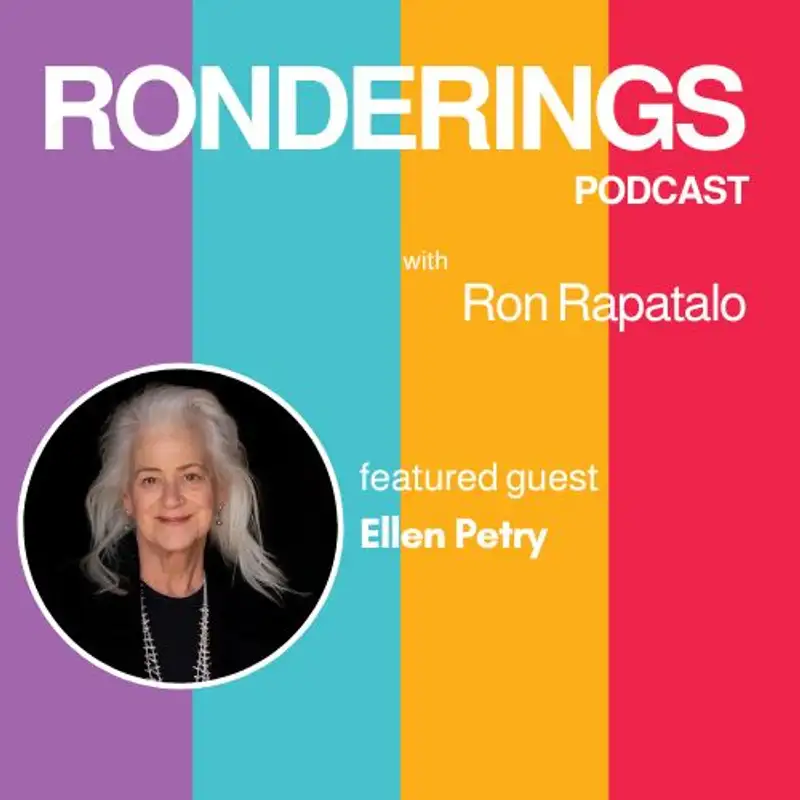
Ron Rapatalo:Let's get into it. Every once in a while, you meet someone who makes you rethink, Well, everything. How you think, why you think, is actually doing the thinking. That's today's guest, Ellen Petry Leanse. Ellen's story starts with a childhood tug of war between science and creativity, birds, geology, art, the pressure to choose just one lane, but life had other plans.
Ron Rapatalo:Rejection letter from Apple 1981, stamped with an iconic six color logo, flipped a switch in her brain. She cold called the recruiter, got the interview, launched a ten year run at Apple during one of the most formative eras in tech. Here's the twist. What she saw happening inside the company sparked a thirty five year journey into neuroscience, not the surface level pop science stuff, deep work, studying peep with people like Dr. Iain McGilchrist, Dr. Jill Bolte Taylor, and Lisa Feldman Barret. Learning how the left and right hemispheres shape not just our productivity, but our perception, our creativity, our sense of possibility.
Ron Rapatalo:Today, Ellen coaches leaders to understand that embracing isn't just hardware, it's a gateway. A filter, a storyteller, and a limiter lets you learn to work with it intentionally. We talked about attention, habit formation, heartbreak, ancient wisdom, creativity fields, and why are we so much more than what we have been told? This episode will stretch you in the best way. Let's get into it.
Ron Rapatalo:Hey, friends. Before we get started, I wanna share something that's been a big part of my own journey. Two years ago, I published my book Leverage. That experience cracked something open for me. I saw how publishing isn't just about pages, about owning your story, sharpening your voice, and amplifying your impact.
Ron Rapatalo:The part that meant the most, readers reached out to me to say they felt seen. That's when I knew this work mattered. I loved it so much I cofounded Leverage Publishing Group with friends who would make know this world inside and out. Now we help leaders, entrepreneurs, and change makers turn their ideas into books and podcasts to actually move people. Got a star in you, and I know you do.
Ron Rapatalo:Let's chat. Find me on LinkedIn or at leveragepublishinggroup.com, because the world doesn't just need more books. It needs your book. Alright. Let's get to today's episode.
Ron Rapatalo:Peace. Ronderings universe, we're in for a treat because we will be talking a lot about the brain. If folks don't know, I was a neuroscience major from '93 to '97. I always still carry a little bit of Philippine Catholic guilt that I didn't do anything explicit with my neuroscience major. And this will be one of the opportunities on the Ronderings podcast that we get to with my guest Ellen Petry.
Ron Rapatalo:Did I say your name right?
Ellen Petry Leanse:Ellen Petry Leanse.
Ron Rapatalo:Ellen Petry Leanse. Yes. I'd say it a second time. Is my Ronderings guest today, and shout out to Yannalei Toussaint, former Ronderings guest for introducing us. How are doing today, Ellen?
Ellen Petry Leanse:I'm doing great. How are you?
Ron Rapatalo:I am good. This is, my my previous guest talked about walking a unique genius. And when I'm recording Rondering's episodes, I'm walking one of my unique geniuses. So this gives me joy being on these episodes and learning from and talking to great guests like you. Good for you.
Ron Rapatalo:How wonderful. Well, Ellen, let's get right let's get right into it. Sure. What's your story?
Ellen Petry Leanse:What is my story? You know, when I'm asked that question, I always go back to a time in my life where I must have been four or no more than five years old. And there was inner confidence and clarity and an outer confusion because all around me, the grown ups who were shaping my life were constantly asking me to choose. I was a fairly nerdy little girl. I loved books.
Ellen Petry Leanse:I loved anything about science. I could look at bugs all day long. I received for a holiday gift one year, Roger Tory Peterson Field Guide to the Birds, which was a little paperback book that had picture upon picture of bird upon bird in it. I So could look at that all the I was captivated by the world of science and I loved, I loved geology and nature. And then I was also an artist.
Ellen Petry Leanse:I love drawing and making pictures and making things out of Play Doh. So I was a pretty creative little human, but also kind of sciency slash nerdy. And I couldn't understand why grown ups were always asking me to choose. I little to myself that I the world made sense to me even when it was super clear. My way of being in the world didn't make sense to them.
Ellen Petry Leanse:That started me on a path that I don't think I understood until many decades later because it comes back to the hemispheres of the brain and both linear and kind of categorizing and classifying nature of the left hemisphere, which is so important for understanding the world we live in, yet also the very vast and sort of swirling big picture realm of the right hemisphere and how it influences whole brain thinking. And what that means in terms of our human potential to generate ideas, create, innovate, and be of service really big way to this world we live in. The other thing that I think was part of my story or is part of my story is, you know, I grew up in a time where I had plenty of time to get bored. And I say that with a smile because it was never boring. But I had the, you know, it was a very different world back in the late fifties and early sixties when I was a young child.
Ellen Petry Leanse:We spent a lot more time just figuring out, you know, what to do on our own. And what I think matters in my story with that is it really taught me to check-in with myself first before solving a problem or trying to understand something rather than outsourcing this sort of natural knowing that young children I believe have to a device I held in my hand, or a grown up who was telling me what to do with my time. Now, one, you know, I say all of this and I spoke with my eldest son the other day about the things that I remember about my story and coming up in the world, and how different they are from his experience. And he reminded me that there are plenty of advantages to, you know, the way he came up in the world to to his story. But I'm very grateful to be able to see the contrast between the things that formed me as a young child and a young woman and even as a woman throughout my life.
Ellen Petry Leanse:This is what's available today. Now, I will say just to wrap on the story. I think, Ron, that the reason I go back to those memories when when you ask your question is having that sort of balance in my brain between curiosity about, like, the working ways of the world and getting things done and motivation, all those great things and this sort of wow creativity realm caused me to recognize something special in October 1981 when a rejection letter a technology company landed in my mailbox and it had a little six color apple in the corner. And I I looked at it. I'd sent out a lot of resumes.
Ellen Petry Leanse:I was looking for a job as a young, you know, recent college graduate. I sent out so many resumes and I swear I got more rejection letters back than I even sent out letters. But when I saw that little six color logo in the shape of an apple I suddenly said this better not be a rejection letter because I saw in that logo that there was a business that understood the importance of creativity and what we now call design and all of that And I had a big uh-huh moment. It was it was a rejection letter and I walked into my parents kitchen and dialed a number on the phone you know phones were hung on walls at that time and the woman who answered the phone she put her extension on she was a recruiter. She didn't know what she was in for and by the end of that call I had an interview at Apple that led me to have a job there and I ended up staying at the company for nearly ten years.
Ellen Petry Leanse:So that's Wow. What a cool story. I know. I've never done anything like it before or well maybe since I've done a few things but it was very unlike my nature as young woman to have done something like that. But the reason I brought it up in the context of the story was, I think I'd spent so much of my life really advocating really believing that there were these two sides of our potential as humans that we were meant to balance and not understanding why the world didn't really get that.
Ellen Petry Leanse:And when I saw that logo I had a really clear sense that Apple was a company that got that and sure enough it was.
Ron Rapatalo:It that that sounds like only a story that can live pre technology, right? To get a letter like that, see that logo. Like, I grew up as a child of the eighties. Right? So I was born in '75, and I remember the Apple commercials.
Ron Rapatalo:I remember the big Apple commercial during the Super Bowl. I was like, who what is this com what is this? This is this is very creative. Right? It was always something around Apple and God bless, may rest in peace, Steve Jobs.
Ron Rapatalo:Right? That creative and technical genius, right? That I think lives in so many of us, yet isn't always supportive. So I'm wondering, Ellen, to go back into your childhood. You had this love of science, You know, the bird, we also had this very creative side.
Ron Rapatalo:How did your community, your family support you with that? Right. Because I would argue that there are many kids who had similar things growing up, but were asked to often choose one or the other. You were given a path, it sounds like, to hell, not at all.
Ellen Petry Leanse:No, no. I would say it seemed at every turn in my early education, in the messages I got from the world around me, I was being asked to choose. And I don't know what in me refused to choose. I mean, I'm fascinated. In subconscious ways or ways I didn't realize, you know, and I do remember, like we're being a very, very strict, kind of rigid household.
Ron Rapatalo:Okay.
Ellen Petry Leanse:When I was a fifth grader, first of all, I love to write stories. And I actually was pretty active in that when I was a fourth grader and a fifth grader. And feedback that people liked my stories. But when I was in fifth, and I think I was quite good with using the English language. Was actually was two languages, but English was my first language.
Ellen Petry Leanse:And, but in fifth grade, a very stern and strict teacher, one that I didn't like, gave us a big project and that was we had to diagram sentences using grammar structures. Have you ever seen those? Did you ever have to do those? It's it's I found it mental torture, you had to take a sentence and break it down into different parts, labeling adjectives, adverbs, modifiers, subjects. Yeah.
Ron Rapatalo:You're bringing back really bad memories of me
Ellen Petry Leanse:Good for the you. The Yeah. I was like. Uh-oh. And at Lieberbelt I refused to do it.
Ellen Petry Leanse:And I would I remember I would try to do it sitting at my desk and I would have tears in my eyes knowing that I hated it so much and being really angry about it. And so when the day came to turn it in, the teacher called my mom and told her, Alan didn't do this, you know. I mean, I'm sorry, but I won a fairly significant like story writing award the prior year. So maybe I was just a little bit inflated with myself that I already knew about this. Taking something that felt like art and turning it into like a checkboard.
Ellen Petry Leanse:And I remember I had a friend, a boy who got a lot of negative feedback because he was told he was a bad student and bad in English. He loved doing this because I think it gave him tools to make sense out of the fluidity and creativity that he could have didn't know how to access or hadn't been allowed to access. And I swear, well first of back to my mom because I told you it was a rigid and strict household. Yeah, normally, my mom would have come after me and been like, you need to get this done by 04:00 this afternoon or whatever. My mom was so chill with it.
Ellen Petry Leanse:I think she knew that it was absolutely a stupid waste of time for me. And that it wasn't she understood why I rebelled against it. And I gently, which was kind of unusual for her, you know, parenting style. She told me, look, you're gonna have to get it done. Make the time to do it.
Ellen Petry Leanse:Don't overdo it. Just do what you need to do to get it done. Let the teacher check it off of her list. You'll never have to do it again. But Ron, that probably planted the seeds for me of what led me to neuroscience by trying to understand the dichotomy between really two ways of thinking that are part of our human birthright.
Ron Rapatalo:Yeah. I love that description of that micro moment with your mom, right? You know, that while may not have been totality of how you grew up, that moment that gave you a sense of like, wait a second, my different way of seeing the world is being supported by my mom in that moment. Right? It's really small, right?
Ron Rapatalo:Seemingly, yet gave you this impetus to say, wait a second, there's something to this here.
Ellen Petry Leanse:I I I called So, that hey, mom, thanks.
Ron Rapatalo:Yeah. Yeah.
Ellen Petry Leanse:It was validating. You're right. And you know what? We all need validation. We
Ron Rapatalo:all need
Ellen Petry Leanse:to be seen, you know, for who we are. And at that moment, you're absolutely right. I felt seen.
Ron Rapatalo:Yeah. So let's talk more about how you continue to develop this curiosity around how the brain functions and what that led you to.
Ellen Petry Leanse:Yeah. Well, you know, I I hadn't unlike you, I had not studied neuroscience when I was a college student. In fact, if we could turn back time we would see neuroscience wasn't really a thing when I was a
Ron Rapatalo:It was now. It was not. No. You're right.
Ellen Petry Leanse:So I think if I'd known about it I would have been drawn to it. I really loved biology and psychology. Yeah, loved it so much. But I also knew that as a, you know, a person who was going to graduate from college in 1981, I knew I was going to need to get a job. I was going to need to do work.
Ellen Petry Leanse:And so I my degree, I have two degrees. One of them is in in international business and the other one is fine arts. Okay. Yeah.
Ron Rapatalo:Even though the choice of your majors, right, that is not a common mix when I think back to my undergrad years. Right? I had someone that I because I was a math and neuroscience major for, three years, which people thought was psychotic. Because it is psychotic, to be clear, in terms of the amount of credits you need to do it. Right?
Ron Rapatalo:But there was someone I met when my upper level math classes who was a math major, was an acting major as well. I was like Wow. I love that. I Rare. Not not something I often saw.
Ron Rapatalo:Right?
Ellen Petry Leanse:Well, now also when we look at the decline in like liberal arts degrees and things like that. So I love that you called my non choice of majors a choice. Thank you.
Ron Rapatalo:So I'm here for the host to notice these patterns.
Ellen Petry Leanse:Yeah, that's right. So I joined Apple in in November, on 11/03/1981, I began my Wow. That was my first day there. And my work was in international product communications which was unbelievable. Like it's not something that could happen again at this time.
Ellen Petry Leanse:It's not something. Given how little I knew, I mean none of us knew about technology, right? I loved it. Had a a real affinity for it. But after Steve left Apple in 1985, as we all know he was ousted by the board for a number of reasons, the culture really changed there.
Ellen Petry Leanse:And I kept doing the things I had done at the Apple I'd known for my first years there, which allowed me to feel like I was really you know doing my thing. But I felt like I had to kind of you know partition myself a little bit differently.
Ron Rapatalo:See that.
Ellen Petry Leanse:Yeah. By the way John Sculley was great but the new guard that came in from all of the more staid and established tech companies, they really, you know, they were they they had a much more much less creative and much more limited palette for how they made decisions, took risks, and all of that. So I kept wondering, like, what is going on with me? What don't I understand that all of these people who've been so successful in their professional journeys are so shut down and I don't want to be like that but do I have to be in order to continue to you know, have my role here. So I began to study psychology to try to understand my not to understand that you know, I thought it was my problem.
Ellen Petry Leanse:Right? And by the way, I'm sorry for that little ding, I did shut off notifications but for something, for some reason it's coming in. Y'all who just heard the little ding forgive me. So Yeah. Studied psychology and very quickly stumbled onto neuroscience And after that nothing, like it all shifted.
Ellen Petry Leanse:And I began studying the brain not for psychology's sake but for the brain's sake just because there's something so fascinating about it. So I have deeply studied neuroscience now for about thirty five years have mapped it to an understanding of consciousness and what it means to be human. And so I look at the brain as the organ of our survival, our our physical This container that we're in. And I've come to Sea Run over the years of studying neuroscience and learning from some of the real greats like Doctor. Ian McGillchrist and certainly from, you know, the incomparable Dr. Jill Bolte Taylor and many of other many other people Lisa Feldman Barrett and others all along the way and others beyond even naming. But also from the school of life and from the school of raising kids, which is a whole other thing. But I've I've really, yeah right, I've really come to see the brain as both the key to our potential as humans but also the filter that limits our potential. And so in my work and in my speaking and hopefully on my podcast I always begin with the brain to take a very unconventional approach to our mental states, cognition, emotional intelligence and so forth to help people connect more fully with what it means to be human.
Ron Rapatalo:Quick pause in the action here. I know a lot of us leaders, entrepreneurs, folks just trying to do good work and felt that grind of pushing a boulder uphill by ourselves. The learning is you don't actually have to do it all alone. Genius discovery program at thought leader path like having a think tank in your quarter. It's not some cookie cutter formula but your story, your plan of impact, giving you the clarity and assets to take the next big step.
Ron Rapatalo:I've seen people go through this and walk out with their voices amplified, ideas sharpened, some even launching podcasts like this one, Bronzerings. So if you're tired of grinding in the dark and you're ready to step into your impact with right support, check out geniusdiscovery.org. God. This is you know, I have this interesting tidbit. Like, I think similar to you, Ellen, like, when I started in my undergrad years, right, I know I wanted to be premed like every good Filipino.
Ron Rapatalo:I was gonna be, like, a very professional career. Right? But I didn't know what I was gonna major in. And I took a freshman honor seminar at NYU in 1993. I believe it may have been the first year they started offering these freshman honor seminars.
Ron Rapatalo:And the one that I took was on the serotonin system, Ellen. System? Yes. On good good good old 5-HT. And learning about serotonin just blew my brain, literally.
Ron Rapatalo:It was so fast with with the amazing professor as media at NYU. We got to the 10th Floor Biology Conference Room, and it was across the university. So there are folks from the performing arts college, from Stern, the business, from the college of arts and science, right, it was just across the who were just curious to learn about the brain and this particular neurotransmitter. And the beauty of understanding just that neurotransmitter and then fast forward, right, many of the drugs that are used for blood suppression. Right?
Ron Rapatalo:The SSRIs. Yes. Right. You know, Prozacs, amongst others, right, come from understanding how serotonin works in our bodies. Right?
Ron Rapatalo:That's right. Which for me then got this curiosity to, like, learn more about the brain. And like the early stages when I saw neuroscience of like, there was so much that was known yet in the vast world of science, so little was even known back then. That's what got me excited because it was like this big frontier of like, you could discover literally on the fly,
Ellen Petry Leanse:I which is why I majored in love it so much. I do have a question for you about that.
Ron Rapatalo:Yeah.
Ellen Petry Leanse:You want to tell, you know, as you know, and really listeners should know is, I made it my strong opinion that we still know so little about Yeah. And how powerful
Ron Rapatalo:So it
Ellen Petry Leanse:what what blew your mind, Ron, about serotonin? Like, what made you go, oh my gosh, this is fascinating.
Ron Rapatalo:The very vast effects that five HT had in the body. Right. Like, I was just like, wait, what? It does what? It does this.
Ron Rapatalo:It just seemed to be it I think if I'm remembering my neuroscience major in that class, right, it was, I think the way that professor Mizzie said it was like, it was the police officer of neurotransmitters in the brain, I think was what I vaguely remember. Right? I was like, what does that mean? I just there was something about learning about its chemical structure and the way it had this cross cutting effect throughout the brain. Obviously, we learned about other neurotransmitters too.
Ron Rapatalo:Right? You know, norepinephrine, etcetera, right, dopamine, yada yada. And it got me just really excited to see how this one neurotransmitter affected behavior. It affected, you know, other things and, like, how your body regulated. Right?
Ron Rapatalo:It just got me really curious. Like, wait a second. There's all this stuff around your similar, like, curiosity and, like, knowing oneself. Yeah. That's what the serotonin system really started with me.
Ron Rapatalo:But then in parallel, like, I remember my freshman year taking honors writing workshop, which everyone called, like, freshman therapy. Taking writing workshop was like, you would write and then you would, like, then do meta writing, which I always found really fast and like, meta? What the hell is meta? I was like, can you talk about how you felt when you're writing? Was like, that is very emo.
Ron Rapatalo:Oh. But I did it. Really It was a constant construct to be able to, like, think, and it just there was, like, in parallel, like, my science brain, my creative brain. You know, being at NYU at that time, I I just so much was poured into me. And then the practical life experience of being a student leader, being a student activist.
Ron Rapatalo:Right? There was so much. Even if I didn't do anything explicit around neuroscience, the what I learned in neuroscience and how, like, analytical I can be and how much then I use that approach around getting to know myself and get to know others has really been a hallmark of, like, my professional career for sure.
Ellen Petry Leanse:I love it. What would I your listeners are lucky to hear you speak about it in that way because it is really important to know that the brain is a biological tool that to itself will optimize everything for what it thinks
Ron Rapatalo:to
Ellen Petry Leanse:start off to survival. And again, left to itself, which I think are three of the most important and underused words in the concept of neuroscience, left to itself the brain will run you as its tool rather than, yes, this is very important.
Ron Rapatalo:Uh-oh. Yes.
Ellen Petry Leanse:I also love that you first became fascinated with serotonin because I feel pretty sure that we that it wasn't known until more recently than you took that class that something like 80 to 90% of the serotonin produced in the body and serotonin is, it's a neuro reward. It rewards different types of motivation in the brain different types of in the brain. But is manufactured in the gut, in the gut showing the importance of this brain body connection which brings me back to this idea that humans are so much more complex and powerful than we tend to be told.
Ron Rapatalo:Yeah. So let's go on that thread. Right? Because I think one of the notions that I've thought about is I understand the brain. When I give the oversimplified version how Ron Rapatalo understands the brain from all the time I've been, you know, around neuroscience is our brains are built to be pattern recognizers, right, which has a brilliance to it.
Ron Rapatalo:Right? I think if I take the riffing off what you said, Ellen, around, the brilliance of our brain can allow us to innovate to be ambitious. But at the same time, if you're you let your brain follow like, make like, lead you, it like, our brain, aside from being a pattern recognizer, also believes in homeostasis. Right? This idea of, like, it's to regulate at some level, right, has always been what I've told people.
Ron Rapatalo:But, like, the pattern recognition part of the brain, right, I think when left to its own devices, I've understood it. Right? You're just gonna fill in the blank for whatever's around you, but it takes a level, I think, of I have found in my own journey, like, cognitive, spiritual discipline to say, well, the pattern that the brain fills in for me may not be the pattern that allows me to innovate.
Ellen Petry Leanse:I I it's so interesting. So, you know, one is sort of going on three things. One of them is the homeostasis, and you're absolutely in saying that in the most ancient part of the brain, I mean
Ron Rapatalo:Yes.
Ellen Petry Leanse:Evolutionary biology of this is so fascinating. Yes, the brain is going to be regulating spaces and also optimizing for energy conservation
Ron Rapatalo:because brain,
Ellen Petry Leanse:I like to say it's an ancient technology we use to navigate the modern world. And so the ancient technology is still locked in, you know, I don't know about you, Ron, but I might have a saber tooth tiger lurking right behind my laptop. Yeah. Yes. It could happen.
Ellen Petry Leanse:And per the brain, it's sort of still vigilant against that. So yes, faces, making sure that the body is doing all of the things the body needs to do. But now you brought up very interesting words. You said pattern recognition. And yet, as you spoke about it, you really spoke in a very whole brained way and I'll explain why.
Ellen Petry Leanse:Okay. The hemispheres of the brain actually function in ways that some people say are as if we had two brains. And of course those two different brains are joined together in the center by the corpus callosum.
Ron Rapatalo:Yay, corpus callosum. I remember the last time I've heard corpus callosum. Well,
Ellen Petry Leanse:know, and it's really funny because the corpus callosum is actually structurally kind of different in female brains than it is in male brains. And then in male brains, the way that the glial cells connect over the surface of the brain is quite different than it is in female brains. All the way that male and female brains connect information fascinating. But so I describe the left hemisphere of the brain as linear pursuit of outcomes. So it likes moving from point a to point b and if we can visualize a point a to point b, we can also see how much of our world is like that.
Ellen Petry Leanse:Check this box if the answer's right. You know, raise your hand fast and you're either right or wrong. Categorize and classify to make sense of the world. So the left hemisphere likes results. It likes the chase of results and the reward systems primarily in the left hemisphere are the dopamine reward systems and I believe we overstimulate those dopamine reward systems today through our constant reliance on the short term rewards of technology.
Ron Rapatalo:Yeah.
Ellen Petry Leanse:This has changed our brains. I call it mental climate change.
Ron Rapatalo:Over and over.
Ellen Petry Leanse:On the right, yes, there's pattern recognition but but to be really careful with those words, it's big picture pattern recognition. So it's a little bit different or can be a little bit different than, okay, this I saw this giraffe and then I saw this llama. The llamas like the giraffe so I'm making a pattern. That's a little bit more left hemispheric. Yes.
Ron Rapatalo:Yes.
Ellen Petry Leanse:For sure. Classification. But if I'm going, animals tend to wander and graze on the earth and I wonder what other animals are kind of like giraffes and llamas. Now I'm more in the big picture and speaking long term domain of the right hemisphere.
Ron Rapatalo:Yeah.
Ellen Petry Leanse:I bet you can hear from those descriptions. We actually don't want to be pathologically over reliant on either one. We're there, we're better together. So how to stay curious and stay intentional and you see an intentional for those who are watching I'm touching my forehead the area above my eyebrows with the frontal cortex.
Ron Rapatalo:This is
Ellen Petry Leanse:we bring on whole brained tendon cognition. Now because the brain prioritizes energy conservation in that ancient way, it doesn't like the newest part of the brain, which is the prefrontal cortex, the human prefrontal cortex to come online because it's a hungry baby. It's the newest part of the brain and it's the least.
Ron Rapatalo:I love the way you described the prefrontal cortex. It's like, gimme gimme gimme gimme.
Ellen Petry Leanse:It's so smart but it wants energy. And so this is why if any of us have ever experienced, but I'm sure we've all experienced, trying to focus and how our brain wants to get distracted and all of this. This is part of the biological energy management systems that make it a little bit harder to bring our highest human cognition online.
Ron Rapatalo:Yeah. So, Ellen, because I know that you and I both coach
Ellen Petry Leanse:Mhmm.
Ron Rapatalo:Your knowledge of how the brain functions and influences behavior and behavior influences the brain must make you have like just astute suggestions and like understandings of how leaders lead. And so I'm curious, how is that like allowed you to coach leaders and people better? Right? Because I think it it sort of allows me to, like, I don't have the depth of knowledge you have, but I sort of, like, think about these things of, like, the influence of one's body on behavior, but also one's cognition on behavior and vice versa. Right?
Ron Rapatalo:Because if you don't, then you're sort of then not using quote unquote research, you know, based practices and, you know, on what leadership and, like, what coaching should look like.
Ellen Petry Leanse:I it's such a great question, Ron. And I, you know, first of all, I hope it is of service. I believe it is of service. I've definitely had clients who like, I don't want any of that neuroscience stuff. Just talk a little bit.
Ron Rapatalo:Ah, my head's gonna explode.
Ellen Petry Leanse:Yeah. Yeah. But, you know, sooner or later everybody seems to come around to it. I would say is most important thing in leadership is really understanding this thing of being human understanding how we're all playing an inner game and an outer game and what that does to our, you know, the way we show up emotionally, cognitively, spiritually in whatever we do. And so when I begin with the brain, which I I think I do in in many aspects of, you know, my understanding of life, it's it's really good.
Ellen Petry Leanse:I have seen it be very effective for people to understand, okay, what's really going on here through the lens of the brain. Doesn't mean we talk for ten minutes about what's happening in the basal ganglia or new thing that I'm learning about the caudate nuclei, nuclei excuse me, the caudate nuclei. Nuclei. We don't need to talk about that to to get stuff done in life. That's fun for me to geek out on but it doesn't mean it's useful for anything else.
Ellen Petry Leanse:But to really say look this person was emotionally triggered and that is why they couldn't blah blah blah blah blah and here is what you can do if you recognize that again. It can be as something as easy as saying, look, most people in meetings because of all of the different competition for their attention that's going on don't really focus. So here is a way that I have seen over time allows people to run and participate in super focused results oriented meetings so we get the outcome that we want. I also can't say that without talking about intentionality. And intentionality is the gift of human prefrontal cortex to set an event.
Ellen Petry Leanse:But I've already told you that the the energy management systems in the brain resists that so it's harder to remember to bring intentions online. And then there's so many more things I could say but the last thing I would say is when people understand the brain's role in creating habits and habituating behaviors that we desire. We ask, we can hack the system and allow the brain to move into habituation, either changing old habits that we've outgrown, or bringing on new habits that take us to our next chapter, we can do that with more efficiency than we otherwise could.
Ron Rapatalo:Yeah, this makes me geek out. One of the ways I like to describe habit creation was remembering in biology class learning about aplasia and the creation of memories. Right? There's something around, like, I think when I was premed, understanding how these things are done at a cellular level Oh. Tend to cascade and have whole system effects.
Ron Rapatalo:That's what I thought was the brilliance of, like, learning this. I was like, wait. That with that little that oh my god. Woah.
Ellen Petry Leanse:But let's not just keep out on this for a minute.
Ron Rapatalo:I know. Please.
Ellen Petry Leanse:I mean, really think about this. All we are is assemblies of cells. Most of these cells, wait, I can't say most, I don't actually know. It's just but I suspect that most of the cells carry human DNA, but not all do. Each body is actually a mix of so many different organisms.
Ellen Petry Leanse:Know, we mentioned the gut biome where the serotonin is produced. Are cells don't have human DNA. So when we really think about the way that, gosh, what's the number? I've heard like, I think I've heard 13,000,000,000,000. I've also heard like 60,000,000,000,000.
Ellen Petry Leanse:I don't remember. But all of these cells are orchestrating and collaborating Yeah. This incredible thing of of us and the ability for all that's happening on a, you know, cellular level, actually allowing crazy stuff to happen like us to have a conversation like this. Right?
Ron Rapatalo:Yeah. So I want yeah. I wanna take this to another level that we had when you and I first chatted before Yeah. Recording today is just the level of, like, spirituality and intuition you and I both have. Right?
Ron Rapatalo:And, obviously, folks may think that this is nothing to do with our brains, but I I think this has a lot to do with with our brains. Right? Our ability to be intuitive and spiritual is governed, I think, in large part of, like, how our brains manifest. I'd love to hear you, Ellen, talk about that a little bit because one of the things I geeked out about in talking with you was, wait, we're gonna geek out about neuroscience and and and and we are aligned in terms of how we like kind of spiritually intuitively see the world.
Ellen Petry Leanse:Yeah. Well, wow. Well, this is one I mean, this is a topic that's so important to me especially as an elder, you know at a later in life. Yeah. But I, you know I have, there have been times when I've been able to go into experiences and even to trying to understanding research with absolute conviction that this reality that we experience is completely mechanistic.
Ellen Petry Leanse:It's just a fabrication of the brain and many people do believe that. In fact, in the the neuroscience community where some of the people that I've learned the most from are straight up materialists or, you know, mechanists. Like they're just saying this is just a biological function, some sort of a hologram or hallucination that's made up of some sort of, you know, it's like a dreaming world that isn't real, but the brain convinces us that it's real. Okay, I can, I can really enjoy the science of that from you know how the way some people express it and find it very curious and interesting? Now on the other side is wow, the brain is an organ that's capable of receiving information, you know, that it perceives, prioritizes, cuts off some of it.
Ellen Petry Leanse:We don't, we could not possibly experience all of the phenomenology that's happening around us. But then it gives us perception, thought, you know, interpretation and then the action that stems from it. And I can see that as being part of a great field of access with realms beyond those that I will ever understand. And the more I've gone in to try to figure out which one is it, the more I see the more the only thing it is is yes and. Like it is a mystery and a wonder that does to some extent create our sense of reality through its own projections.
Ellen Petry Leanse:Yet it's also incredibly connected in ways we don't understand to vast fields of consciousness and spiritually and, you know, as a matter of fact I have to put in a plug not to take anyone away No. From your
Ron Rapatalo:No. Please
Ellen Petry Leanse:There's a glorious podcast out there called The Telepathy Tapes. Wait, telepathy tapes, excuse me.
Ron Rapatalo:Telepathy tapes.
Ellen Petry Leanse:And it starts out exploring nonverbal autistic kids who seem to be communicating with each other across space without ever meeting. Oh, Oh, it's great. And it was the top podcast I believe in the world for some number of months this year. But the second season looks at how we interact with, you know, consciousness and even things like creativity in a very unconventional way. I would recommend that you and maybe anyone else who's interested treat themselves to listening to season two, I believe it's The Telepathy Tapes episode on creativity, because the people there and some world class creatives.
Ellen Petry Leanse:And I think Steve Jobs would have agreed with this is that there is a field of information out there that is giving us everything we need to be the most innovative and creative and powerful beings that we can possibly be. The the win goes to those who let themselves receive that information.
Ron Rapatalo:That I know. Kaboom. There could just be this, like, rainbow cloud that we were all, like, floating on as a result of this.
Ellen Petry Leanse:Unicorn. Unicorn. You know? Oh, Oh
Ron Rapatalo:my gosh. It you know, one of the things I wanted to ask you about, Ellen, based on our, you know, first convo was this feeling of what is happening today. Right? This sense of what's going on, not only in our world, but our country. Right?
Ron Rapatalo:There's the anxiety people are feeling, the the sense of I can't control anything. Right? Is that political? It probably is. We're not gonna delve into that, at least with this episode.
Ron Rapatalo:Right? But, you know, there's so much going on that when I think about how everyday people I'm interacting with are feeling, right, those adjectives, anxious
Ellen Petry Leanse:Oh, yeah.
Ron Rapatalo:Loss of control, like Polarized. What is possible. Right? Yeah. Like, as an elder in this space, Ellen.
Ellen Petry Leanse:Mhmm.
Ron Rapatalo:What advice would you give us, and what are you seeing for what is possible with what is going So
Ellen Petry Leanse:I'm going to answer in three ways, if you'll let me. The first one is
Ron Rapatalo:Please.
Ellen Petry Leanse:I have learned so much from wisdom of the ancients. You don't think that human civilization existed, you know, based on some things that started, based on some things three thousand five hundred years ago that began to shape the Western world. And that's really the the paradigm that we live in. However, humans and proto humans were doing very sophisticated and really in, you know, very survival oriented things for hundreds of thousands of years, some would say before that. So I look at some ancient wisdom to really activate my sense of faith in participating I hope in a in a in a values driven way in a mystery greater than I will ever understand.
Ellen Petry Leanse:I hope I'm in service to something that's greater than I will ever understand. Tao is with the talk about yin and yang, the quote oppositional but mutually necessary forces of feminine and masculine energy, of movement versus stillness, of action versus reflection, all of these things. If you look at Taoism, it's going to tell you again and again everything will always be out of balance until it comes into balance for a moment and then it will go out of balance again. Which by the way, if you look at the latest sort of quantum mechanics, the ways of thinking about the universe, the big bang and then the you know the shrinking and expansion, you know all of this, it kind of So describes there's something there. And then the other thing is from a more contemporary source in The United States and these would be I believe it's the Algonquin people of Southern Canada and Northern Northeastern United States, Southeastern Canada, Northeastern United States.
Ellen Petry Leanse:And these are people who have prophesied for about three hundred years that we were experiencing the rise of something called Wetiko. And Wetiko is a word that sort of translates into the thought virus of evil. And the thought virus of evil is going to lead, the prophecy says, to hyperindividuation, excessive hierarchy and competition and control, you know, grabbing, hoarding some people and dominating the planet in an unsustainable way. Now when people who really understand this principle write about it, they say that the darkness or the hardship of this, the actual they do call it an evil. The evil is here to teach us that we will reach a point that we we can no longer go on unless we reclaim the good.
Ellen Petry Leanse:And so I find some comfort in wondering how I don't even have things. I find some comfort in knowing that this is a human way that is bigger than I can understand. Now your timing with this question is fascinating because last night I recorded after ten months without recording a podcast.
Ron Rapatalo:I recorded
Ellen Petry Leanse:it on being stuck and I was trying everything I could find Ron to understand what is the neuroscience of stuckness because I had a belief if I could understand stuckness I could understand how to get out of it. And when I I really I wrote eight, I wrote three drafts more than 8,000 words and each paragraph sucked. It was horrible. I hated it. I didn't even do this.
Ellen Petry Leanse:And I mean, I'm talking hours doing this. And then, and this is the really cool part. I came across a study about heartbreak and what heartbreak does to the motivation systems in the brain. And I saw that heartbreak without a target and I'm really simplifying this. I'm also extrapolating, you know, there's no real evidence for the first sentence I'm going to say though there will be for the second.
Ellen Petry Leanse:But heartbreak without a target like it was you you did that to me is passive dull and stuck. It's gloomy. You're in the murk. You don't know what to do. Kind of like I felt for the last ten months, right?
Ellen Petry Leanse:Yeah. Heartbreak with a target, look what she did, look what he did turns into action and motivation but not necessarily good. As I wrote it could be villainous, victim y or vengeful villainy or victim y. You know, you do damage to someone because once you have an active target for your heartbreak, you want to go in and you know all of that stuff. I thought about that when I considered the times this year where I have wanted to cast blame or point fingers at specific things that happened and say that person did it or if only we'd done this differently or whatever else.
Ellen Petry Leanse:Then I went into those sort of vengeful, you know, villainous, you know, probably had some ideas come to mind that I wouldn't want to share in a public forum, you know, things that I didn't feel good about but when I retreated without a target, I was dull, I was passive. And so I turned that word heartbreak into the word heartache. And I postulated possibility that heartache without a target is dull with a specific target of someone to blame. It is angry and vengeful. But what if we shifted the target and made it a target like what I came up with hope and all of a sudden run.
Ellen Petry Leanse:I was unstuck And I actually the episodes only sixteen sixty minutes long. I started crying as I recorded it like you can hear my I'm crying because I felt the pain of all that it had me stuck. But I also realized like I had not seen a way to rehabituate that stuckness toward an action pointed at a positive outcome. And so, you know, as I say at the end of the I go, it's probably pseudoscience. Okay?
Ellen Petry Leanse:Some of this stuff can't be proven. But if this is pseudoscience, more please bring it on. Because if I can take an energy that's been holding me back and transmute it to an energy that lets me be more aligned with the person I I I yearn to be in the world, more of that please.
Ron Rapatalo:Alright, let me keep it real. A lot of us have write a book sitting on our goals list, maybe for years, I sure did. Good news is there's more than one way to get it done. If you've got more money than time, a ghostwriter can help bring your story to life. If you got more time than money, a great book coach can guide you through the process step by step.
Ron Rapatalo:If you've already written a thing, you'll want someone to shepherd you through publishing so you don't waste time or cash. Here's the thing though, no matter how you do it, the real win is writing the right book. The one that builds your credibility, grows your business, and actually makes a difference. That's what the team at Books That Matter is all about. Head to booksthatmatter.org and get some feedback in your ID or manuscript.
Ron Rapatalo:Don't sit on it any longer, your book could be exactly what the world needs. You know, this makes me think of Ellen when I dealt with my first heartbreak, heartache in college. One of the things I did to cope was to pour my energy into working out. And I literally started working out. And I dabbled in working out in college, but it was never consistent.
Ron Rapatalo:Right? It was definitely ego filled, right, of, like, how much can I bench press? Like, stereotypical, like, gym bro stuff. Right? But the workouts became this, like, sense of release.
Ron Rapatalo:Like, yes, it was coming out of anger over the heartache. I needed to do something with that energy. And it turned into, well, have to do something with this energy or else it's gonna consume me. Right? And so six days a week, two hours a day that I started eating along with that.
Ron Rapatalo:And it became, as I got more mature and older and more aware, it's now something like that working out sort of has this triangle of the physical, the mental, and the spiritual for me. Because when I work out, it's this it's a flow. It's like, it's just it's one of it feels like I'm floating when I'm having a good workout.
Ellen Petry Leanse:It it it's such a wonderful way to almost reprioritize the activity of the brain in a way that is integrating integrates with the body as well and balancing to all of the things we do when we're like chasing after outcomes. And I mean we can chase after some outcomes on the gym floor as well or the dance floor the you know whatever it is that we do. But yes, it is I would say self care right now and really bringing ourselves into the body and the power of our bodies is I think one of the most emotionally, spiritually, and mentally nourishing things that we can do. And it's a it's a little bit of an odd thing that in when we are stressed and we get a little bit hijacked, the brain tends to turn, often can turn away from things like actually the self nurturing and so forth.
Ron Rapatalo:Yeah.
Ellen Petry Leanse:And we have to be intentional about doing those things in order to rehabituate and bring back the balance. So yeah. It's important. So important.
Ron Rapatalo:Yeah. I mean, my last anecdote on this on this thread before I ask you the rendering question, Ellen, is, you know, we're we're recording this Thanksgiving weekend, And I am out of my usual Abbott driven routinization of my workouts, which is driven by morning routine. Dropping off the girls in the morning, right, going right to workout after that. Between nine and eleven, Monday through Friday, it's pretty routinized, I workout. Right?
Ron Rapatalo:It's just something even when I'm tired, haven't eaten or any it just I just do it. Right? Because my body it's just inertia. Right? But because I'm out of that routine because it's Thanksgiving, where I was like, this is gonna sound crazy to my listeners.
Ron Rapatalo:People know me know that, like, I'm driven by this stuff. I didn't work that in two days. The last workout I had was Wednesday. Don't include the walk I took Thursday to, like, buy groceries throughout the neighborhood. Right?
Ron Rapatalo:And so I was itching for a workout because it started to affect my mood. Yeah. It's the god's honest truth. Right? And so I was like, well, Ron, let's use what you've learned from James Clear and Atomic Habits and neuroscience and, like, lived experience.
Ron Rapatalo:What's gonna get you to finally do this kettlebell home workout that you've been putting in your calendar since Thursday morning? You keep hunting. I was like, wait. Ron, what do you do? Write the workout plan.
Ron Rapatalo:So I wrote it. Yep. I then put it in the calendar. I then set a timer for when I said I would do it, which was then linked to, like, doing laundry at the same time.
Ellen Petry Leanse:Uh-huh.
Ron Rapatalo:Right? Right. Then when my wife went to drop off her grandmother to go back to the bus station to get back home to Baltimore, I was like, that's when I'm gonna begin my workout. So was sort of, like, all set of, like, alright. Put on a workout T shirt.
Ron Rapatalo:It was, like, all these little things, the inertia of like, that I just couldn't say no because the other then I brought my laptop and there was music. And I said, okay, what do I usually do with work? I take a photo. And so it's like, well, how do I take a photo with my Mac? Like, oh, yeah.
Ron Rapatalo:I have QuickTime on. So I took a video of, like, one of the, like, sets that I did. And so the long story short is you, I can create, I think when you start to get conscious of this stuff, Ellen, related to neuroscience, I can routinize in real time. Right. The thing that I know is good for me, even if I'm out of my routine.
Ron Rapatalo:I didn't want to wait till Monday morning to work out because I felt my mood was off of like and and the working out today got me to feel like past because I realized the way that I and I would say this is most of most of us. Right? And I have a buddy, Jeff Lee, who talks about this in schools, the movement factor, right, is how much movement is so key to our overall well-being. Oh, great. That does not mean, like, you know, that you gotta do crazy stuff like me, like power lifting almost.
Ron Rapatalo:I'd like niche things. Right? I'm I'm competitive. Right? That's the left brain side of me.
Ron Rapatalo:Like, I like to compete yet the right stop right brain side of me, quote, unquote, enjoys the, like, creativity of the workout and, like, what, like, I'm getting out of it. That's not just sent out of the result. Like, I don't get wrapped up about the result, but I follow a plan Because without it, my ability to hit the result and have fun with it probably lessens greatly. And so it's like, I use a little bit like, my parallel thing is the perfect, like, synergy between, you know, my left brain and right brain because it allows me to track results without being so stuck on it. And I get this more, like, creative, spiritual, mental pursuit out of it that is more of the benefit that I get, then, yes, I'm 50.
Ron Rapatalo:My body's in better shape than it ever has been. And yet that's nice, but there's something bigger than that that I never imagined I would be getting out of it.
Ellen Petry Leanse:Oh, that's a whole other, you know, journey. So what I really heard from you is that spiritually and really as a whole being, you were really activated to pick up the weights and swing them around or do your thing. And you were saying my habit stacking pattern has been disrupted. Okay, where do I fit it in? And that boy I hear things like that all the time.
Ellen Petry Leanse:But what you did so well is you recruited the power of your left hemisphere to create a plan. And one of the things that I've also seen that helps people if they you know if their habit stackers and then their habit is disrupted and this is really a hard thing especially people with kids right? Because boy oh boy the day that that little one is sick and you don't go to school it's like oh my god no how do I make it? Here's a beautiful question you can say what is one thing I can do one thing to meet this goal that is my spirit is calling me for? If all you do is pick up those, you know, kettlebells and do, you know, your 12 of this and your 12 of that or whatever else, great I did the one thing.
Ellen Petry Leanse:But then the body goes back to the the neural mapping, the circuitry of whatever that habit is and makes you wanna keep doing it. That's so good.
Ron Rapatalo:Yeah. It just one thing. And it's amazing. Right? It reminds me, right, of one of the things I've learned speaking of, like, the melding of, like, the spiritual, mental, the physical, like, my meditation practice.
Ron Rapatalo:Right? Learning to meditate has allowed me to pull from this power of intention that you talked about in the prefrontal cortex. Right? And it's been, I like to brag about this because I'm the results oriented part of me. Forgive me, but don't forgive me.
Ron Rapatalo:I've been meditating since 2016 through Headspace. Shout out to Headspace in the app. Headspace is good. Just it's I don't know what I'd do without Headspace every morning. Yeah.
Ron Rapatalo:It's like autopilot.
Ellen Petry Leanse:Mhmm.
Ron Rapatalo:I just it's just part of what I do every morning. Right? Hit the Headspace app. I do the daily thing. And that power of attention of understanding my body's feeling, it just it's then carries over to other things that I do with a lot more consistency than if I did not have a daily meditation practice.
Ellen Petry Leanse:Alright. Well, well, another time maybe we'll talk about two practices. One is meditation and one is gratitude. And what those
Ron Rapatalo:Yes. Yes.
Ellen Petry Leanse:What those two practices change in the brain.
Ron Rapatalo:Oh, boy. Well, Ellen, you'll need to if you would have me as a guest on your podcast, I we can continue that convo there. That would be amazing. Well, we're at that time, Ellen. We're gonna have to ask you the wandering question.
Ron Rapatalo:What lesson or value do you wanna share with the audience today?
Ellen Petry Leanse:I'm gonna keep it really simple, and that is that my my hope, my dream, my prayer would be that every person who is listening to this podcast takes a moment to drop into their inner realm and really feel how powerful they are, how how deeply connected to something larger than themselves they are. And I love to express it like this. We are so much more than we have been told. The prevailing stories about who we are as humans make a lot more sense for the society that we live in, which enforces all of that conditioning, than they do across the long arc, the long journey of of human existence. And that the deep powers within us that our culture does not necessarily encourage, acknowledge or activate may be exactly the ones we need to fall in love with and start practicing now to create the future that we want to be part of that we can be proud to be part of.
Ellen Petry Leanse:I love to say what's gotten us here will never get us there. And there is something more we need to get us there. And the beauty is I believe it's been inside us all along. And the more of us awaken that, see that as our brilliance rather than the crazy part of us that scared us scares us sometimes because I know a lot of people do, the better problem solvers we will be.
Ron Rapatalo:Yes. Thank you for your wisdom, Ellen, on renderings today. Before we leave, how do people find you? What would you like to promote?
Ellen Petry Leanse:Well, there are two things. Thank you for asking. One of them is I have a really cool talk I'm giving right now, And it's called it's called intelligence reclaimed. And you probably heard the AI and the word reclaimed. And it is looking at a full spectrum of human intelligences to complement the very linear and quite specific, you know, band on the spectrum intelligence of AI.
Ellen Petry Leanse:And so the 10 complementary intelligences and they're really interesting and it the talk seems to be people seem to get something from it. So that is all found on my website which is ellenleanse.com . And then the other thing is I am returning after ten months of being stuck to my podcast, which is called the brain and beyond. So at thebrainandbeyond.com, there are a number of different episodes, my different experiments with how to bring this love of neuroscience neuroscience to the world, practices, interviews, and, you know, interpretations. So those two ways are really the best ways to find me.
Ron Rapatalo:Well, Ellen, I love how much you love the brain because you're like reigniting what I've always known is my own love of the brain and being able to geek out with you. I'm like, oh my god, remember all these substantia nigra? I'm like remembering all these books and things I've read. I'm like, oh my god, I need to start like re getting back into that world. So thank you for your gift of being a guest on Ronderings Ellen.
Ellen Petry Leanse:Mhmm. It's been a pleasure. Thank you for this conversation. And to all the listeners, really glad you're there.
Ron Rapatalo:Absolutely. In the words of one of my heroes, the brilliant Deion Sanders, we always come hot with amazing guests like Ellen Petry Leanse. Peace. Peace. If you're feeling a little expanded right now, good.
Ron Rapatalo:That's what talking to Ellen does. What I'm taking with me is this. Our brains are powerful, but they're also biased toward efficiency, patterns, the short term. And when we don't understand that, we think stuckness means failure. When in reality, it often means our prefrontal cortex, that hungry baby, is out of fuel.
Ron Rapatalo:Our heartbreak doesn't know where to go. Ellen reminded me that tapping into our right hemisphere, the big picture, the long term, the interconnected, isn't some woo woo idea. It's necessary if you wanna evolve beyond the narrow thinking that God is here. Spiritual layer, that was a gift. The idea that the brain is both a physical organ and a receiver, connected ancient wisdom, intuition, creativity fields, is something we need in this cultural moment, especially as AI accelerates faster than our consciousness has been trained to handle.
Ron Rapatalo:If you want more from Ellen, visit ellenleanse.com, follow her podcast, The Brain and Beyond, and watch for a talk on intelligence reclaimed, the 10 human intelligences we need alongside AI. Ellen left us with this. We are so much more than we have been told. So tap into that, stretch into that, and as always, keep roundering. Peace.
Ron Rapatalo:Before we wrap, I've gotta give a huge shout out to the crew that helps make rounderings come alive every week, podcasts that matter. Their mission, simple but powerful. Every great idea deserves a voice. So if you've been sitting on that spark of a show or story, don't overthink it. Just start.
Ron Rapatalo:Head to podcastsmatter.com, and let their team bring your vision to life. Till next time, keep pondering, keep growing, keep sharing your voice with the world. Peace. Thank you for listening to today's Rondering. I enjoyed hanging out with me and my guests, and I hope you leave with something worth chewing on.
Ron Rapatalo:If it made you smile, think, or even roll your eyes in a good way, pass it along to someone else. I'm Ron Rapatalo, and until next time, keep raundering, keep laughing, and keep becoming.
Listen to Ronderings using one of many popular podcasting apps or directories.